#牺牲股市救美元 ?
Bitcoin was cut in half from around $125,000, while gold and silver fell in tandem. Around November 25, more than $4 trillion was wiped from global assets in 24 hours, and U.S. stocks closed lower. At the same time, the 10-year Treasury yield fell and the dollar strengthened.
There is no dispute that risk assets were sold off and money flowed into the dollar and Treasuries. But concluding from this that “the U.S. deliberately sacrificed the stock market to save the dollar,” then asking whether it was Trump, the Fed, or a “hidden hand” behind it, clearly overestimates the consistency and control of policymaking.
The central assessment: the outcome is real, but it was the combined result of several forces bearing down at once—not a carefully crafted script.
I. Liquidity is indeed tightening
The Fed continues to shrink its balance sheet, the Treasury is issuing large amounts of debt to replenish the TGA, overnight reverse repos are nearly depleted, and bank reserves are approaching $3 trillion. Liquidity fuels valuations. When it diminishes, Bitcoin tends to peak first, gold and silver follow, and stocks then come under pressure. This is a mechanical consequence of the cycle, not a deliberate design.
II. The three forces are not all pulling in the same direction
- Warsh’s balance-sheet reduction is not intended to crash the stock market
Kevin Warsh argues that “the printing press must be quiet for interest rates to be lower.” Shrinking the balance sheet is a prerequisite for rate cuts, and he opposes the central bank continuing to backstop asset prices. “Not rescuing” does not mean “wanting to harm.” Trump is pushing for lower rates, the opposite of a script in which he “coordinates tightening to save the dollar.”
- The stock market has its own script
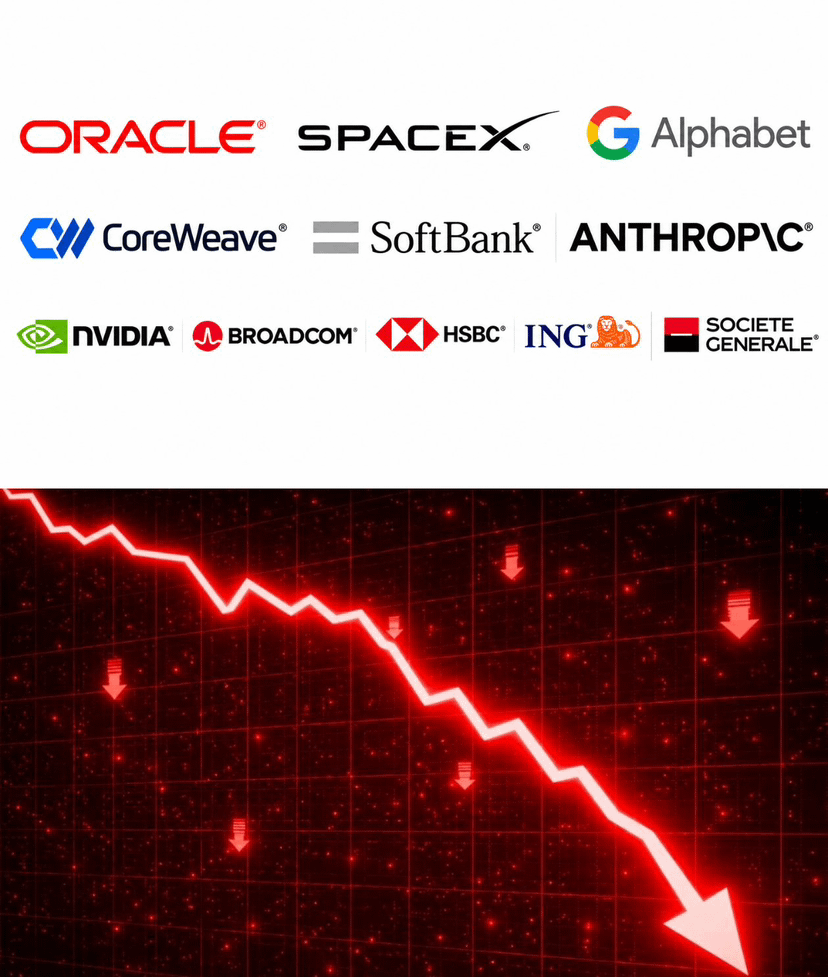
At the heart of the AI revaluation is whether astronomical capital expenditures can deliver returns. Nvidia has shed about $2.65 trillion from its peak valuation of nearly $6 trillion. Liquidity has amplified the decline, but it is not the root cause. Treasuries and the dollar are beneficiaries of the outcome, not the target in advance.
- “Rothschild” has no factual role here
Attributing events to an unnamed family only leads to an unfalsifiable narrative, obscuring the real tensions: the conflict between Warsh’s discipline on balance-sheet reduction and Trump’s desire for rate cuts, and the vulnerability of AI valuations as liquidity recedes.
III. The bottom depends on equilibrium, not on anyone “backing off”
If a single actor controlled a button, simply backing off would mark the bottom. But reality is:
- Warsh will not change course just because stocks fall;
- Trump’s rate cuts cannot solve the problem of AI returns;
- AI revaluation follows its own timeline.
No single party determines the bottom. It depends on when these forces find a point of coexistence at new prices. Calling the bottom too soon is dangerous; so is mistaking their combined impact for a conspiracy.
$BTC $QQQ $ETH