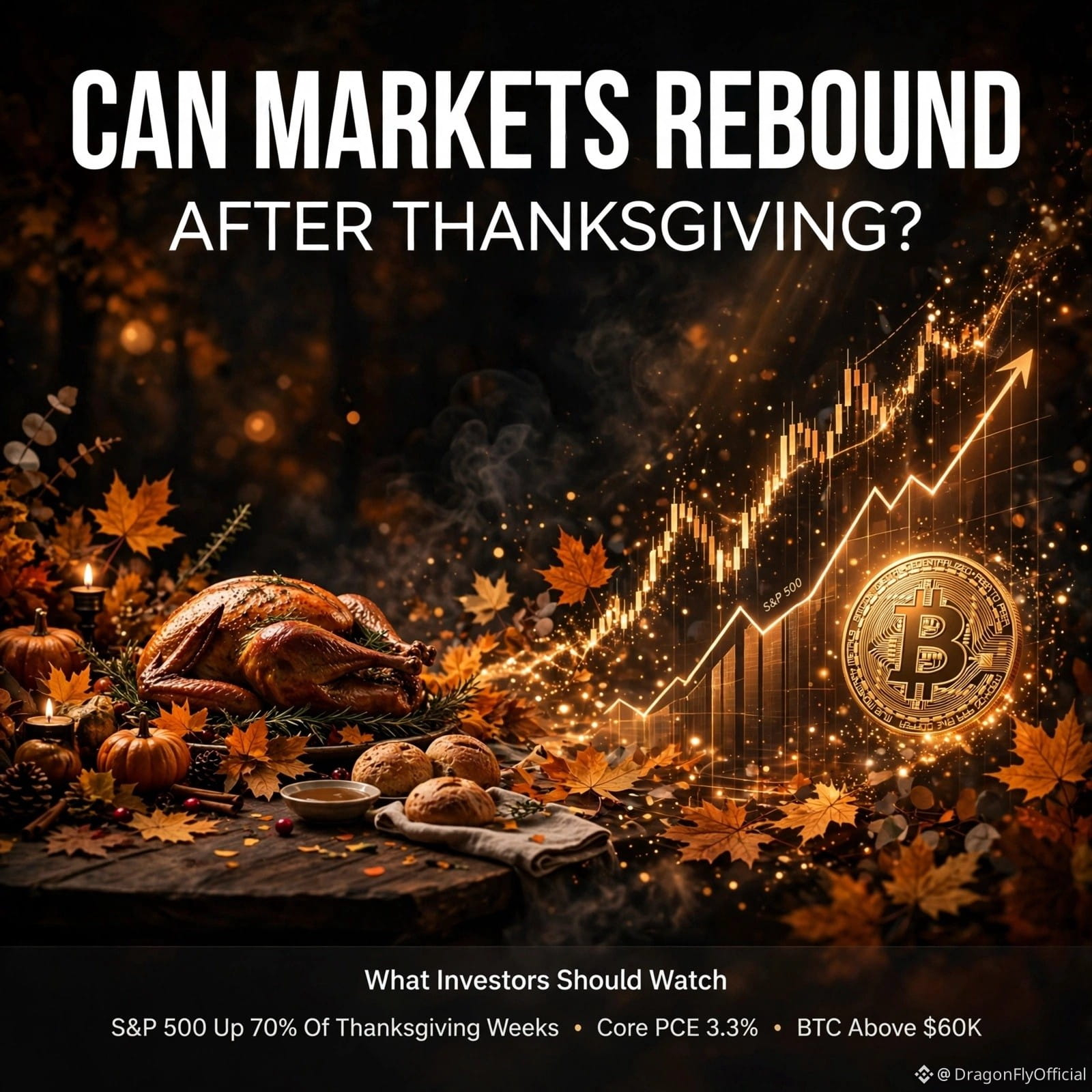
𝗖𝗮𝗻 𝗠𝗮𝗿𝗸𝗲𝘁𝘀 𝗥𝗲𝗯𝗼𝘂𝗻𝗱 𝗔𝗳𝘁𝗲𝗿 𝗧𝗵𝗮𝗻𝗸𝘀𝗴𝗶𝘃𝗶𝗻𝗴? 𝗛𝗶𝘀𝘁𝗼𝗿𝘆 𝗢𝗳𝗳𝗲𝗿𝘀 𝗛𝗼𝗽𝗲, 𝗯𝘂𝘁 𝗥𝗶𝘀𝗸𝘀 𝗥𝗲𝗺𝗮𝗶𝗻
📊 𝗛𝗶𝘀𝘁𝗼𝗿𝗶𝗰𝗮𝗹 𝗘𝗱𝗴𝗲
The S&P 500 finished higher in 40 of the past 50 Thanksgiving trading periods between 1976 and 2025, with an average gain of 0.40%. That gives investors a reason to watch for a recovery, but history is not a guarantee of what happens next.
✅ 𝗥𝗲𝗮𝘀𝗼𝗻𝘀 𝗳𝗼𝗿 𝗛𝗼𝗽𝗲
Markets have already shown that buyers are willing to step in after heavy selling. On November 25, US stocks recovered from much deeper early losses. The S&P 500 finished down just 0.3% after falling as much as 3.2% during the session.
Lower Treasury yields and improving sentiment around proposed US tariffs could also support a recovery if uncertainty continues to fade.
⚠️ 𝗠𝗮𝗷𝗼𝗿 𝗢𝗯𝘀𝘁𝗮𝗰𝗹𝗲𝘀
The recovery still faces serious challenges. Persistent inflation, expectations of further Federal Reserve rate increases, trade tensions and concerns about expensive AI investments remain important risks.
#CanMarketsReboundAfterThanksgiving?