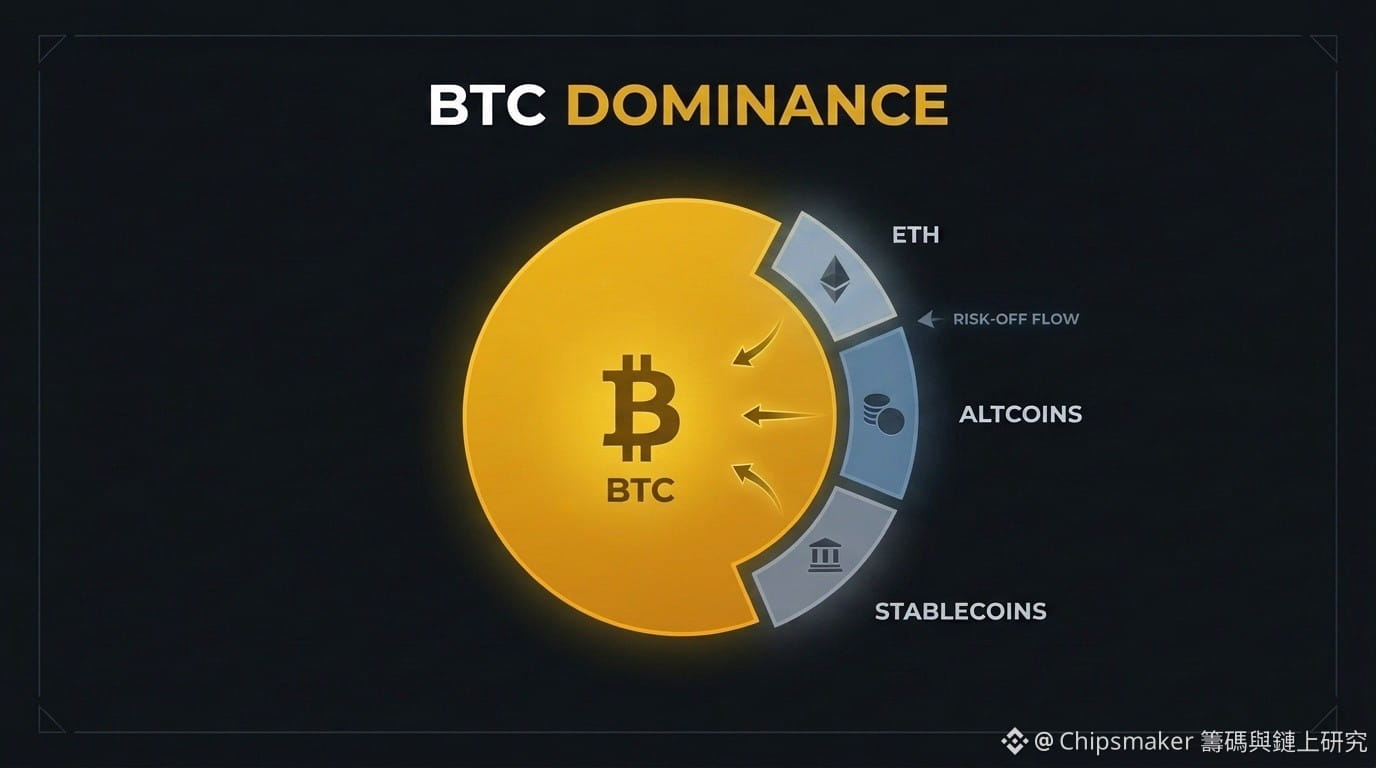
Bitcoin has bounced back above $60,000 today, so why do the Ethereum and other coins I’m holding still seem unable to gain ground?
To understand this divergence, start by looking at Bitcoin dominance (BTC.D), which measures Bitcoin’s market cap as a share of the total crypto market cap. Think of the crypto market as a series of pools of different sizes: when sentiment is optimistic, money flows into the more volatile altcoin pools; when the mood turns cautious, funds retreat to Bitcoin’s deepest, most liquid pool for safety.
Today’s market is a case in point. According to CoinGecko, the global crypto market cap is about $2.1 trillion. BTC.D is as high as 57.89%, while ETH’s share has fallen to 9.8%. Binance spot prices show BTC rebounding to $60,658, while ETH is still around $1,691, putting the ETH/BTC exchange rate at about 0.0279. With the Alternative.me Fear and Greed Index at just 11, investors would rather hold Bitcoin than risk jumping into smaller coins.
A common misconception is that a falling BTC.D means altcoin season has arrived. In fact, BTC.D only measures relative share; it doesn’t indicate absolute price movements. In a falling market, altcoins may drop even harder than BTC, pushing BTC.D higher. If Bitcoin plunges and investors move entirely into stablecoins to wait things out, BTC.D can fall too—that’s just a broad retreat from the market. To interpret it, look at total market cap and stablecoin dominance as well.
In short: BTC.D isn’t a bull-or-bear signal; it’s a gauge of the market’s risk appetite.
These are my personal views and do not constitute investment advice.
$BTC $ETH #CryptoEducation