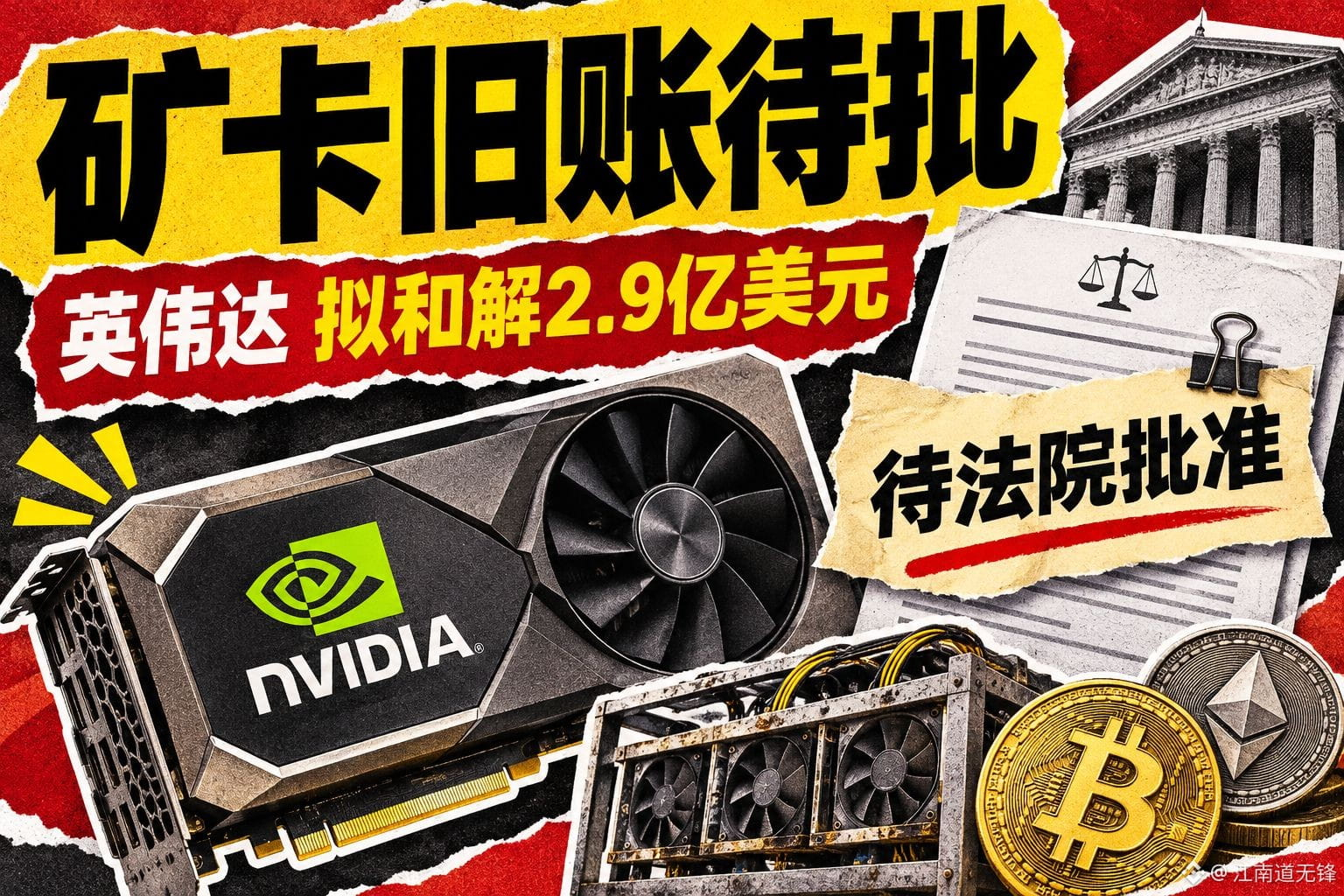
#NVDAUSDT NVIDIA mining GPU disclosure lawsuit reaches proposed settlement
NVIDIA is busy selling AI chips, but an old issue from the graphics card mining era has resurfaced.
The law firm representing investors announced that a proposed $290 million settlement has been reached in a shareholder class action over NVIDIA’s disclosures of cryptocurrency mining revenue. The agreement still needs court approval, so it is too soon to say the lawsuit is completely over.
The case dates back to 2017–2018. The plaintiffs alleged that NVIDIA did not adequately explain how dependent sales of its gaming graphics cards were on demand for cryptocurrency mining, making it difficult for investors to assess the risk of fluctuations in that demand.
These are allegations by the plaintiffs; reaching a proposed settlement does not mean the court has found NVIDIA liable for them.
Today, the mining GPUs in the story have been replaced by AI servers, but investors are asking familiar questions: Where is revenue growth coming from? How long can customer demand last? How much could the company’s results be affected if demand cools?
Of course, mining and AI are different markets, and the cycle back then cannot be used to directly predict today’s stock price. For traders, good-looking earnings figures are only a first impression. Understanding the sources of growth and the risks is what tells you what kind of story you’re buying into.
Do you think today’s market has a clearer picture of AI demand than it had of mining GPU demand back then?$NVDA