🚨 AI DEBT CRISIS IS GETTING WORSE.
Wall Street is becoming increasingly worried about the massive debt behind the AI boom.
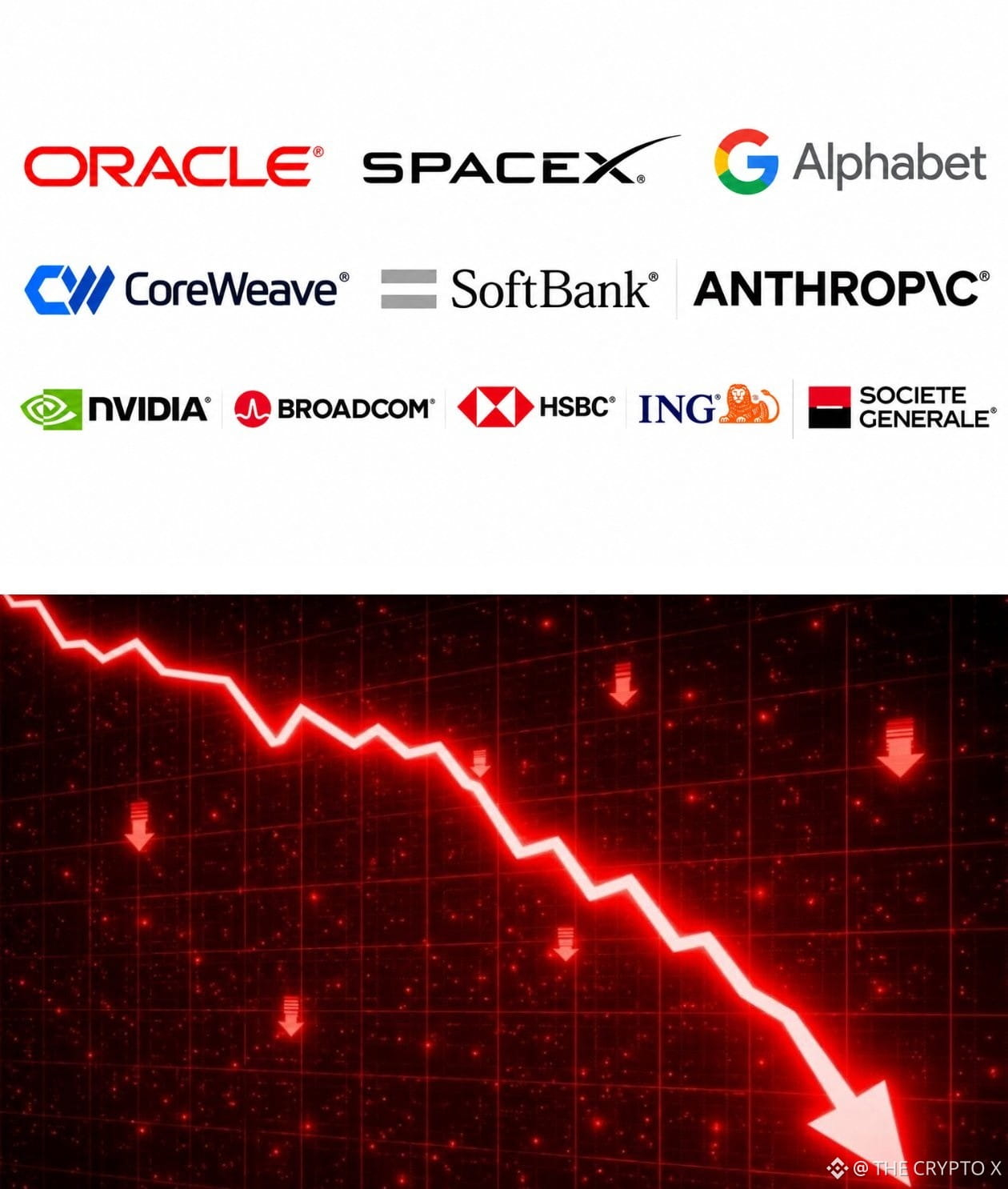
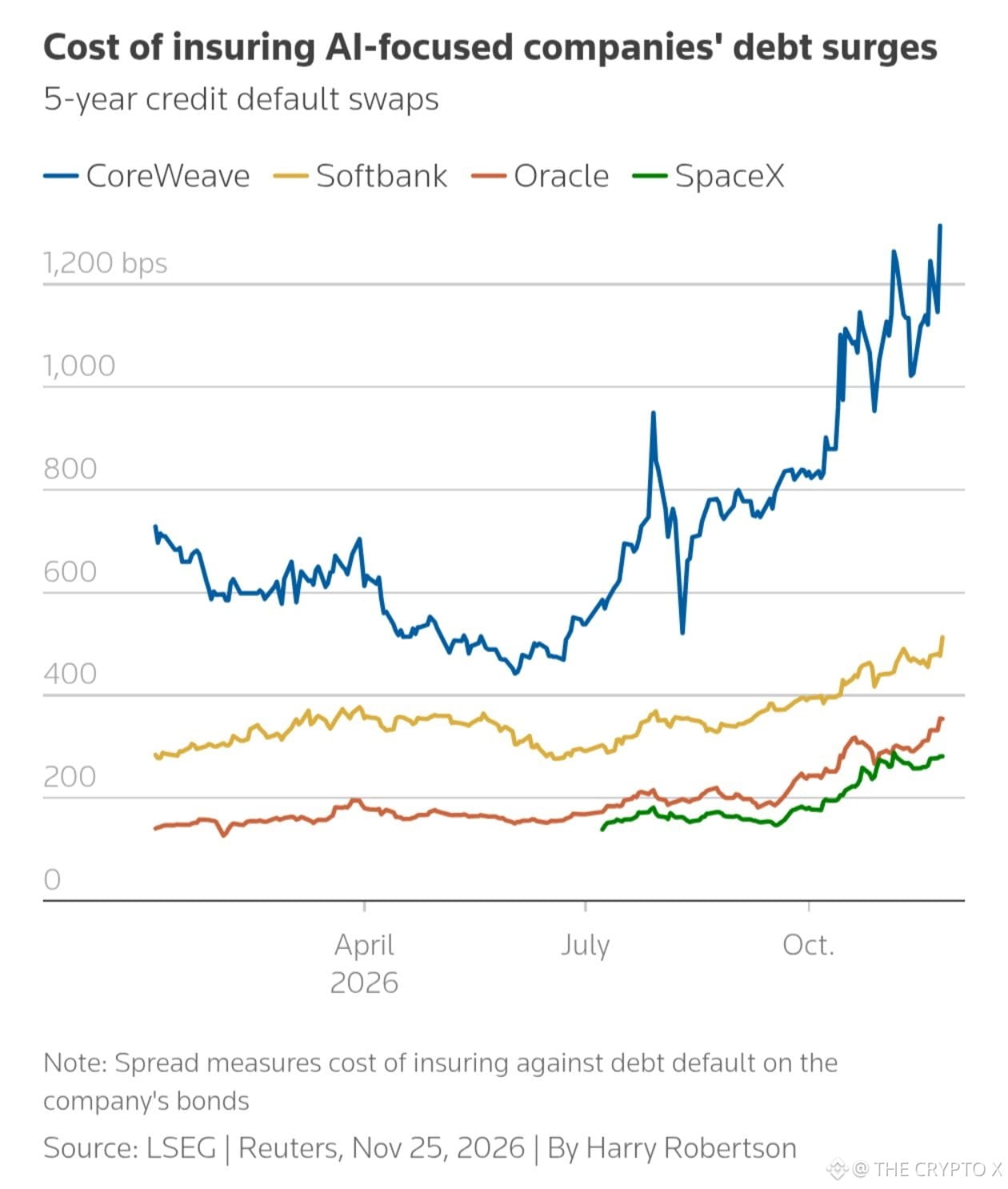
The cost of insuring debt from Oracle, SpaceX, Alphabet and CoreWeave against default has reportedly hit RECORD HIGHS.
Even Nvidia's massive stock rally following Jensen Huang's return failed to calm the AI debt market.
And the numbers are getting concerning.
• CoreWeave's estimated 5-year default probability reached 68%, based on credit market pricing.
• SoftBank's debt insurance costs reached 501 basis points, their highest level since October 2022.
• Oracle, Alphabet and SpaceX have also seen record levels in their debt insurance costs.
But Anthropic could be facing an even bigger problem.
Just days after its record breaking IPO, bond investors expect Anthropic's debt to receive a JUNK credit rating, according to WSJ.
The company has committed to spending roughly $900 BILLION on AI computing power over the coming years.
Despite generating $17 BILLION in revenue last quarter, Anthropic is still losing money because of its enormous computing costs.
It had $96 BILLION in cash before the IPO, but its future spending commitments are nearly 10 times that amount.
A junk rating would make borrowing more expensive and could limit its access to the $8.6 TRILLION investment-grade bond market.
And Anthropic isn't alone.
Nvidia and Broadcom have already guaranteed tens of billions of dollars in loans tied to AI chip purchases.
Meanwhile, major banks are trying to sell billions in data center loans as concerns about construction delays and financing risks continue to grow.
The problem is that AI companies still need hundreds of billions of dollars to complete their expansion plans.
But the lenders financing those projects are becoming more worried about whether they'll get their money back.
If borrowing costs continue rising, companies could be forced to delay projects, cut spending or seek more expensive financing.
And that could hit everyone from AI developers to chipmakers and data center operators.
$SSV
$MANTRA
$ELSA