



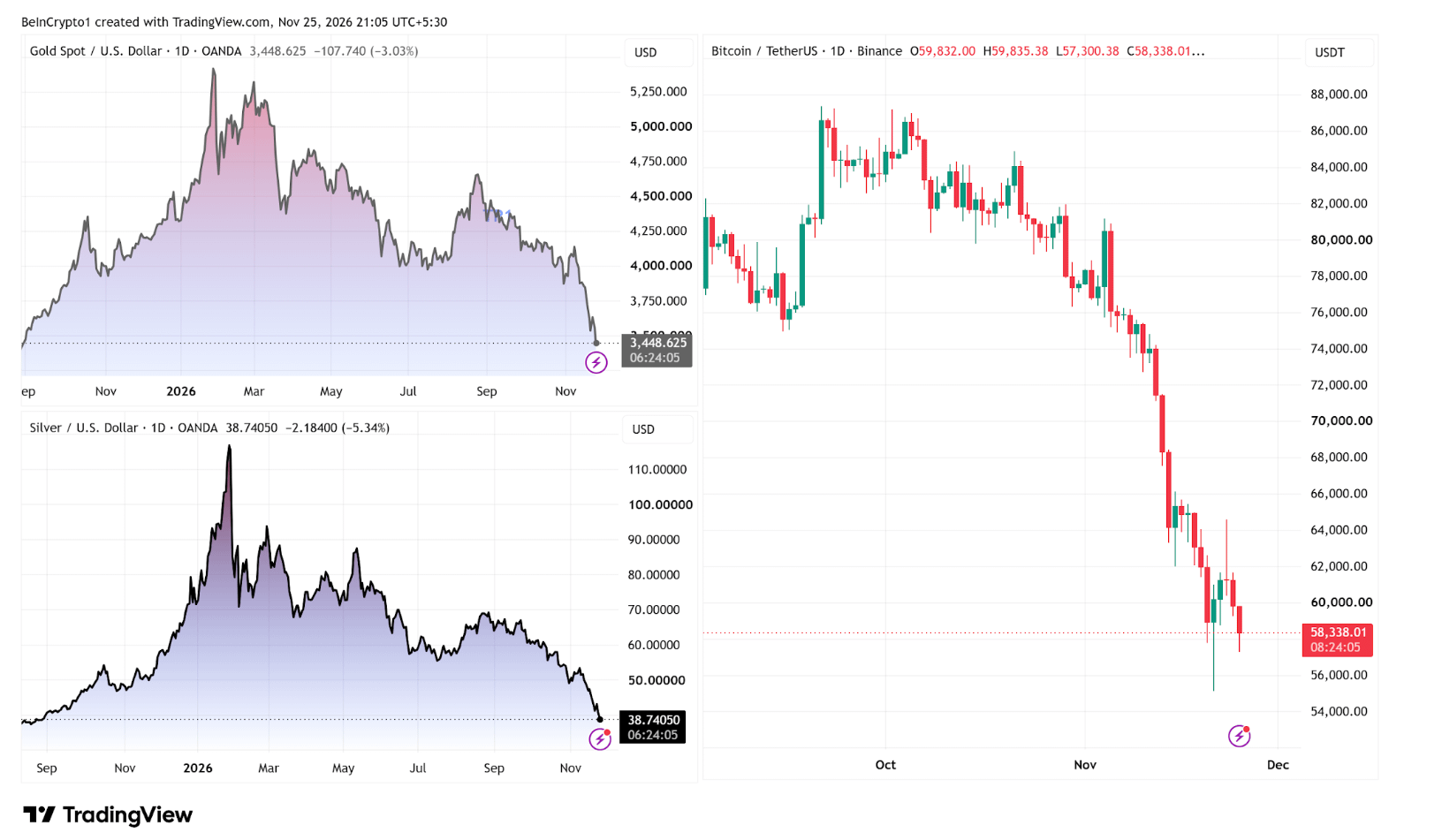
PCE data released on Wednesday showed that U.S. inflation remains elevated. The economy is getting more expensive with each passing month. Bitcoin, gold, and silver prices fell again after the report.
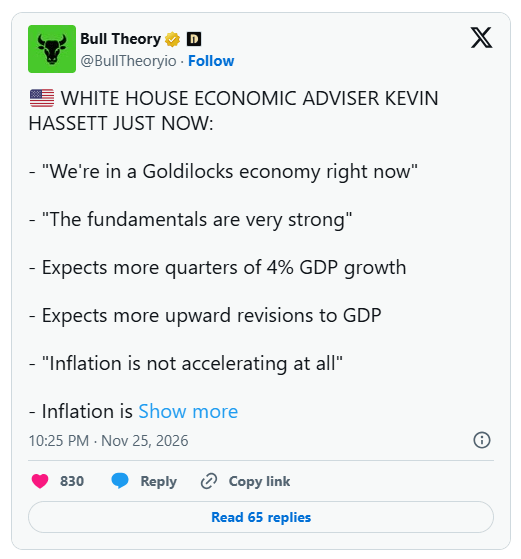
Meanwhile, White House economic adviser Kevin Hassett called it a "moderate" economy. He noted that investors are rapidly selling off risky assets.
There is currently a 97.8% chance that the Federal Reserve (Fed) will raise interest rates on December 9, increasing borrowing costs for U.S. households and businesses.
How High Will Inflation in the U.S. Be as December 2026 Begins?
The Federal Reserve (Fed) targets 2% inflation. October marked the 68th consecutive month that inflation remained above that target.
A “moderate” economy grows fast enough to create jobs, but not so fast that prices soar.
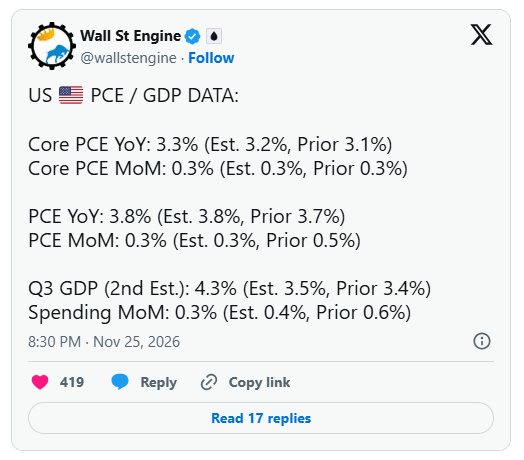
On growth, the government revised its third-quarter GDP forecast up to an annualized 4.3% from 3.4%, far exceeding the 3.5% forecast.
Hassett said he expects more quarters of 4% growth and further upward revisions.
“The fundamentals are very strong,” Hassett said. According to the Bureau of Economic Analysis (BEA), inflation-adjusted disposable income—the money households keep after taxes—increased 0.5% in October.
The Personal Consumption Expenditures (PCE) price index, the Federal Reserve’s (Fed) preferred measure, rose 3.8% year over year in October.
The core PCE index, which excludes food and energy, rose to 3.3% from 3.1% in September.
Hassett said inflation “may be a little above target” but “is not accelerating at all.”
Income increased 0.7%, helped by a one-time Medicare premium refund. Spending rose just 0.3% and was unchanged after adjusting for inflation.
Fed Poised to Raise Interest Rates Despite White House Opposition.
Under Chair Kevin Warsh, the Federal Reserve (Fed) raised interest rates for the first time in three years in September. The move went against President Donald Trump’s call for rate cuts.
Hassett said Wednesday that he expects Warsh and the Federal Reserve to continue relying on the data. Futures traders interpret that data as grounds for a second rate hike.
On November 12, BeInCrypto reported that traders had fully priced in a price increase after October inflation came in high.
The sell-off affected Bitcoin, gold and silver, which are non-yielding assets.
Federal Reserve Governor Christopher Waller told CNBC on November 18 that another half-percentage-point rate hike may be necessary.
The December 9 decision will show whether the Federal Reserve (Fed) views these figures as ideal inflation levels or an issue that still needs to be addressed.