
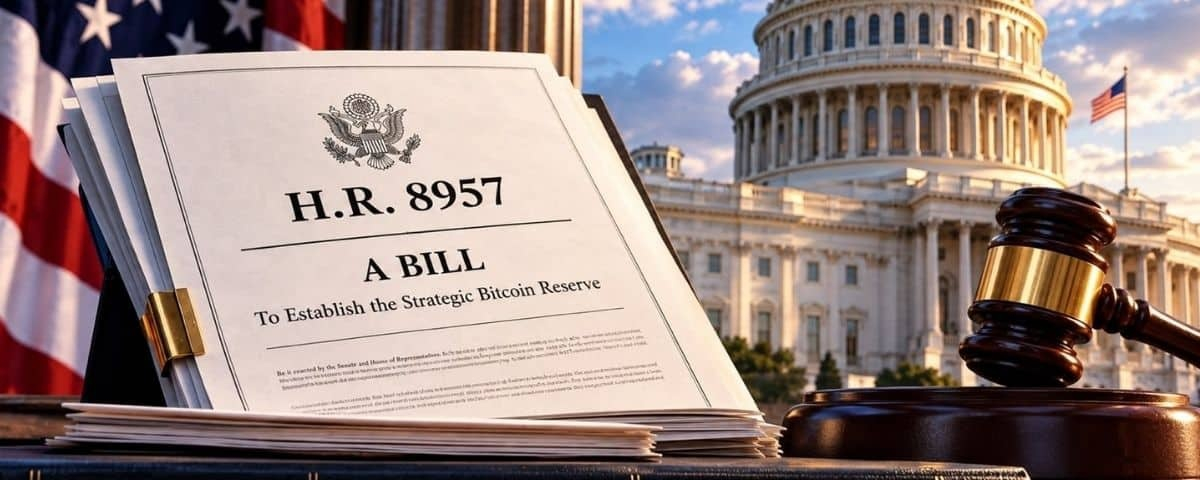

A legislative proposal in the United States has made headlines with claims of a supposed 20-year “shield” for Bitcoin. However, the reality is more nuanced—and less definitive—than the viral message suggests.
The bill H.R. 8957, called the American Reserve Modernization Act of 2026, was introduced by Representative Nick Begich. According to the official Congress.gov record, on November 24, 2026, it was reported with amendments by the House Financial Services Committee and placed on the Union Calendar, No. 789.
What does it propose?
• Create a Strategic Bitcoin Reserve within the Department of the Treasury.
• Centralize and account for Bitcoin under the control of various federal agencies.
• Hold for a minimum of 20 years any Bitcoin deposited into that reserve. During that period, the text prohibits selling, exchanging, auctioning, or using it as collateral, except as provided by law.
• Establish annual reports, independent audits, and a public proof-of-reserves system.
• Maintain a separate reserve for other digital assets seized or controlled by the Government.
The key point is that it is not yet a law. The proposal had not been approved by the full House or the Senate, nor signed into law by the president. Nor does it, by itself, mean that the United States will buy large amounts of BTC on the market.
The measure focuses primarily on how to safeguard and manage Bitcoin that the Government already owns or may legally acquire. Therefore, claiming that Washington has already “locked up” its bitcoins or that government selling pressure has disappeared is premature: that would happen only if the bill completes the entire legislative process and takes effect.
In short: H.R. 8957 represents a significant legislative step toward a possible strategic reserve, but it remains a proposal under consideration—not a final policy or a guarantee regarding the price of Bitcoin.
Official source: Congress.gov — H.R. 8957
https://www.congress.gov/bill/119th-congress/house-bill/8957
Bitcoin #BTC #Cripto #EstadosUnidos #Regulación #ReservaEstratégica