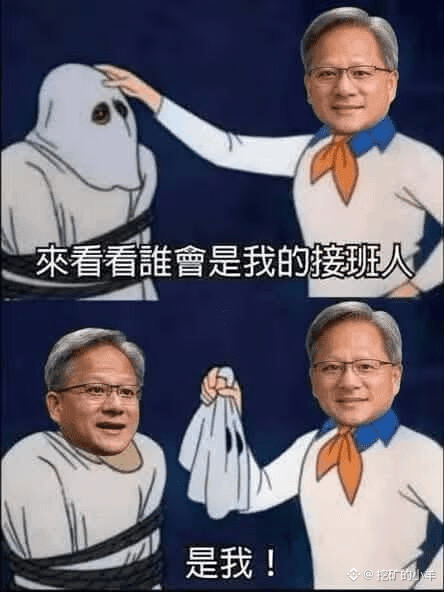
Many people are still wondering whether Jensen Huang is under investigation.
But what’s really worth paying attention to is the signal sent by the U.S. government.
Vance made it clear that Huang is not currently under investigation and does not need a pardon.
At the same time, he stressed that Huang’s return was a decision made by Nvidia’s board, and said it was also an opportunity for Nvidia to comply with U.S. export controls.
Taken together, these remarks carry a lot of weight.
What the U.S. really cares about may not be replacing a CEO, but ensuring that the AI chip industry remains within the U.S. regulatory framework.
What is Nvidia?
It’s no ordinary tech company.
It’s one of the most important infrastructure providers of the AI era.
Where GPUs are sold, who can access advanced computing power, and which countries can use AI technology—these issues have long gone beyond the realm of business.
They’ve become part of national competition.
So, to some extent, Huang’s return gives the market a degree of certainty for now:
The CEO’s position is stable, but the pressure from export controls hasn’t gone away.
For tech stocks, the biggest fear isn’t strict policies.
It’s policies changing suddenly.
The same is true for crypto markets.
BTC, ETH, stablecoins, and exchanges are increasingly affected by global regulatory policies.
Today, the market rebounded after the news reversed.
But over the long term, market trends are still driven by policy, liquidity, and capital flows.
Short-term traders trade the news; long-term investors invest in the rules.