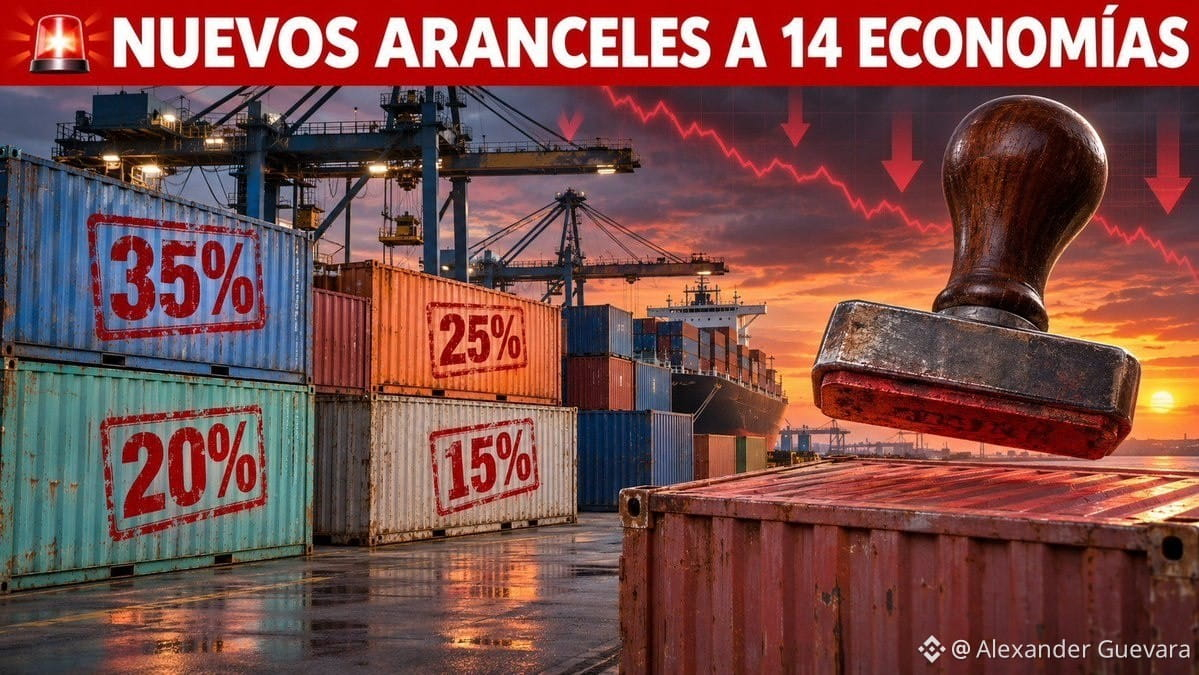
🚨 BREAKING 🚨
THE UNITED STATES PROPOSES NEW TARIFFS OF UP TO 35% ON 14 ECONOMIES. AND MARKETS ARE FALLING SHARPLY
👀 This comes after core PCE inflation, the measure the Federal Reserve watches most closely, came in higher than expected.
What happened, and how is it affecting financial markets? 👇
🇺🇸 The United States Trade Office proposed new tariffs on 14 economies.
🌏 They include China, India, the European Union, and Japan.
🏭 The reason given: those countries produce far more than is demanded, with subsidies, harming U.S. industry.
🎯 How much would each one get? (proposed maximum rates)
■ Vietnam: up to 35%.
■ India: up to 25%.
■ China and Singapore: up to 20%.
■ Bangladesh, Cambodia, Indonesia, Malaysia, and Thailand: up to 18%.
■ European Union, Japan, South Korea, Switzerland, and Taiwan: 15%.
🧾 What is a tariff? A tax on goods entering a country.
💸 It is paid by the importer and often ends up raising the price of the goods people buy.
📊 And it comes at the worst possible time: PCE inflation rose to 3.8% year over year, while core inflation came in at 3.3%, compared with expectations of 3.2%.
📉 How did markets react?
■ Nasdaq: fell nearly 4% at one point.
■ S&P 500: down more than 2.5%.
■ Bitcoin: down more than 4%, below $58,000.
■ The fear index (VIX) jumped 20%.
🏦 And the market is already pricing in nearly a 100% chance of a Fed rate hike in December.
🖍 One important clarification: the tariffs are still just a proposal.
🗓 The public comment period runs through January 5, with hearings starting January 25.
📍 But the bigger picture is different: the rules of global trade are being rewritten. And when the rules of trade change, the rules of money change too.
🔄 Treasury Secretary Scott Bessent had already spoken about a major global economic reordering.
🧩 Each piece that moves brings the transition to the new financial system closer.
#aranceles #EEUU #VIX #economy #TesoroEEUU $SPY $QQQ $BTC