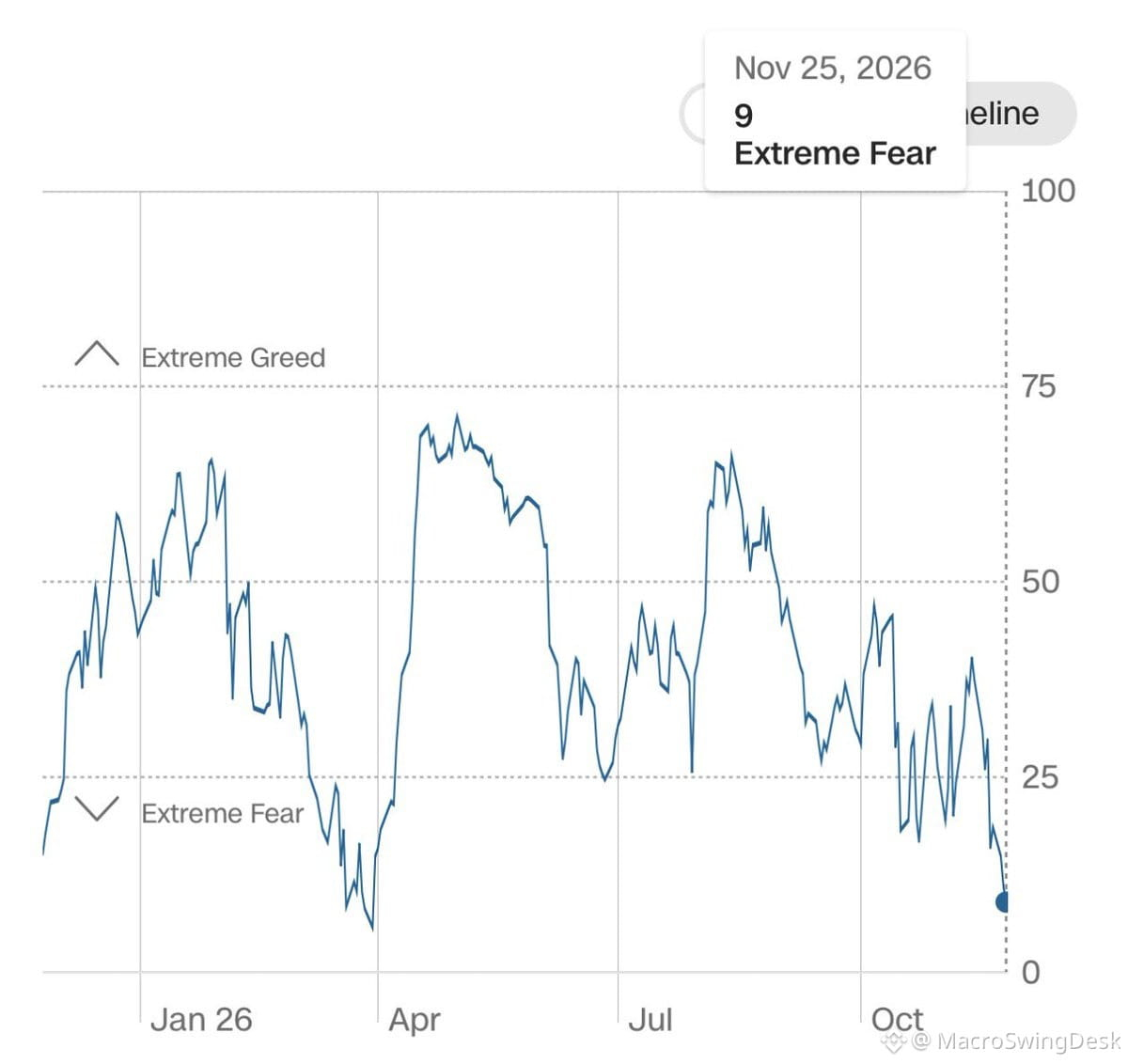
Fear Index just hit 9 — officially in Extreme Fear territory.
Historical context matters here: when the index drops below 25, the $SPY has been positive 86% of the time over the next 12 months, with an average return of +15.2% (per Mandala backtests covering the last 14 years).
This isn't a call to blindly buy the dip, but it's a reminder that panic often creates asymmetric setups. The crowd is terrified. Positioning is defensive. Sentiment is washed out.
Longer time horizons tend to favor buyers when fear peaks. If you're swing trading or building positions, this is the kind of environment where patience and conviction get rewarded — not chasing headlines or selling into weakness.
Watch for stabilization, sector rotation, and breadth improvement. Fear extremes don't guarantee immediate reversals, but they do tilt probabilities in your favor if you're willing to look past the noise.