Regarding the latest developments involving Jensen Huang and Singapore’s Megaspeed, my personal assessment is that the current situation is favorable to Huang!
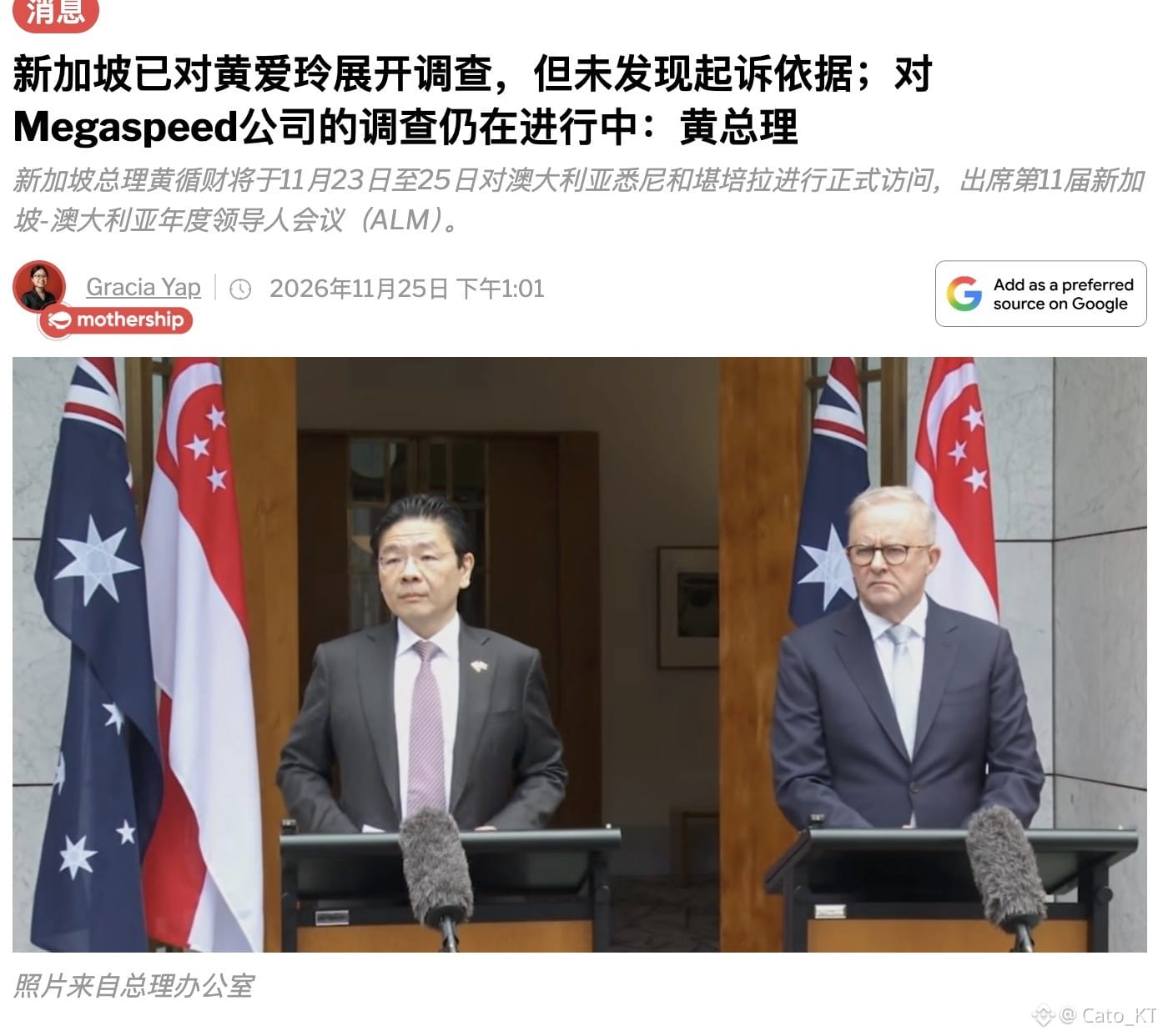
First, Singaporean officials said they still have not received all the investigative materials provided by the United States. Singapore previously released Huang Le after an investigation due to insufficient evidence. Now the United States is ordering Singapore to continue the investigation, but Singapore’s prime minister has personally acknowledged that the materials shared by the United States are incomplete.
This is rather interesting. While it doesn’t completely rule out Huang being investigated, or allow us to conclude that the Justice Department has abandoned its investigation into Huang Le and Megaspeed, the shared materials are insufficient. Were they not shared comprehensively enough, or does the United States itself lack complete information? If it’s the latter, the legal threat to Huang is greatly reduced—which is good news.
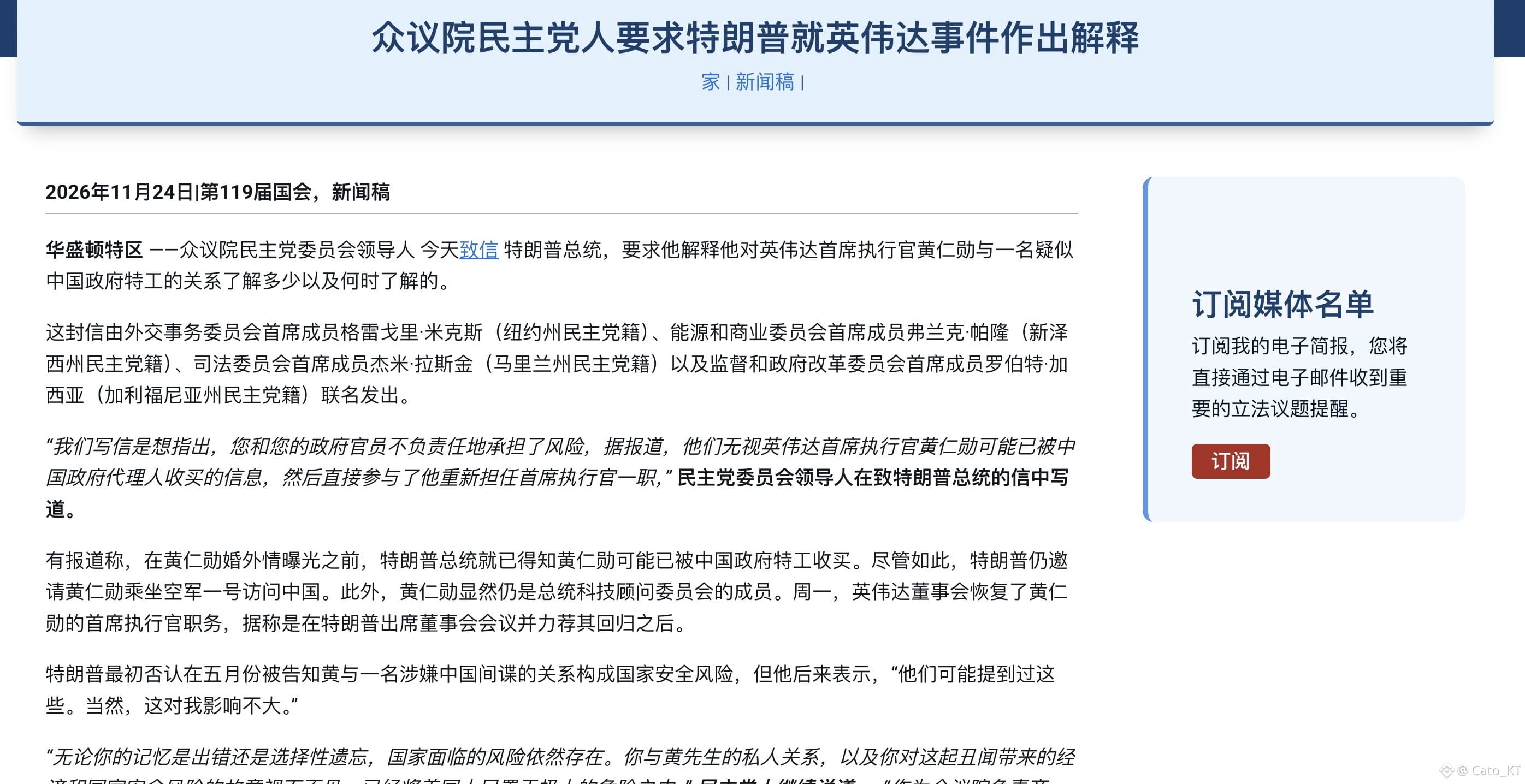
Second, four Democratic members of the U.S. House of Representatives have formally written to Trump, demanding an explanation of his role in the process of reinstating Jensen Huang.
What’s interesting about this news is that after Huang’s reinstatement, Democrats have turned their criticism toward Trump. This has, in effect, eased the personal political and legal pressure on Huang.
Taken together, these two developments suggest that Huang’s legal risks are diminishing. The investigation in Singapore has made no progress, and Democrats have redirected their criticism toward Trump. At the level of the U.S. Congress, the focus of oversight has shifted from Huang personally to NVIDIA as a company, and further to the Trump administration’s involvement.
Actually, the bigger the controversy around Huang, the better. When the public’s focus shifts away from Huang himself or NVIDIA as a company and turns to discussing regulation of the AI industry, that’s good for both Huang and NVIDIA!#黄仁勋称英伟达不需要接班人计划