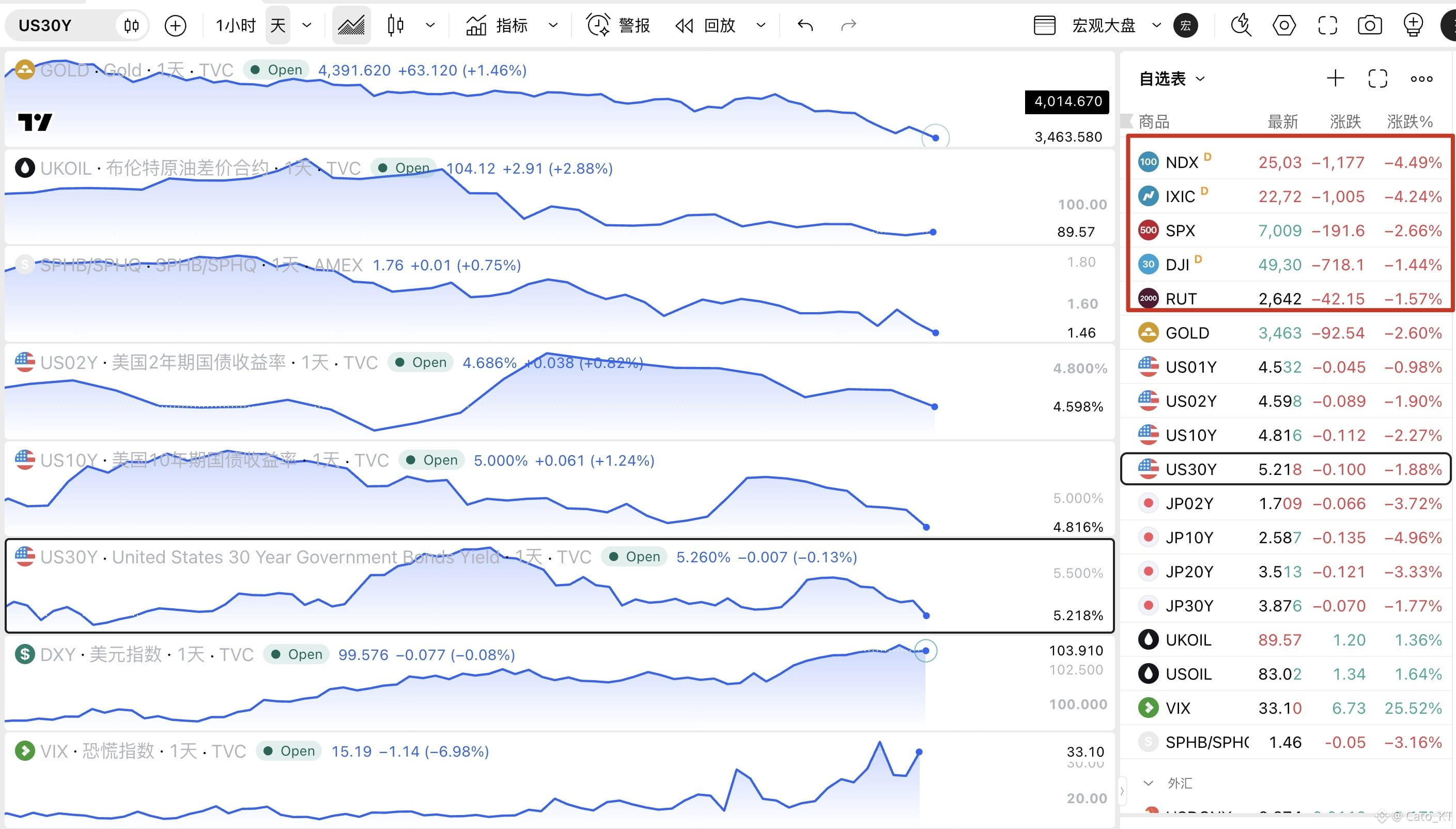
Two hours into the U.S. market session, the market appears to be pricing in the negative data impact from tonight’s PCE and GDP releases. Stocks are continuing to fall, gold is being sold off in tandem, and Treasury yields are continuing to decline—a typical flow of funds into Treasuries and the U.S. dollar.
On the one hand, this move reflects short-term risk aversion; on the other, it represents a repricing of expectations for future rate hikes. Of course, expectations for the scale and duration of rate hikes in 2027 are only being priced in preliminarily for now. The key things to watch next are the December dot plot and what Warsh says, after which the market can fully reprice its expectations.
Notably, the Nasdaq 100 and Nasdaq Composite are currently seeing the biggest declines, while the S&P 500, Dow Jones, and Russell 2000 are relatively stable. It’s clear that AI stocks are undergoing a short-term, sector-specific deleveraging.
The core issue remains the huge capital expenditures behind the AI narrative over the past two years. Even in the current Q3 earnings season, companies have yet to present a perfect ROIC plan. When macroeconomic expectations tighten and money becomes more expensive, investors demand higher valuations, while risk management around sectors and leverage also becomes stricter. That is the situation we are seeing now.
Of course, there are two sides to every story. The current proactive deleveraging also reduces volatility risk and valuation pressure under tighter rates in the future. If deleveraging is completed thoroughly at this stage, it could actually present a good buying opportunity. Keep a close eye on the period from this week through December 9!#美国核心PCE超预期,美联储加息预期增强