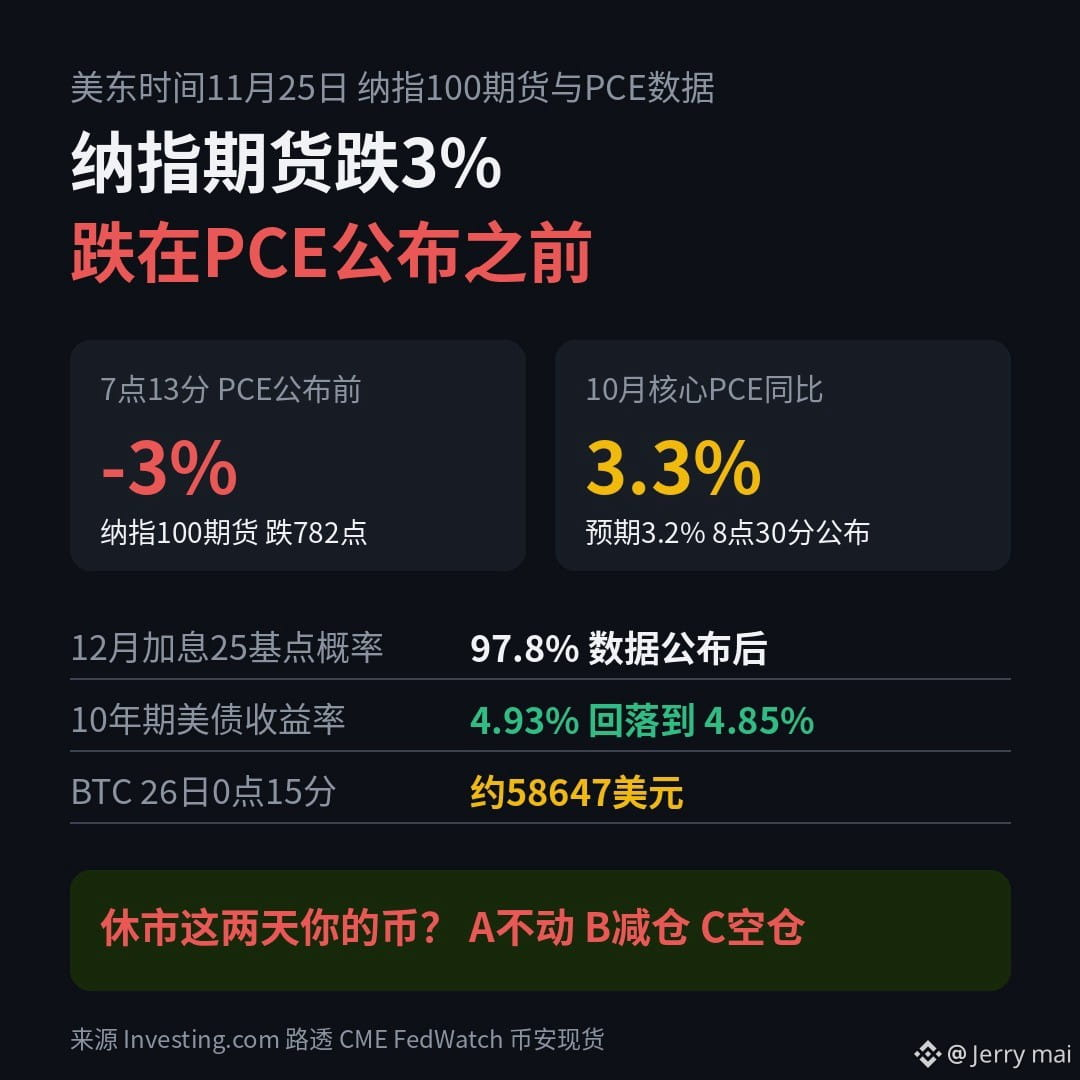
Nasdaq futures fell 3%—and most of the drop was already over before the PCE release.
At 7:13 a.m. ET on November 25, Nasdaq 100 futures were already down 782 points, or about 3%. The PCE data wasn't due out until 8:30.
The data did come in hot: core PCE was up 3.3% year over year in October, versus expectations of 3.2%.
After the release, CME FedWatch put the probability of a 25-basis-point rate hike in December at 97.8%, roughly unchanged from before the release. The 10-year Treasury yield also fell from 4.93% to 4.85% in premarket trading.
Blaming the sharp sell-off on PCE doesn't add up—the timing and price action don't match. The drag came from the AI trade.
By 9:53 a.m., after the open, the Nasdaq Composite was down 4.15%, and Nvidia had fallen 8.6%. Reuters reported that the Nasdaq 100 had at one point dropped 20% from its record closing high. Art Hogan of B. Riley said the headwind for tech stocks was how much data center construction would slow.
The same day, the U.S. also proposed imposing additional tariffs on 14 major trading partners, with China facing an extra 20%. This is still just a proposal; the list and tariff rates will have to wait for the official document.
$BTC Binance spot was trading near $58,647 at 12:15 a.m. Beijing time on the 26th, with a 24-hour low of $57,300.
U.S. stocks are closed on Thursday for Thanksgiving and will close early on Friday. Bitcoin will continue trading around the clock over those two days.
Crypto traders are used to looking to CPI and PCE for direction. This week, the market is pricing in AI capital spending and tariffs; a hotter-than-expected inflation report barely moved rate-hike expectations.
What are you doing with your crypto during the two days the U.S. stock market is closed?
A Holding on
B Sold some
C Already in cash
#Nasdaq futures down over 3% #美股 #BTC