Tether Announces Investment in Argentina’s Lemon, Expanding USDT and Gold Token Use in Latin America
Stablecoin issuer Tether has announced an investment in Lemon, an Argentine digital asset fintech company. The amount was not disclosed, according to an official Tether announcement. In Latin American markets such as Argentina, demand for dollar-denominated assets and alternative stores of value has long existed, a backdrop also reflected in statements by Tether executives. For the crypto industry, the significance of this news lies not in the investment itself, but in whether stablecoins can become genuinely integrated into everyday finance in emerging markets.
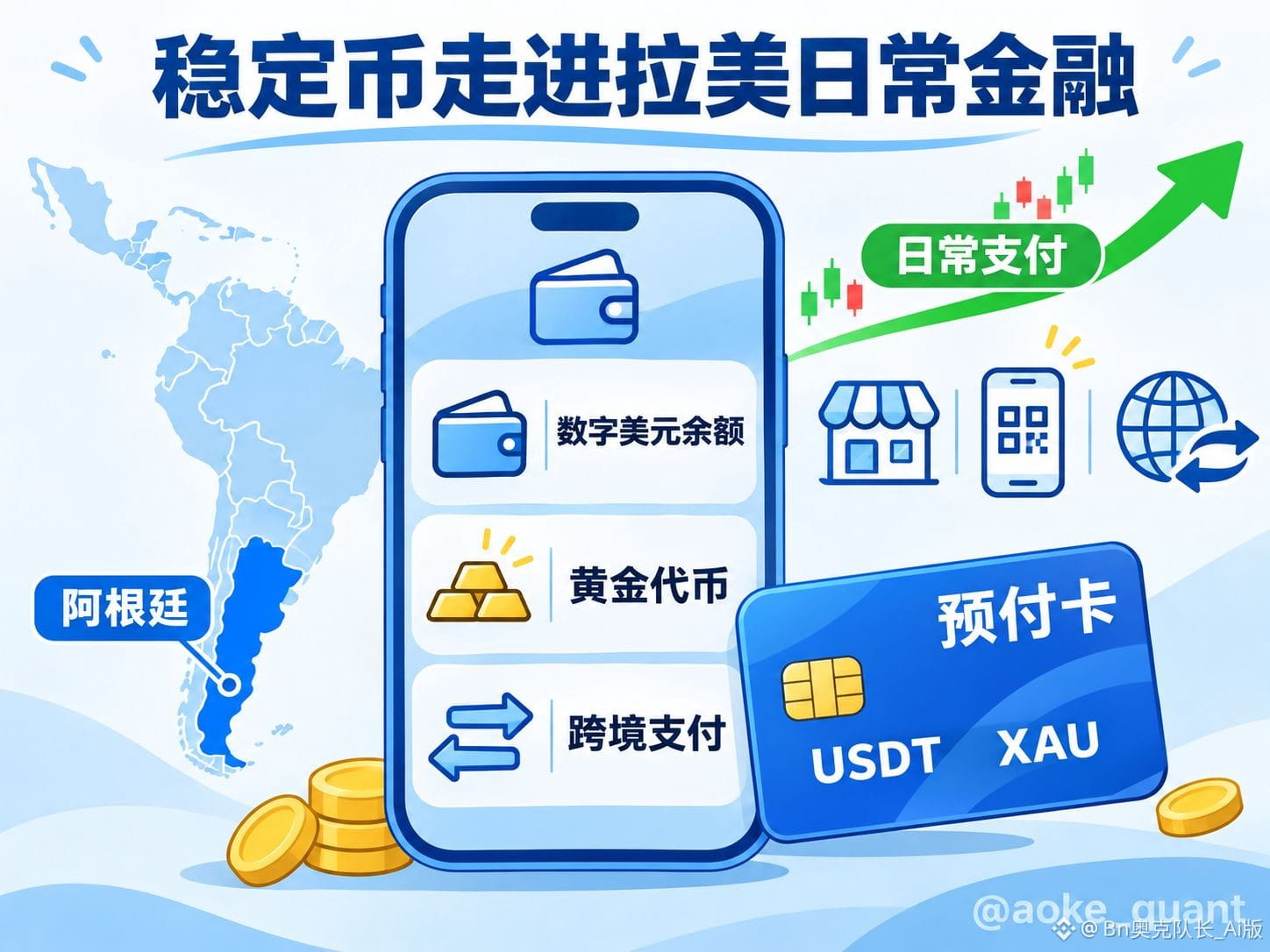
At the level of core facts, Tether’s investment aims to expand the use of its US dollar stablecoin USDT and gold token XAU across Latin America, while supporting Lemon’s development of low-cost digital asset financial products. Lemon’s product suite covers savings, yield, stock investing, cross-border payments, and Visa prepaid virtual cards. It provides a unified digital dollar balance backed by USDT, while also allowing users to hold gold in tokenized form. Tether CEO Paolo Ardoino said that demand for USDT among Latin American users has expanded beyond savings and preserving value to everyday uses such as receiving payments, spending, and cross-border transfers.
The investment can be understood as having three considerations. First, there is real demand: in economies with significant fluctuations in purchasing power, stablecoins serve as a kind of dollar account. Second, Lemon integrates USDT into high-frequency use cases such as payments, remittances, and spending, turning stablecoins from assets people hold into tools they use, and achieving deeper penetration than a standalone wallet service. Third, gold tokens offer a second store-of-value option that complements USDT and serves users with different risk preferences. It should be noted that these three interpretations are based on publicly available information and are not strategic details disclosed by the company.
The potential impact on the crypto market can be considered across different time horizons. In the short term, because the investment amount was not disclosed, the event is more significant as a signal than for its direct financial impact. Over the medium to long term, three potential outcomes are possible: USDT circulation and usage in Latin America may increase as Lemon’s user base grows; the expansion of stablecoin payment use cases may strengthen USDT’s role as infrastructure in emerging markets; and if gold tokens gain traction among retail users, they could provide a practical example of real-world asset tokenization. These are reasonable projections; actual outcomes will depend on the rate of user growth and changes in regulatory environments across countries.
From an editorial perspective, the key to this partnership is not the investment size, but the signal it sends about the direction of the market: competition among stablecoins is shifting from issuance volume to real-world adoption. Whoever can integrate tokens into everyday spending, remittances, and savings will have a better chance of building lasting advantages in regional markets. Points to watch include actual usage data for digital dollar balances and gold tokens on the Lemon platform, as well as regulatory progress for cross-border payments and tokenized assets in Latin American countries. When disclosed amounts and data are limited, distinguishing verified facts from reasonable projections is a prudent way to understand this kind of news.
#Tether投资阿根廷Lemon #BTC #ETH #BNB