
The saga of “Jensen Huang resigning and then making a lightning-fast comeback”—is it truly a top-tier script from the capital markets, or a real storm amid geopolitical tensions? 📉📈
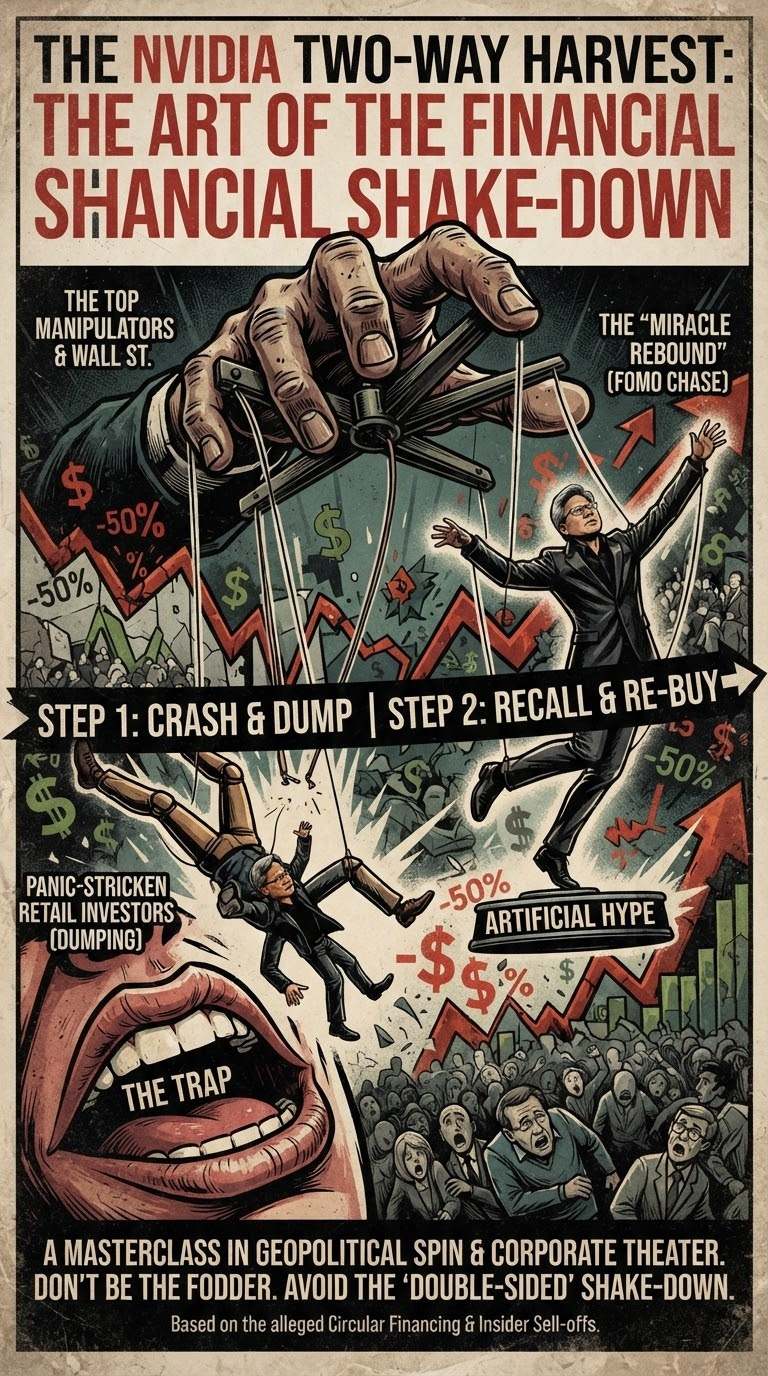
Nvidia’s stock has been on a roller coaster lately. First, news of an executive scandal and a sudden resignation sent shares plunging. Less than two weeks later, the board unanimously approved Jensen Huang’s rapid return, driving a strong market rebound. A theory immediately gained traction: “This is nothing but a financial scam masterminded by Wall Street and top capitalists—they short first, then go long, squeezing retail investors on both sides!”
🤔But if we take a longer view and calmly examine things from the opposite perspective, simply blaming it all on “financial manipulation” may underestimate the deeper power struggle behind it.
These three perspectives will help you see what’s really behind this storm:
1. No four-trillion-dollar giant would commit “political and legal suicide” just to make a quick buck
If this were merely about creating volatility to fleece retail investors, the price would be far too high.
Nvidia is currently facing more than just stock-price volatility: there are multiple congressional hearings in both chambers of the U.S. Congress, investigations by the attorneys general of 17 states, and allegations of possible accounting improprieties and chip smuggling.
For a company valued at over four trillion dollars, these political and legal risks are “live ammunition” that could shake it to its foundations—not a show financial institutions could easily stage just to profit from short-term price swings.
👀
2. The real battlefield isn’t Wall Street—it’s the hawk-dove showdown in Washington
Rather than a financial shake-down, this looks more like a direct collision between geopolitical and business interests. At the heart of the issue is a struggle within the U.S. government between “China hawks” (who favor a total blockade on advanced technology) and “business doves” (who want to extract profits from the Chinese market). Jensen Huang’s staying or leaving directly affects Chinese customers’ confidence in placing orders and the intensity of export controls.
The board’s dramatic change of heart in just a few days wasn’t because the script had already been written. It was 💥 because reality had brutally proved that without Jensen Huang, Nvidia simply couldn’t function under the combined pressure of politics and the market.
3. Retail investors are often fleeced not because there’s a “market manipulator,” but because of “emotional leverage”
There will always be people in financial markets who use news to take long or short positions. That’s called “how the market works,” not a “scam.”
Top institutions make money from information asymmetries and risk pricing. Most retail investors feel they’re being “fleeced in both directions” because they panic-sell at the bottom, then chase the rally after good news and buy at the top.
💡 Conclusion
Conspiracy theories are compelling because they offer a simple explanation for chaos. But the real world is often harsher: this wasn’t a perfectly orchestrated scam, but a crisis-communications effort and power struggle teetering on the brink of getting out of control. In an era when giants clash, understanding the political and business logic behind events will protect your money far better than guessing what the market manipulators are up to.
#NvidiaStorm #JensenHuangReturns #ContrarianThinking #CapitalMarketsReality #GeopoliticalRivalry #DontBeAnEmotionalBagholder #BattleForAIDominance #美股觀察 $BTC $NVDAB $NVDA.US