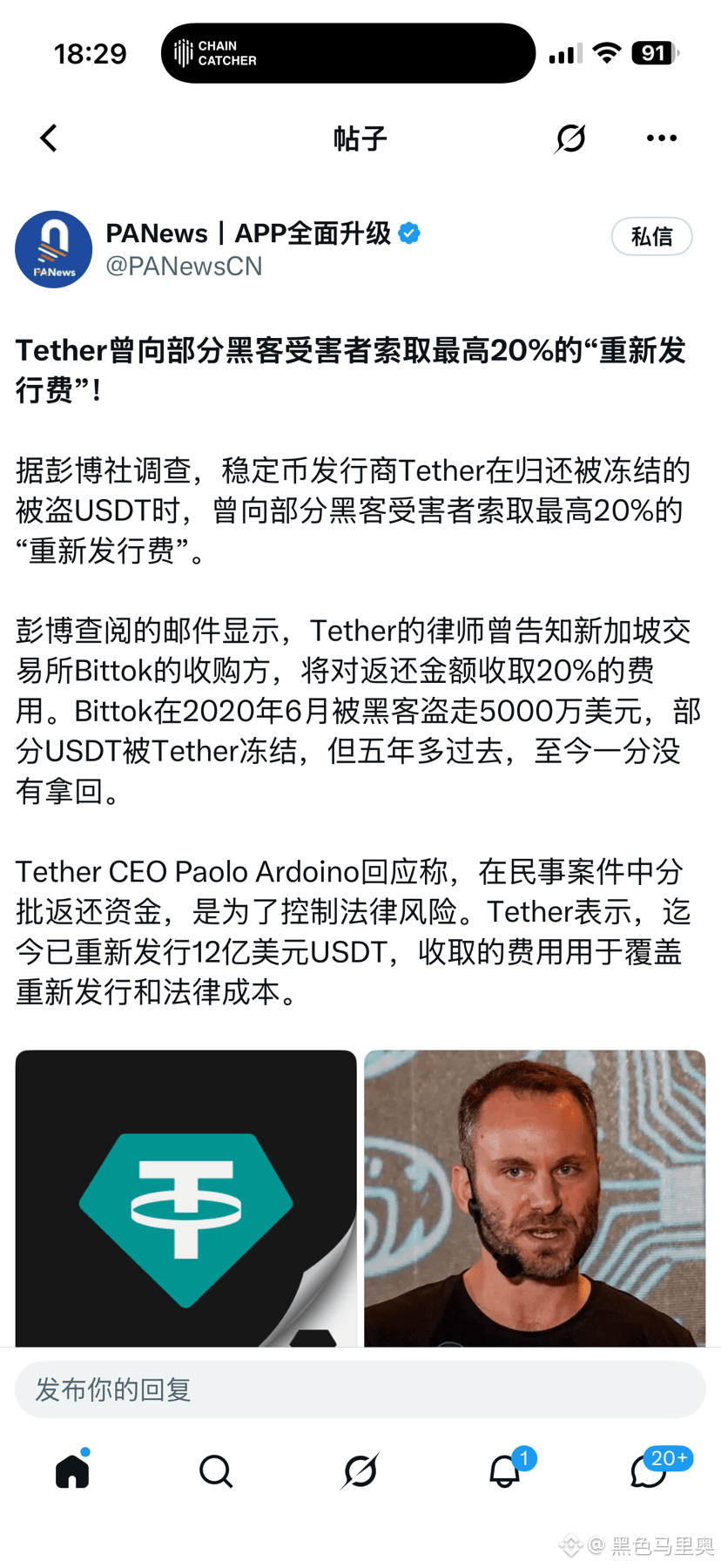
Tether has recently found itself back in the spotlight.
Bloomberg recently reported that it had demanded a reissuance fee of up to 20% in USDT from some victims of hacking attacks.
There is some background to this story.
Back in 2020, the Singaporean exchange Bittok was hacked, losing around $50 million. Tether subsequently froze some of the stolen USDT to prevent the hackers from moving the funds further.
But the portion frozen by Tether was, in principle, Bittok’s money—and it has never been returned to Bittok.
Later, the company that acquired Bittok sought to recover the frozen funds. Tether’s lawyers said that if the USDT were to be reissued and returned, a 20% fee would be charged based on the amount actually returned.
In other words, if $10 million were ultimately recovered, $2 million would have to be paid to Tether.
Neither side is backing down.
More than five years have passed, and the USDT frozen from Bittok has still not been returned.
Besides Bittok, there have been several other undisclosed cases in which a 20% fee was charged, but they were not made public due to legal issues.
Tether’s explanation is that the fee is mainly intended to cover the costs of verifying ownership and dealing with legal disputes related to stolen assets.
But the market is now questioning the rationale and basis for Tether taking a 20% cut of the amount returned.
Tether itself has the ability to freeze USDT held by hackers and also controls the authority to reissue it—in effect, using its dominant position to bully its customers.