At this time last week, I wrote that none of the three figures—the tariff rate, the exemption list, and the effective date—had been finalized, and that the amount of the increase was still just a news report. Today, all three figures came out together.
The Office of the U.S. Trade Representative concluded its overcapacity investigations into 16 economies and, on November 25, proposed raising tariffs on 14 of them. China: 20%. Vietnam: 20%. For the EU, Japan, and South Korea, which have signed trade agreements, the total tariff rate, including the new tariffs, will not exceed 15%.
China is the only one facing stacked tariffs: the 20% is added on top of the 25% imposed in 2018 over forced technology transfers. The total tariff rate on some goods exceeds 40%. Semiconductors, automobiles, steel, and aluminum are exempt.
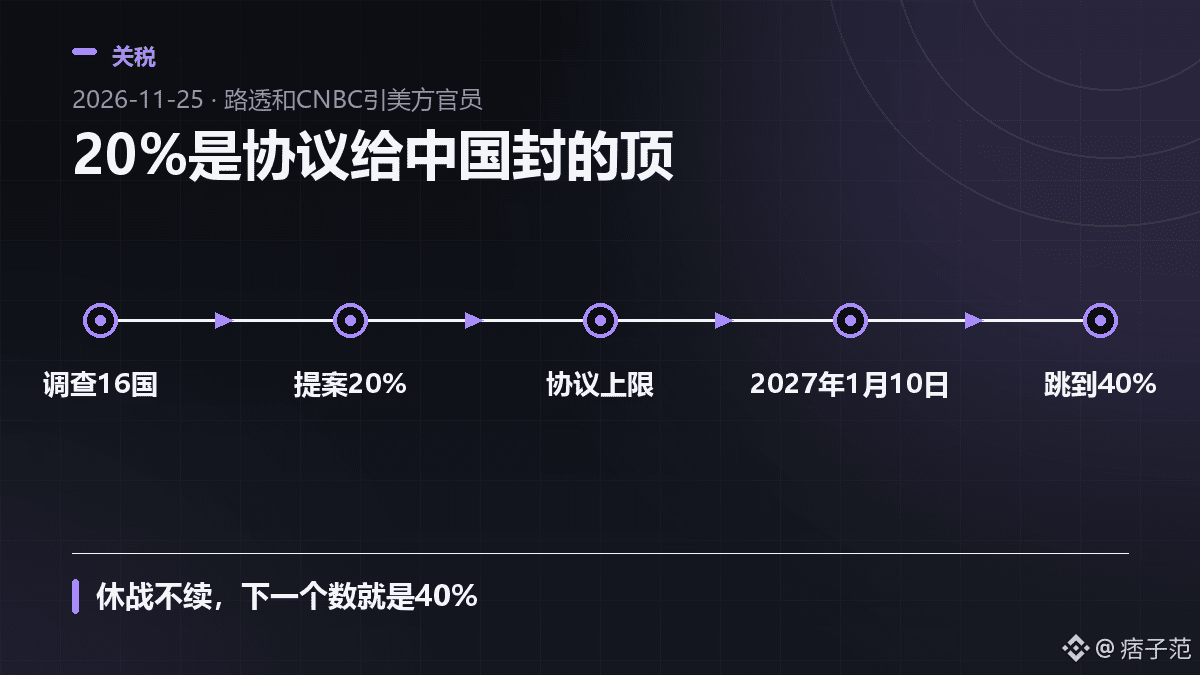
The two dates falling so close together matter more than the tariff rates. U.S. officials say the new tariffs will take effect as early as January 2027, after hearings and a public comment period. The U.S.-China trade truce expires on January 10, 2027, and 20% is precisely the ceiling set for China under that agreement. The same official said the investigation concluded that China should face 40% and Vietnam 35%, but because talks are still ongoing, the proposed rate is 20% for now.
The 20% is a temporary figure during negotiations. If the truce isn’t extended, the next figure the official gave is 40%.
I’m not changing my positions this week. I’ve marked January 10 on the calendar; that’s when I’ll see whether the truce is extended.