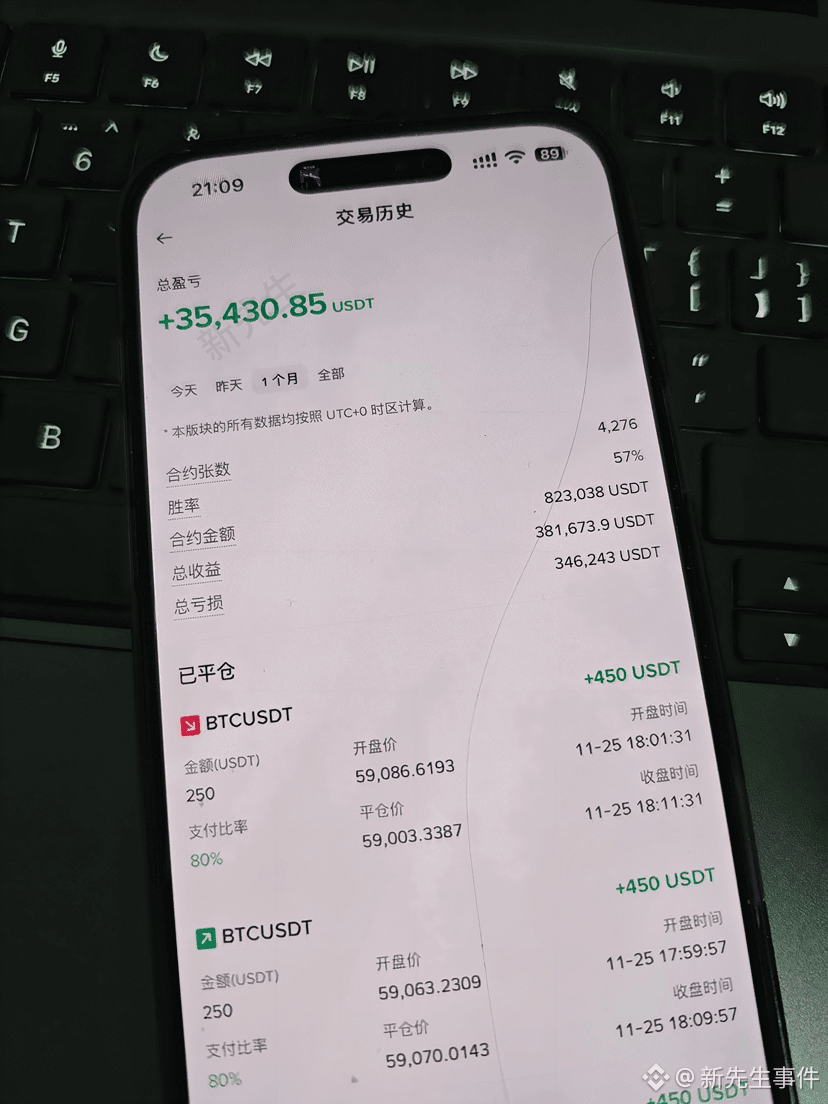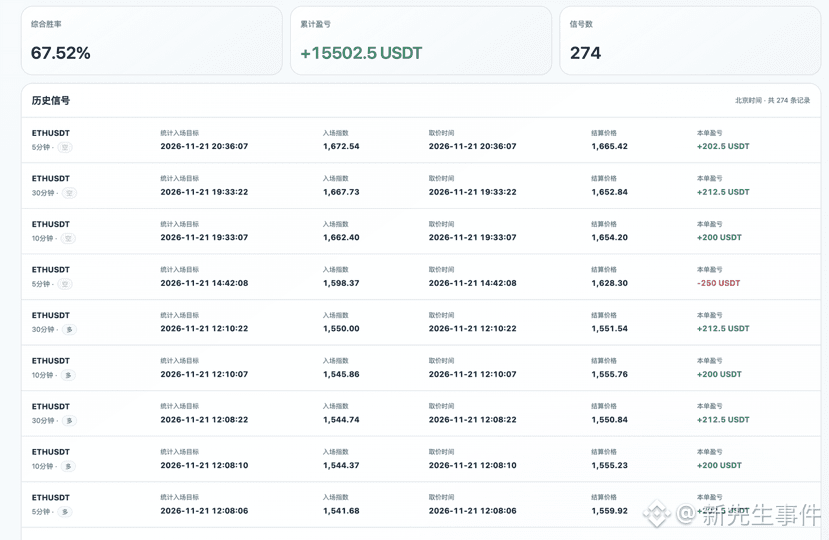
“Starting with a few hundred bucks, I made 30K U this month! The most dangerous thought is still: ‘I’ll stop once I break even.’”
This month, I started with a few hundred bucks and used an AI quantitative strategy for event contracts to help execute trades, bringing my total profit to 30K U. When I first got started, I never would’ve dared to imagine making that much. But after trading for a few months, I’ve learned one thing better than anything else: profits you work hard to build up over several weeks can disappear in just a few impulsive minutes.
I lost on the first trade and thought I’d make it back on the next one. The second trade went wrong too, and my hand was already reaching for a bigger position. By the third trade, I had just one thought in my head: “I’ll go all in, and once I’m back to breakeven, I’ll stop.”
The hardest part is that a lot of traders have been burned in perpetuals and switched to event contracts hoping for less pressure and a chance to save gradually. But once they start chasing losses, they may go from wanting to make just a few hundred bucks to risking their entire account on one shot to break even.
With a platform payout of 0.8 and fixed-size, flat bets, there’s theoretically room for long-term profits if the win rate can really stay around 65%. But that depends on the win rate holding up in live trading—and on keeping position sizes under control. You can build up profits little by little with small positions on every trade, then lose all of them at once if you multiply your position size several times on the last trade.
That’s why I now use AI quantitative tools to help execute trades. If the conditions aren’t right, the system doesn’t place a trade. If consecutive losses trigger a rule, the system pauses automatically. I can still misread the market, but the money I just lost won’t determine how big my next position is.
The 30K U I made this month is worth remembering. If I hit a losing streak someday, the system will stop, and so will I. There’ll be more market opportunities tomorrow; there’s no need to force myself to win back today’s loss. #事件合约 #U.S. October core PCE due soon: how will rate-hike expectations shift?