$FET: FET: Dopamine Seeking in a Flat Range
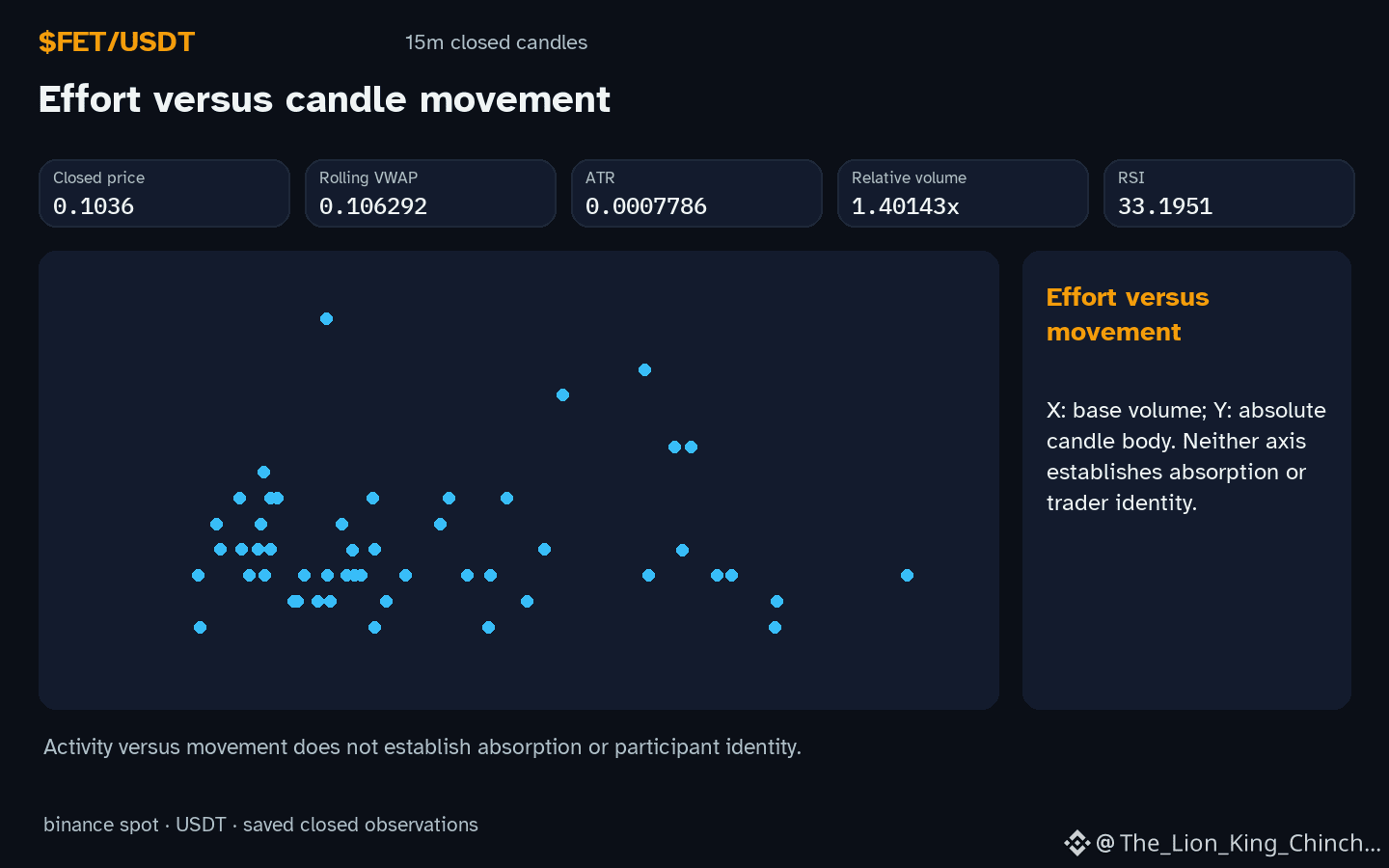
$FET: FET is moving down hourly while volume sits 1.40x baseline, prompting the question of whether traders chase dopamine hits in a flat range.
The observation shows a down hourly direction and volume above baseline, but price remains below support. This creates a tension between attention to the price dip and the pull of a rising volume signal.
One relevant bias is attention bias, where recent high‑volume spikes draw focus even when the price context is weak. In this case the flat range may act like a mental treadmill: each small move feels rewarding, encouraging repeated trades despite limited upside.
A competing interpretation is that the volume rise simply reflects algorithmic activity rather than human excitement, which would weaken the dopamine hypothesis.
A practical self‑check asks: before entering a trade, pause and ask whether the decision is driven by the visible volume spike or by a genuine price edge. If the answer leans toward the former, consider waiting for a clearer breakout or a shift in RSI 33.2 that aligns with the price move.
Future evidence that could challenge this view includes a closed‑hourly candle that shows a neutral or negative volume change while price stays flat, suggesting the volume was a transient artifact. Conversely, a sustained volume increase together with a decisive break of the local support level would support the idea that attention bias is translating into real market pressure.
In summary, the current flat range invites a thought experiment about dopamine‑driven trading, but the interpretation must be reassessed as new candles form and volume dynamics evolve.
Probabilistic market research, not a recommendation or guaranteed return.
Process or outcome: which are you judging?
#FET #TradingPsychology #CryptoLearning