Aoying’s road to success
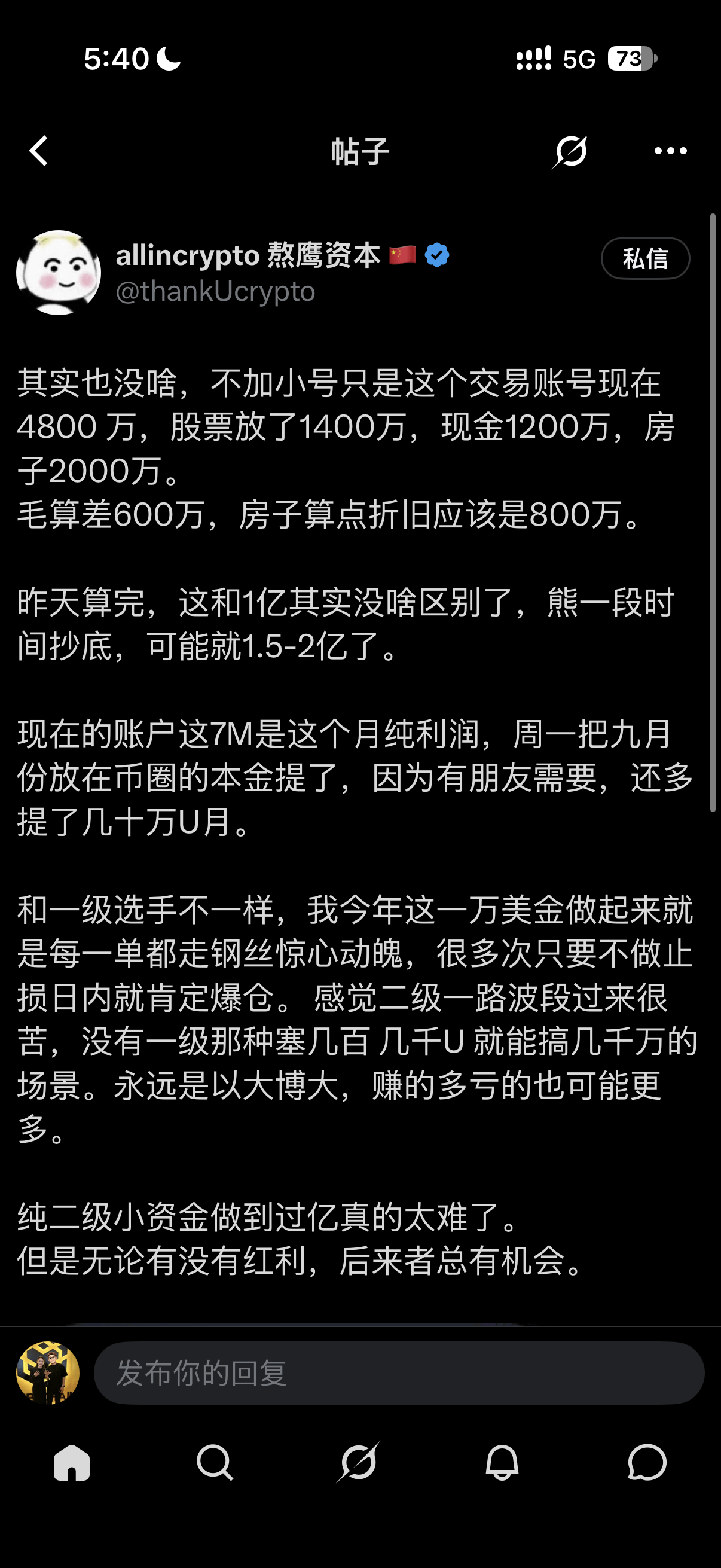
Today, Aoying posted a breakdown of his assets on X: 48 million in his trading account, 14 million in stocks, 12 million in cash, and 20 million in property. By his own account, he’s just a few million short of 100 million.
He started with $10,000.
Here’s the path he described:
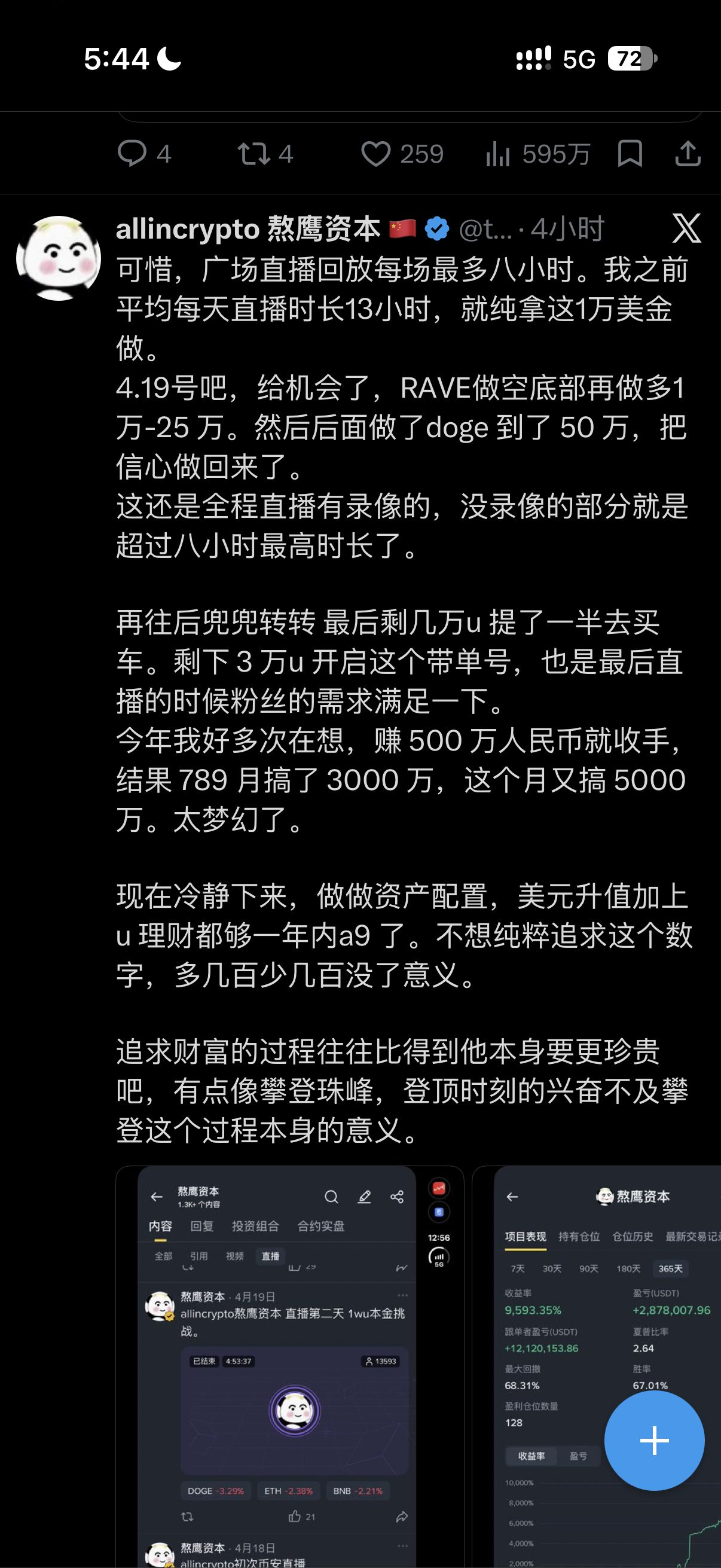
Around April 19, he first shorted RAVE near the bottom, then flipped long, turning $10,000 into $250,000.
Next came DOGE, which brought him to $500,000. In his words, it was how he “got his confidence back.”
After that, things went back and forth, and his account was down to a few tens of thousands of U. He withdrew half to buy a car.
He was left with 30,000 U and opened a copy-trading account.
Then, over July, August, and September, he made 30 million, and this month he made another 50 million.
He livestreamed the whole time on Square, averaging 13 hours a day. Square keeps a maximum of 8 hours of replay per session, so the rest wasn’t recorded.
What I really want to highlight is something he wrote himself: “Building this $10,000 took walking a tightrope on every trade. If I hadn’t skipped stop-losses so many times, I’d definitely have been liquidated intraday.”
That’s more worth remembering than the 30 million. The ones who make it through are the ones who survive to the end. Those whose accounts were wiped out and who got knocked out won’t come out and post their gains.
His plan now, he says, is to cool off and focus on asset allocation: dollars and U-based wealth management. As for this month’s net profits, he already withdrew the principal he put into crypto in September on Monday.
If you want to learn from him, start with that last step: withdraw your profits.
With small capital, don’t use leverage to chase swings. Set your stop-loss before placing a trade, and keep the loss on any single trade to within a few percentage points of your principal. Don’t assume you’re the one who can tough it out all the way without getting liquidated.
$BTC #熬鹰
The material in this article comes from the subject’s own public statements and does not constitute investment advice.