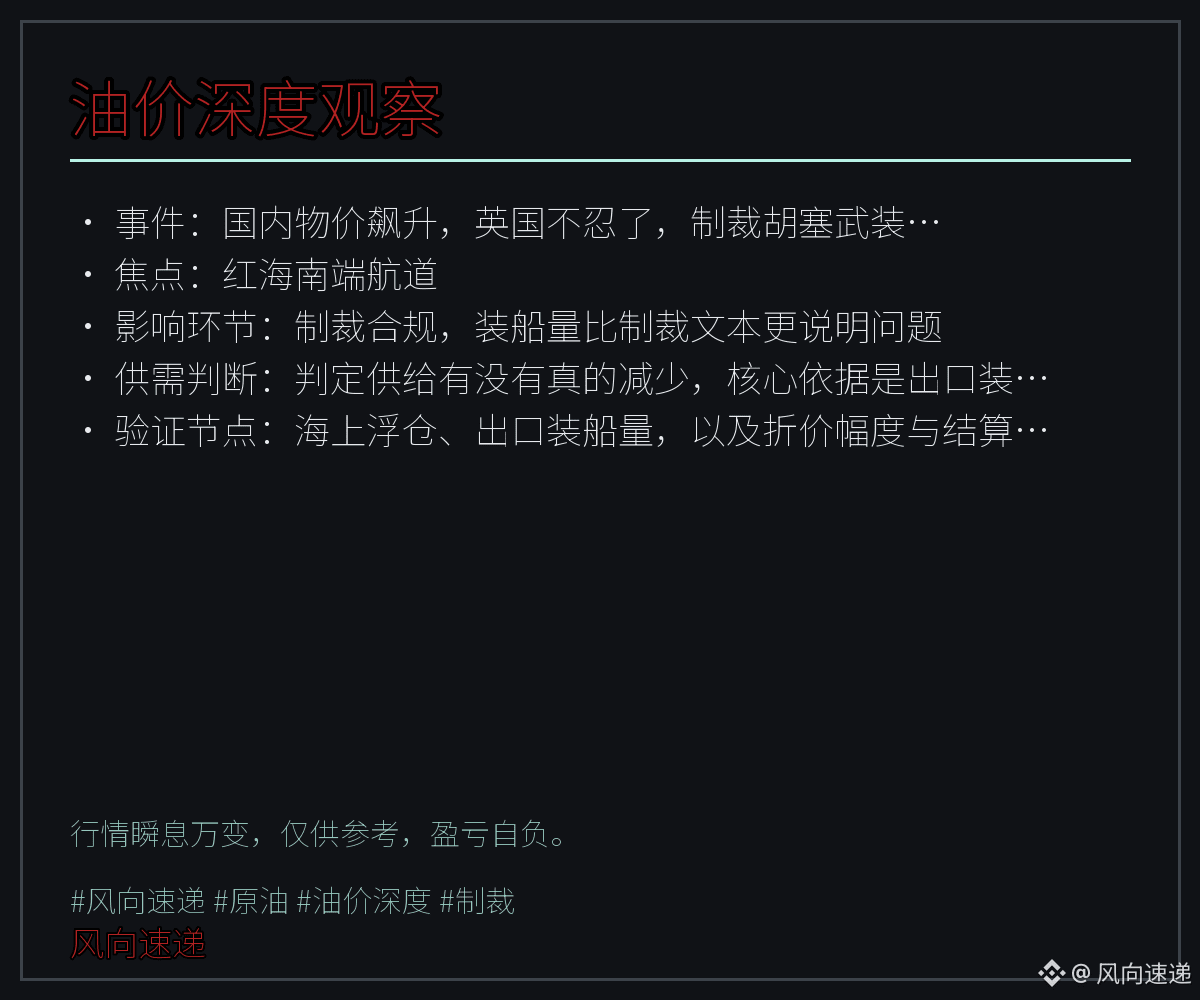
In-Depth Oil Price Analysis
【Key Event】
Domestic prices are surging. The UK has had enough and is sanctioning the Houthis, condemning their deliberate efforts to undermine stability in the Middle East (2 hours ago)
【Who Is Affecting Oil Prices】
The Houthis are tightening the rules governing energy trade, with the focus on the shipping lanes at the southern end of the Red Sea. The sanctions affect whether crude oil can be settled, insured, and brought into port smoothly. Sanctioned production may not disappear, but its destinations and discounts will be reshaped.
【Transmission Channels】
When enforcement tightens, shadow-fleet capacity, insurance, and payment channels are constrained first. Buyers turn to alternative sources, pushing up the premium on compliant crude.
Sanctioned crude usually trades at a steeper discount, widening global price differentials and causing feedstock costs to diverge among refineries.
【Supply, Demand, and Pricing】
The key indicator for determining whether supply has actually fallen is export loadings. The sanctions text itself only signals a change in the rules.
WTI is currently trading near $81.63, with a 24-hour change of +1.56%. This level can serve as a starting point for observation; assess subsequent moves alongside the confirmation points below. Sanctions news often triggers a one-off jump, after which the market recalibrates based on how rigorously the measures are enforced.
【What to Watch Next】
Track offshore floating storage, export loadings, and changes in discount levels and settlement channels.
【What Would Invalidate This Outlook】
If exemptions are broadened or enforcement is lax, the compliance premium will fall and trade flows will adjust again.
Markets change rapidly. For reference only; you are responsible for your own gains and losses.
#风向速递 #原油 #油价深度 #Sanctions