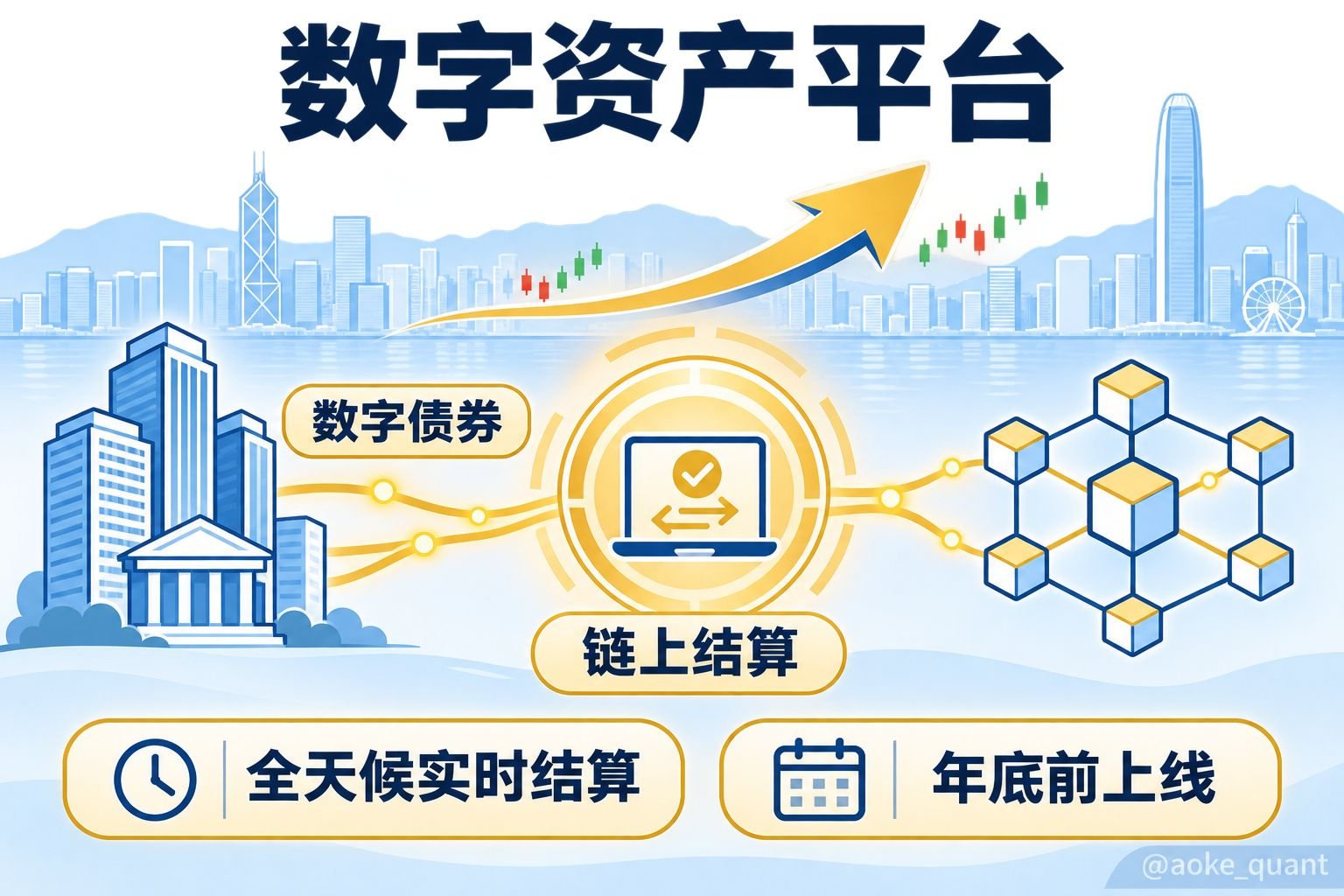
Hong Kong’s CMU Digital Asset Platform to Launch This Year, Initially Supporting Digital Bond Issuance and Settlement
Hong Kong is moving digital assets beyond the realm of regulatory discussion and into the infrastructure layer. According to the 2026–27 Budget, the HKMA’s Central Moneymarkets Unit (CMU) will establish a digital asset platform this year to support the issuance and settlement of digital bonds, with plans to gradually expand to other digital assets and connect with other tokenisation platforms in the region. The goal is to consolidate Hong Kong’s leading position in digital assets. This initiative aligns with sections of the Budget on international connectivity for the CMU and one-stop post-trade infrastructure for multiple asset classes, indicating that the development has been incorporated into the broader market-system plan rather than treated as a standalone project.
On the key facts, HKMA Chief Executive Eddie Yue gave a more specific timeline earlier at the Treasury Markets Summit: the CMU, the debt instrument central clearing system operated by the HKMA, will launch a new service by the end of this year, providing 24/7, real-time on-chain settlement. The upgraded platform is intended to support the digital Hong Kong dollar as well as central bank digital currencies. He also added that the HKMA will study whether tokenised deposits and regulated stablecoins can settle directly on the CMU.
Taken together, the two developments can be understood as follows: the CMU, traditionally the settlement hub for debt securities, is being equipped with on-chain settlement capabilities. Combined with a digital asset platform that supports the issuance and settlement of digital bonds, this effectively connects the asset side of traditional finance with blockchain-based settlement through a shared infrastructure. If the study of direct settlement for tokenised deposits and regulated stablecoins reaches a positive conclusion, on-chain payment instruments will be more deeply integrated into Hong Kong’s core securities settlement system.
The potential impact on crypto markets can be considered on three levels. The first is tokenised assets: the platform will initially serve digital bonds before gradually expanding to other digital assets, potentially providing an official settlement channel for assets such as tokenised gold. The Securities and Futures Commission also plans to develop a regulatory framework covering tokenised gold and real-world assets, with regulation and infrastructure advancing in parallel. The second is stablecoins: in April, the HKMA issued its first two stablecoin issuer licences, one to HSBC and the other to Anchorpoint Financial, a joint venture led by Standard Chartered together with Hong Kong Telecom and Animoca Brands. The Hong Kong dollar stablecoin issued by the latter is redeemable one-for-one for Hong Kong dollars, and Standard Chartered plans to use it for the settlement of tokenised money market funds in the fourth quarter. The third is market expectations: improvements to infrastructure generally attract follow-on participation from issuers and institutional capital, but this is a reasonable inference, not an established fact.
It is worth noting that the circulating supply of this Hong Kong dollar stablecoin remains very small. As of August 19, there were only about 522,000 tokens in circulation. HSBC has yet to issue its own Hong Kong dollar stablecoin and plans to launch it in the second half of the year, underscoring the clear pattern of regulatory frameworks arriving first, with actual adoption and growth in supply lagging behind.
Editorial view: Hong Kong’s current push focuses on bringing settlement, custody and licensing under regulatory oversight at the same time, with a measured pace. Three developments are worth watching: whether the CMU’s on-chain settlement service launches as scheduled by year-end, when the digital asset platform completes its first digital bond transaction, and what the study concludes about direct stablecoin settlement. Until then, these developments are primarily positive from an institutional and regulatory perspective; their impact on market activity will take time to assess.
#香港金管局推出CMU数字资产平台 #BTC #ETH #BNB