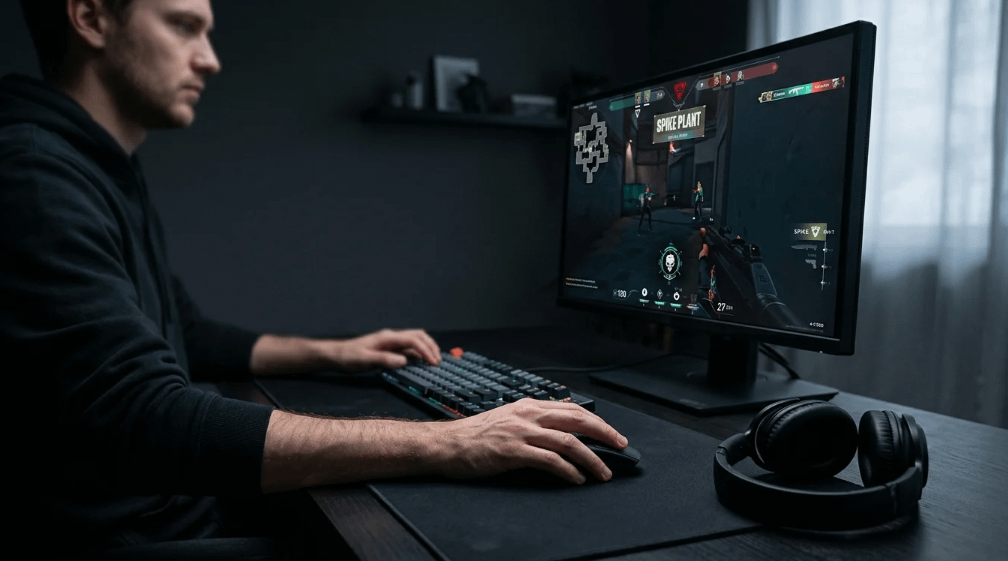

01|Staying up late every day to play games—is being young all about pushing yourself to the limit?
After spending a long time in the crypto market, I’ve noticed a harsh reality: many retail traders aren’t failing for lack of effort; they’re constantly trading their time for money. They work during the day and watch the charts at night. When they finally make a little money, one impulsive trade can wipe it all out. Young people in particular tend to think that quick reflexes and strong learning abilities mean they’re bound to have an edge in the market. But the market doesn’t care how young you are, and it certainly won’t cut you a break just because you can trade quickly.
Today, I’m sharing a story submitted by a 25-year-old follower. After graduating from high school, he started boosting accounts in online games, helping clients rank up, farm gear, and complete quests. In peak season, he could earn over 10,000 yuan a month; in the off-season, he might make only 3,000 or 4,000. He spent more than ten hours a day in front of a computer, taking jobs in the early hours and catching up on sleep during the day. His life revolved almost entirely around gaming. After four years, he had saved his first 80,000 yuan through his skills and the jobs he took on. It wasn’t a huge sum, but he had earned it one match at a time.
02|Starting with 1,000 USDT, I realized for the first time that making money doesn’t have to mean staying up all night
The way he got into crypto was pretty interesting, too. He used to have a regular client who hired him to boost their game account and often talked with him about BTC and ETH. Sometimes they’d chat about the market after a session. At first, he didn’t pay much attention, but later he noticed that more and more gamers were discussing digital assets. Curious, he signed up for an exchange.
At first, he used just 1,000 USDT to buy BTC and ETH. He wasn’t expecting to make a fortune—he was simply learning as he watched the market. Then a rally came along, and his account gradually grew to nearly 6,000 USDT. For a young guy who made money by staying up late to play games, it was a very different experience. Before, he’d earn tens or hundreds of yuan per session. Now, the numbers in his account could change with the market. For the first time, he realized that earning money didn’t have to mean sitting in front of a computer for more than ten hours every day.
But I often remind my friends: when you make money for the first time, don’t rush to think you’ve figured out the market.
03|His worst trade: opening a futures position while gaming, only to get liquidated
After making money in the account, he started getting a little overconfident. He figured that since he spent all day on a computer and had quick reflexes, he should be able to react to market changes in time, too. So he moved from spot trading to short-term futures, even opening positions while handling game-boosting orders.
One time, he was helping a client rank up and opened a long futures position on the side. It was initially in profit, and he thought he’d deal with it after finishing the match. But one game turned into another. By the time he was done and checked his account, the market had already reversed, and the position that had been in profit was now showing a large loss.
Worse still, he refused to accept the loss. He thought the drop was a good chance to add to his position, but the market kept falling, and eventually his position was liquidated.
He completely panicked during that period. Trying to make his money back, he started chasing all kinds of trending altcoins. One day he’d buy because someone said a coin was about to rise; the next, he’d switch to another coin after seeing it surge. After a few rounds of trading, he’d lost most of the savings he’d built up. To make matters worse, the game-boosting business was also slowing down. He had fewer regular clients, and his computer equipment needed upgrading.
He told me that the hardest part wasn’t how much money he’d lost, but suddenly not knowing what else he could rely on to make a living. He used to think that as long as he was willing to stay up late, he’d always be able to earn money. Now he realized he’d never really built a stable way to make a living.
04|Starting over: the $12,000 wasn’t made by gambling
Eventually, he decided to make a change. First, he stopped gaming and trading at the same time, and completely separated his game orders from his trading hours. He set aside a regular period each day to study the market, focusing on BTC and ETH’s four-hour trends and using the one-hour structure to look for entry points.
He began setting trading rules for himself: First, don’t chase a sustained rally. If the price hasn’t pulled back to a key area, don’t rush in just because others are making money. Second, decide where to place a stop-loss before opening a position. If the setup is invalidated, exit—never try to hide a mistake by continually adding to the position. Third, control position size and risk only what you can afford to lose on any single trade. Reduce your trading frequency after consecutive losses. Fourth, take profits in stages: lock in some gains first, then decide whether to keep holding based on the trend.
For example, when going long on BTC, he first checks whether the four-hour trend has formed a clear upward structure, then watches the one-hour chart for a pullback to a support area and signs of stabilization. If there’s no suitable entry setup, he keeps waiting. Even if the price suddenly surges, he no longer chases it out of fear of missing out like he used to.
This approach didn’t make every trade profitable, but at least one wrong call no longer cost him dearly. After a period of reviewing his trades and building experience, his account gradually recovered to around $12,000.
05|Real success means no longer having to stay up all night to make a living
He still does game-boosting work, but he no longer takes every order himself like he used to. He recruited two part-time teammates and now mainly handles orders, assigns tasks, and manages accounts, gradually turning his solo business into a small team. His income is more stable than before. He’s also bought a more powerful computer and some household essentials for his parents.
As for crypto, he didn’t decide to quit his job and trade full-time just because his account had recovered. Instead, he kept learning and stuck to his trading routine. He finally understood that quick reflexes can help you win a round in a game, but in the trading market, what really determines whether you win or lose isn’t speed—it’s discipline.
I’ve always thought the most worthwhile part of this story isn’t that 1,000 USDT turned into 6,000 USDT, or that his account later recovered to $12,000. It’s that he gradually learned to manage his time, money, and risk instead of being someone who only knew how to trade time for money through game boosting.
There are market opportunities every day, but not every day is worth trading. Poor position sizing can turn even the right direction into a loss; if you can’t stick to your stop-loss, all that technical analysis is just window dressing. A truly mature trader isn’t someone who gets it right every time, but someone who can walk away unscathed even when they get it wrong.
If you’re also learning about BTC and ETH, or keep losing money by chasing rallies, taking oversized positions, or trading too often, come join our team and share ideas. We regularly discuss market structure, key levels, trading strategies, and real-trade reviews. Bring your questions and we’ll talk them through together, so you can avoid some of the pitfalls of emotional trading.
We don’t promise overnight riches, and we don’t encourage blindly copying trades. In this market, it’s not about who moves the fastest, but who can last the longest.
You’re young—you can take a few losses, but don’t keep paying tuition the same way. Build your skills first, then wait for the opportunities that are right for you.$BIGTIME $GUA $BTW