The UK ban on exchanges making markets on their own platforms is all over the news, but the rule was already set in June—and it won’t take effect for another 11 months.
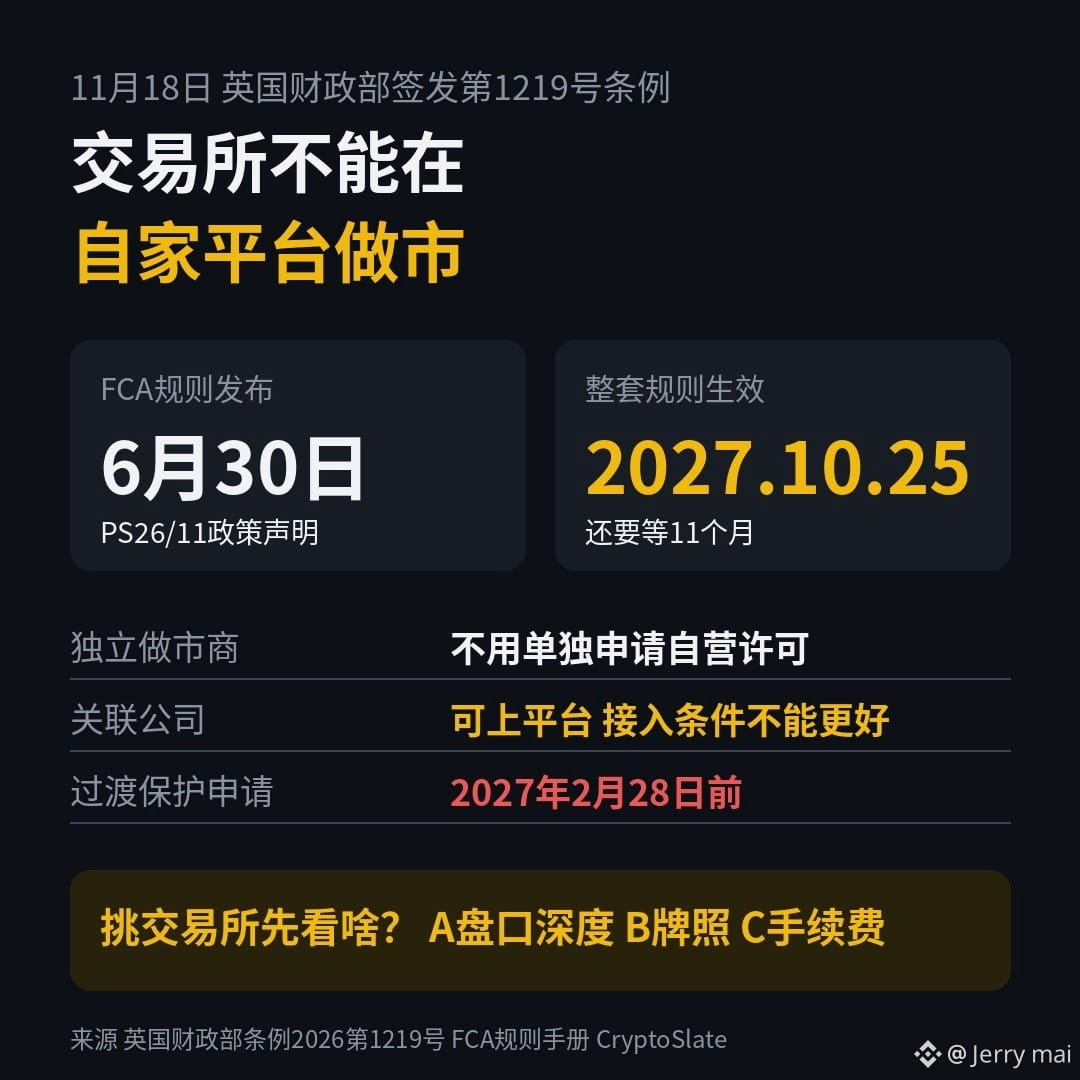
On November 18, the UK Treasury issued Regulation No. 1219 of 2026, adding Article 9UA. Independent market makers quoting on compliant trading platforms no longer need to apply separately for permission to trade as principal.
The ban is set out in the FCA rulebook: platform operators must not use their own funds to execute any orders on platforms they operate.
The FCA’s guidance adds that this means operators cannot act as market makers on their own platforms.
The rule was published on June 30 alongside the PS26/11 policy statement. What came out last week was the Treasury’s half of the package, clearing the way for external market makers.
The rules leave two exceptions.
An affiliated company within the same group may trade on the platform, provided its access terms are no more favorable than those offered to other users.
With additional permission, an operator may also conduct matched principal trading for clients under rules that leave no room for discretion.
Platforms have more work to do, too. They must identify and monitor users running market-making strategies, and disclose the incentive terms offered to market makers. Operators are also prohibited from providing credit to clients.
The full set of rules takes effect on October 25, 2027. Existing firms seeking transitional protection must submit an application by February 28, 2027. These details are in the official documents.
The FCA’s guidance on how it defines a market maker is not yet final. How overseas exchanges serving UK clients will be treated is, for now, mostly based on media reports.
My take: going forward, the depth of an exchange’s order book in the UK will depend mainly on how many external market makers it can attract. The exchange will no longer be able to step in with its own funds.
What do you look at first when choosing an exchange?
A. Order-book depth
B. Whether it is licensed
C. Trading fees
#英国将禁止加密交易所自营做市 #FCA #英国