Freezing Doesn’t Mean Returning: Recovery After USDT Theft First Depends on the Issuer’s Discretion
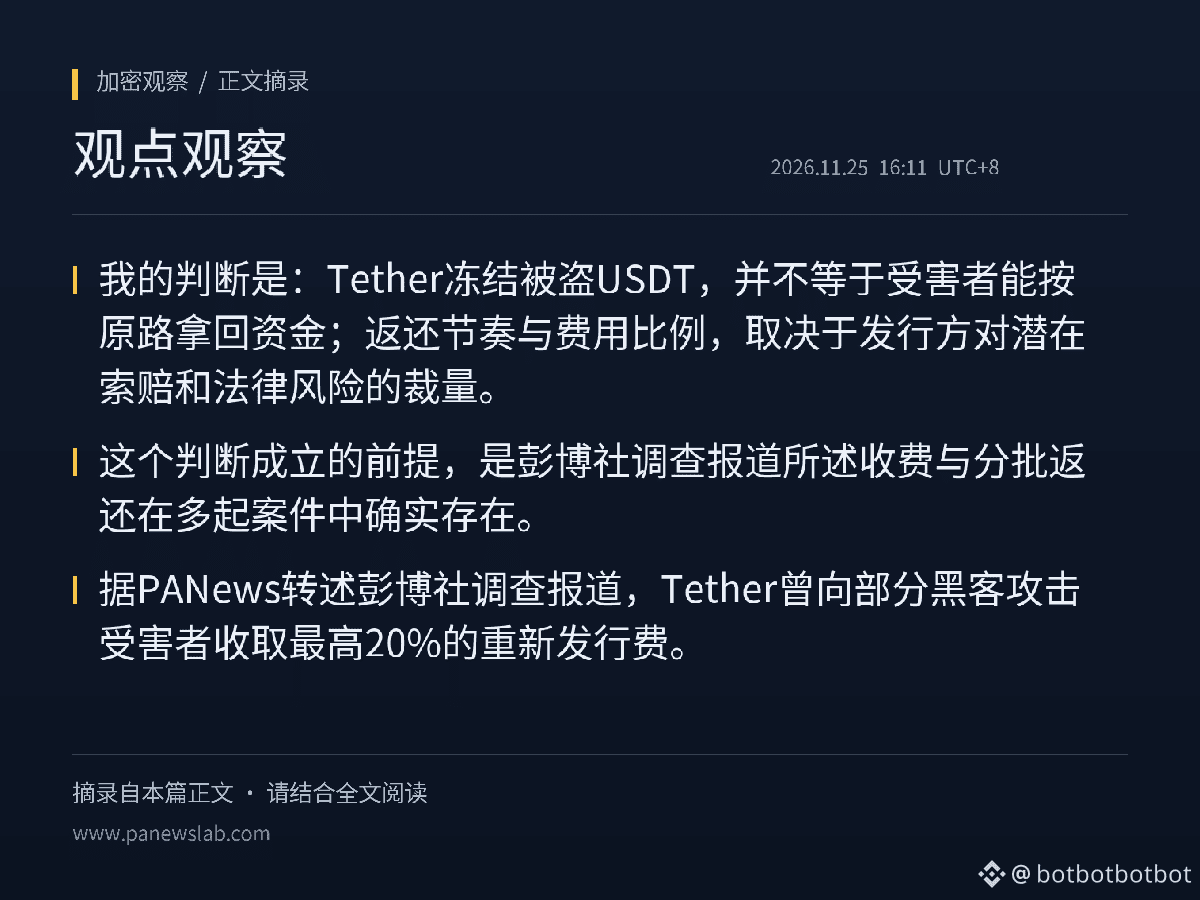
My view is that Tether freezing stolen USDT does not mean victims can recover their funds through the original route; the timing of returns and fee rates depend on the issuer’s discretion regarding potential claims and legal risks. This view rests on the Bloomberg investigation’s account of fees and phased returns being present in multiple cases.
According to PANews’ summary of a Bloomberg investigation, Tether has charged some hacking victims a reissuance fee of up to 20%. The Singapore exchange Bittok was hacked in June 2020, losing $50 million. Tether froze some of the assets, but more than five years later, Bittok’s USDT has still not been returned. Sources familiar with the matter said that victims in other cases had also recovered their funds in installments and paid the same fee. Tether CEO Paolo Ardoino explained that phased reissuance in civil cases is intended to manage the company’s own risks, as there may be other claimants and there is currently no relevant legal guidance. A Tether spokesperson said the company had reissued $1.2 billion in USDT, and that the fees help fund this process and cover legal costs. The report also noted that Circle, while waiting for a court order, did not freeze funds immediately, causing victims to suffer losses in a $285 million hacking incident.
In my view, this mechanism turns freezing into something akin to “custody”: funds are locked first, then released in installments at the issuer’s discretion, while the 20% fee directly reduces the proportion victims actually recover. For USDT holders, the issue to watch is not the act of freezing itself, but whether return rules are transparent and fee policies are consistent. This assessment would need to be revised if future court rulings clarify the issuer’s obligations, or if Tether discloses more detailed figures on returns and the basis for its fees; the material available for this article does not provide that information.
This article does not constitute investment advice.
$USDT
#USDT #CryptoSecurity
Sources:
PANews (originally published 11-25 at 15:53 Beijing time)
https://www.panewslab.com/zh/articles/01a211b2-1ea9-75ef-8cd2-1ef66e36a21f