#cftcapprovestradereportingruleforpredictionmarkets
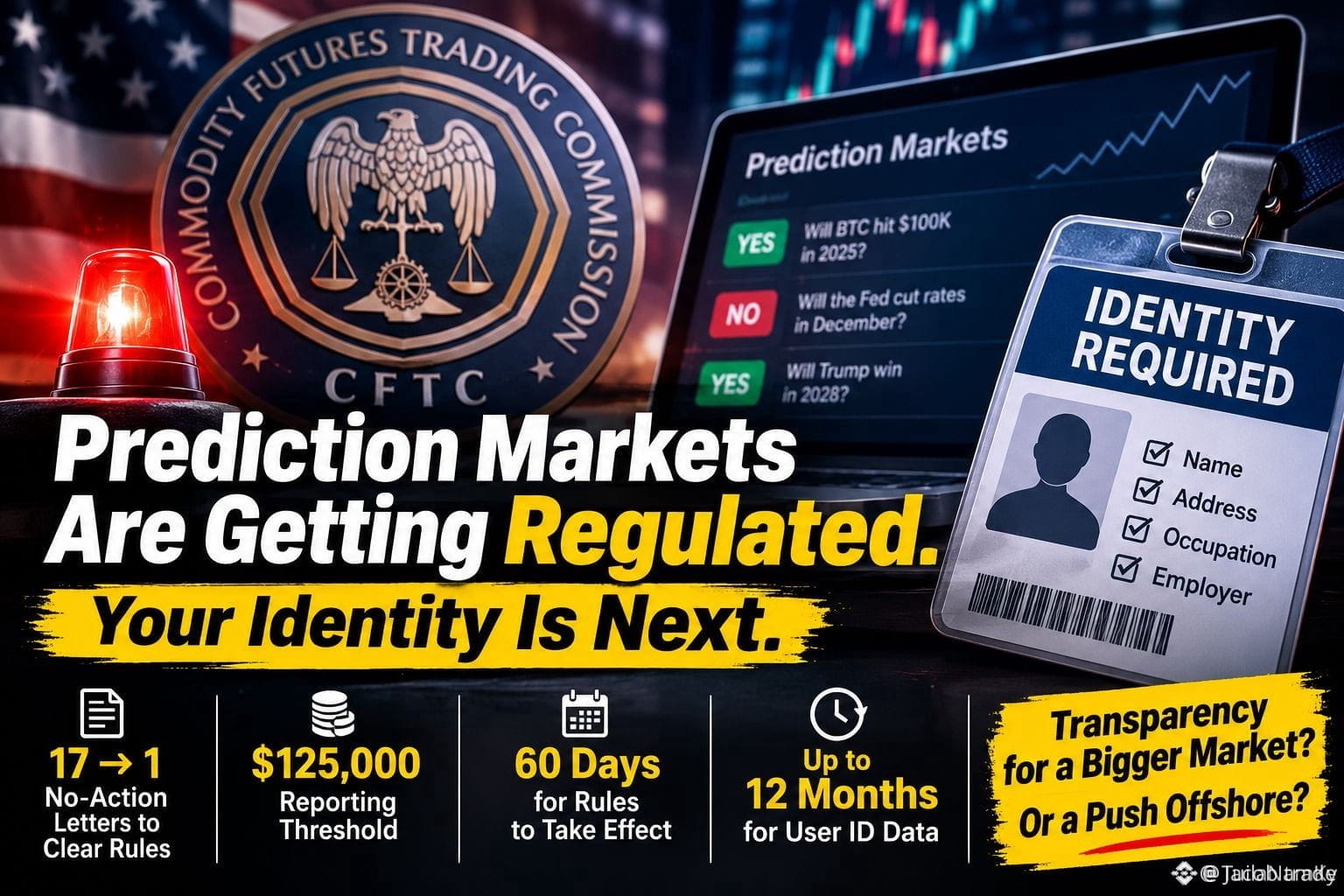
🚨 Prediction markets are now regulated. Your identity is next.
For years, prediction markets operated with makeshift regulatory solutions: 17 no-action letters, each politely saying, “we won’t take action… for now.”
Under Chair Michael Selig, the CFTC has replaced this patchwork system with fixed transaction-reporting rules for fully collateralized event contracts.
It was about time.
Around 1,600 contracts were certified in 2025, compared with roughly 5 a year between 2006 and 2020
📊 The key figures:
17 no-action letters → 1 permanent framework. Case-by-case exemptions are over; standardized reporting is in.
125,000 contracts or $125,000 in notional value. That’s the reporting threshold for large positions. Whale-sized amounts, now on the record.
The core rules will take effect 60 days after publication in the Federal Register.
Up to 12 months are allowed to collect users’ identity information: name, address, occupation, and employer.
It’s this last measure that really changes the game.
The “anonymous gray area” and the “CFTC-regulated platform” are about to quietly part ways.
💡 Square’s take:
Clear rules allow compliant platforms to grow and big money to come in without a legal escort.
Transparency is the price of entry. Traders who saw prediction markets as an unregulated side quest had better adapt before reporting requirements do it for them.
So, here’s the question:
Do identity checks and mandatory reporting make prediction markets credible enough to attract serious investors, or will they push degenerates toward offshore and on-chain alternatives?
$BIGTIME
$BTW
$GUA