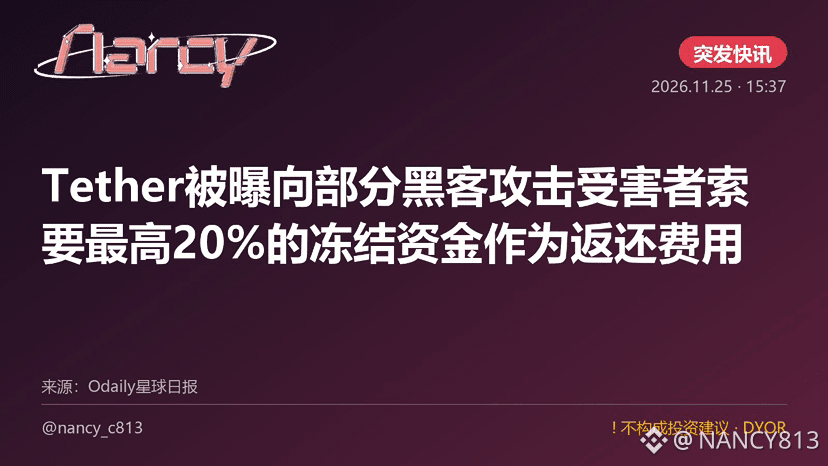
Oh my god, hackers stole the money, and after finally managing to freeze it, you still have to pay 20% to get it back?
When handling stolen funds that have been frozen, Tether has asked victims to pay a return fee more than once. The most notable case involved Bittok, a small Singaporean exchange. Hackers stole $50 million from it in June 2020, and Tether froze some of the funds. The company that took over Bittok then received an email from Tether's lawyers mentioning a 20% reissuance fee.
What’s even more troubling is that reports say Tether has no consistent policy: sometimes it lets stolen funds slip away, sometimes it freezes them and never returns them, and when it does return them, it charges a fee. The timing of this story’s exposure is especially sensitive. Last month, after Binance was hacked, Tether froze more than $1.5 billion in USDT within 30 minutes. Tether says it has frozen more than $7 billion in total and helped return about $1.2 billion.
Here’s the question: if the same 20% fee applied to that $1.5 billion, that would mean a $300 million “service fee.”
My take: being able to freeze funds is a good thing, but when one company holds both the “power to freeze” and the “power to charge,” users have no real room to negotiate. That’s the reality of centralized stablecoins.
Do you think charging a fee after freezing funds is a reasonable cost—or taking advantage of people in their time of need?
#Tether #USDT #稳定币 #黑客 #Crypto