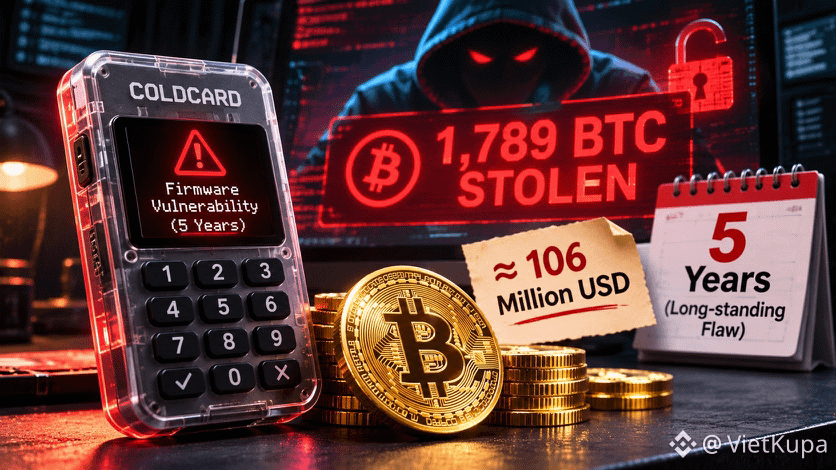
1,789 BTC STOLEN: ARE COLD WALLETS REALLY COMPLETELY SAFE?
Many people buy hardware wallets because they believe that moving their private keys offline will keep their assets safe.
But an incident involving Coldcard has just reminded us that wallet security isn’t that simple.
1. Notable figures
According to the market report dated 25/11/2026:
- A firmware vulnerability in Coldcard is believed to have existed for 5 years.
- 1,789 BTC were stolen.
- The estimated value was around $106 million.
What’s concerning isn’t just the amount of Bitcoin lost, but also how long the vulnerability went undetected.
2. Why are cold wallets still at risk?
Cold wallets help reduce the risk of private keys being stolen in online attacks.
But hardware devices still depend on firmware, transaction-signing processes, and how users safeguard their devices.
Put simply: cold wallets provide greater protection, but they don’t create an absolute shield.
3. My perspective
In Web3, we often spend a lot of time looking for the best wallet, but sometimes forget to check how we use it.
An expensive wallet can’t replace good security habits.
I think users should:
- Only download firmware from official channels.
- Check for security notices and updates from the manufacturer.
- Never enter your seed phrase on websites or apps from unknown sources.
- Never sign a transaction without understanding what it does.
Taking custody of your own assets means taking responsibility for their security.
Do you use a hot wallet or a cold wallet to store your assets long term? And when was the last time you checked your firmware?
#bitcoin #Coldcard