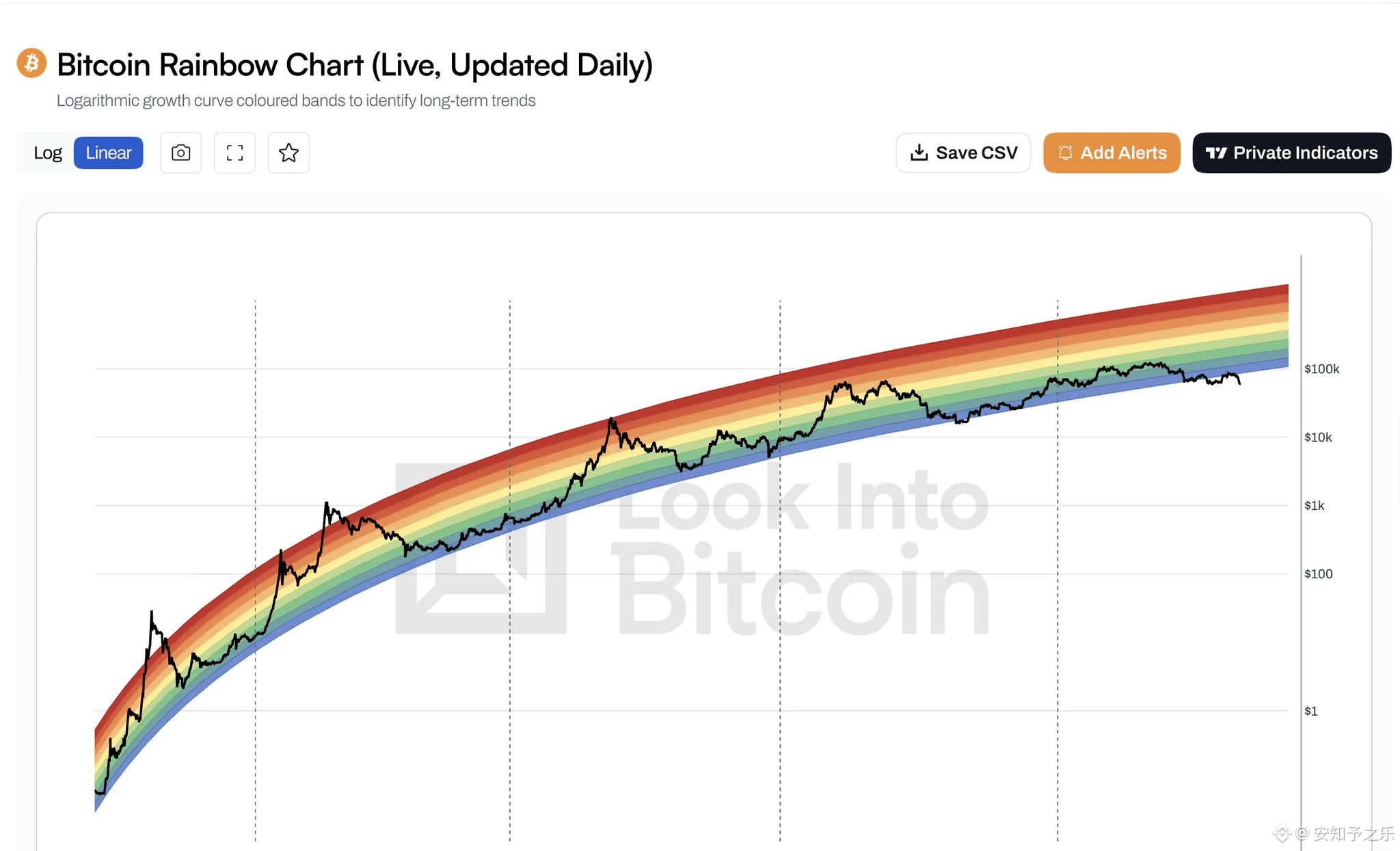
The Bitcoin Rainbow Chart isn’t much use as a reference anymore!
Indicators like Ahr999 will most likely gradually become less reliable over time, too.
The longer the market drags on, the more volatility $BTC contracts. Naturally, indicators built by backtesting historical ranges become less and less useful.
Since 2025, quite a few big names in the crypto community have been promoting the idea of a supercycle and an eternal bull market.
But the reality is that the four-year cycle framework still hasn’t been broken.
So how should we understand this four-year cycle?
Looking back at the cycles of 2013→2015, 2017→2018, and 2021→2022, bear markets took an average of 12 to 13 months to bottom out.
The rally ahead of a halving usually starts about six months beforehand, with prices generally reaching a short-term high a month before the halving;
After the halving, the market typically spends about another six months forming a bottom, then the main rally begins, lasting 12–18 months and reaching the cycle’s bull-market peak.
The next halving is expected around April 2028.
Going by this cycle pattern, the rally ahead of the halving will most likely begin around October 2027.
The BTC market has grown larger and larger, and price swings have become smaller, but the timing of bull and bear cycles hasn’t changed. In fact, the consolidation phase in each cycle is getting longer.
The widely repeated idea that “bear markets are short and bull markets are long” was a misconception to begin with, and many people were led astray by it.
Correct mistaken market assumptions in time. Respect BTC, respect the market, and adjust your thinking as the market changes.