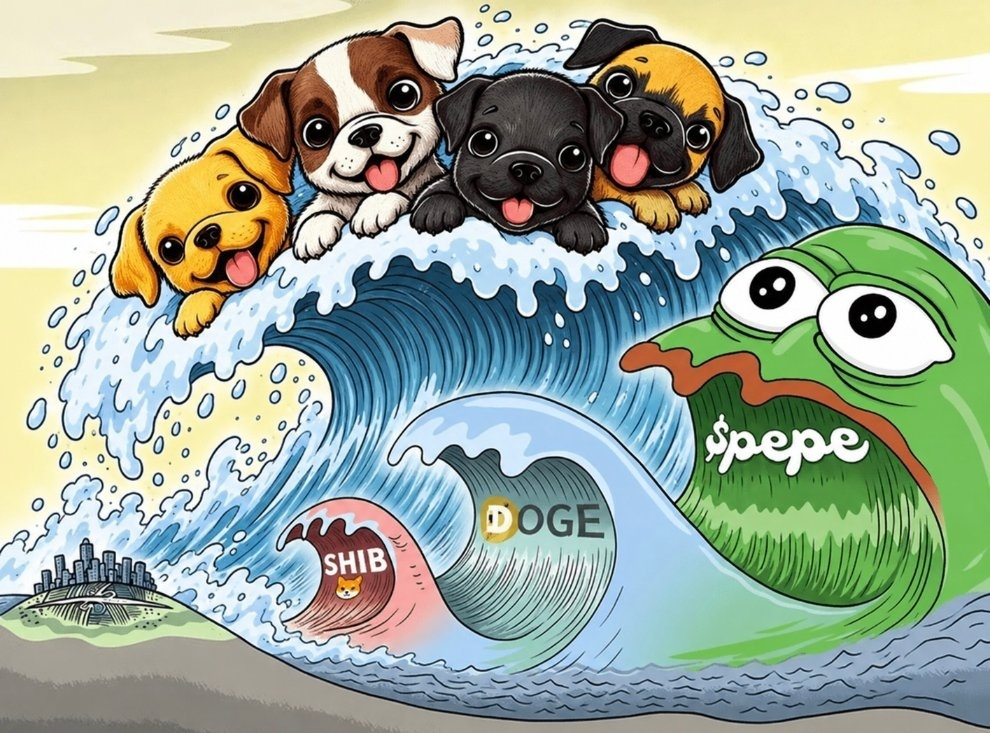
When the market is good, everyone is building.
@Yi He @CZ
Hundreds of communities are posting, streaming, and calling for buys at the same time.
Your voice is drowned out by tens of thousands of others.
It’s not that nobody sees you; it’s that they can’t keep up.
The low point is different.
During a downturn, only a very small number of people stay here and keep working.
If you post something, someone really sees it;
if you start a stream, someone really watches it from beginning to end;
if you answer a newcomer’s question, they really remember you for it.
The chance of being remembered is completely different.
That’s the power of scarcity.
The total amount of attention is fixed,
but the voices competing for it drop by 90% during downturns.
So the same action has a different value.
There’s an even deeper layer:
People remember things through "contrast."
In a lively place, liveliness is normal and not worth remembering.
In a quiet place, if there are still people doing things,
that will be remembered.
Because it goes against common sense.
What DOGE did in its least favored years
later became the part of its story that was told over and over.
That’s also the difference between "sending charcoal in snowy weather" and "adding flowers to brocade."
When you show up when things are hot, anyone can do that; that’s just adding flowers to brocade.
Still being there when things are cold—that’s sending charcoal in snowy weather.
And people only remember the latter.
On the 1,018th day of the Shiba community, everything was done in the cold:
📹 The livestream has never been interrupted, with a peak reach of 700,000;
📝 In the top 100 hot posts, as many as 51 came from ordinary members;
💬 Every newcomer’s question has been answered;
🔗 On-chain addresses are publicly verifiable, and contract permissions have been renounced.
This isn’t "we started very early back then,"
it means that for most of these 1,018 days, it was not hot.
We have always been doing the same thing.
The path DOGE, SHIB, and PEPE have taken is structurally identical:
The people who stayed during the coldest times
later became the narrative itself.
What is repeatedly told about SHIB is not when it rose,
it’s the half year when it was mocked as a zeroed-out bag but still hadn’t scattered.
What is done in the cold is remembered a little longer.
This is a pattern of human memory, not a promise from the market.
So a downturn is not a period to simply "endure";
it is itself a window
A window where every word you say is heard
During a downturn, how many people do you plan to have remember you