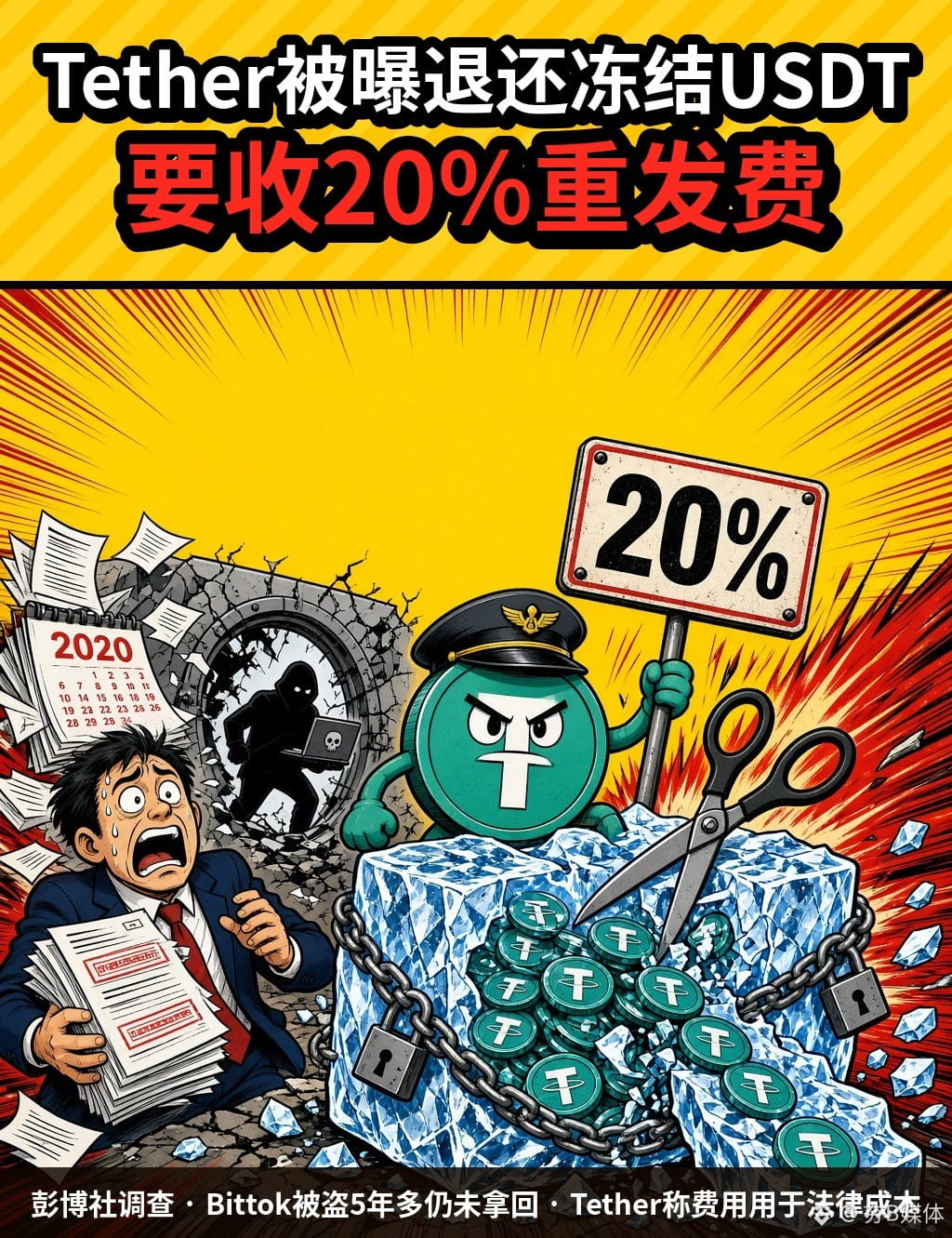
Tether reportedly charges a 20% reissuance fee to return frozen USDT: freezing stolen funds doesn’t mean victims can get them back in full
Bloomberg reported on November 24 that when returning frozen USDT to some hacking victims, Tether proposed charging a 20% “reissuance fee.” Even if the funds are frozen promptly, victims may ultimately recover only 80% of them—and have to wait a long time.
One typical case is Bittok, a small Singaporean exchange. It was hacked in June 2020, losing about $50 million. Some of the USDT was frozen, but more than five years later, none has been returned. Emails reviewed by Bloomberg show that Tether’s lawyers told the exchange that 20% would be deducted from the refund. People familiar with the matter said that in several other cases, funds were returned in small installments and similar fees were charged.
Tether responded that civil cases may involve other claimants, and that phased reissuance is intended to manage legal risks. Clear regulations are currently lacking. The company has reissued a total of $1.2 billion in USDT, and the fees go toward processing and legal costs.
Note: When Binance was hacked last month, Tether froze more than $1.5 billion in USDT within half an hour. But the report didn’t say whether a fee would also be charged in that case; there’s no information on this yet. A fast freeze doesn’t mean a fast or full refund.
Next, we’ll see whether Tether publishes a unified refund policy and fee schedule.
If your stolen USDT were frozen, would you accept a 20% deduction to get some of it back now, or wait it out through a lawsuit?
Not investment advice.
Source: Bloomberg, Wu Blockchain · 2026-11-25 Hong Kong time
#夯B媒体 #Tether #稳定币 #FundsSafety
$USDT