
Everyone is focused on Bitcoin, which has fallen below $60,000. Meanwhile, a major project is about to launch its own blockchain in just 5 days, but almost no one in Indonesia is talking about it.
That project is LayerZero (ZRO).
What Is Zero? More Than Just a Regular Update
So far, we’ve known LayerZero as a cross-chain protocol. Its job is to connect blockchains so tokens can move from Ethereum to Arbitrum, BNB, and others.
Now, on November 30, 2026, LayerZero will launch its own blockchain, called Zero.
Zero isn’t a general-purpose blockchain like Ethereum or Solana. It’s purpose-built for trading and financial applications. Its goal is to be a place for order matching, clearing, settlement, and risk management all in one.
Alongside Zero, its first application, called lzATLAS, will also launch.
lzATLAS is trading infrastructure. Simply put, it’s the engine that lets multiple exchanges / trading venues use Zero as their backend, with an initially claimed speed of up to 200,000 transactions per second.
ZRO Staking Has Been Open Since November 23
One week before mainnet, LayerZero opened what it calls pre-genesis staking.
This means ZRO holders can lock their tokens now to help secure the Zero network before it produces its first block.
Here’s the official timeline:
- November 23, 2026: Staking opens at http://staking.layerzero.network
- November 30, 2026, 00:00 UTC (07:00 WIB): Zero mainnet launches, rewards start accruing
- March 31, 2027: All staked tokens unlock
One thing to note: this staking is different from regular staking. Since it happens before genesis, the ZRO you stake will be burned on its original chain, then minted again on Zero. And most importantly: there’s no early exit. Once you stake, your tokens are locked until March 31, 2027.
The Foundation Stakes 100 Million ZRO
The LayerZero Foundation is also staking a large amount. It completed the staking of 100 million ZRO through 2 transactions of 50 million ZRO each on November 24, 2026.
That’s equivalent to 10% of ZRO’s maximum total supply of 1 billion tokens. And they claim to be staking under exactly the same terms as regular users, including the lock-up until March 31, 2027.
So, How Much Are the Rewards?
This part is often misunderstood.
Zero is targeting 1% annual inflation, or around 10 million new ZRO per year. After deducting the 10% validator commission (until March 31, 2027), around 9 million ZRO will be distributed to stakers, based on how much they stake and for how long.
According to the calculator on the official staking website, one example simulation shows that staking 10,000 ZRO with an assumed network participation rate of 30% would yield around 303 ZRO in a year, or about 3.03%.
This is only a simulation, not a promise. The more people who stake, the lower the yield per person will be. And rewards aren’t guaranteed—they could be zero.
Why Is the ZRO Price Falling Despite the Good News?
This is what’s confusing a lot of people.
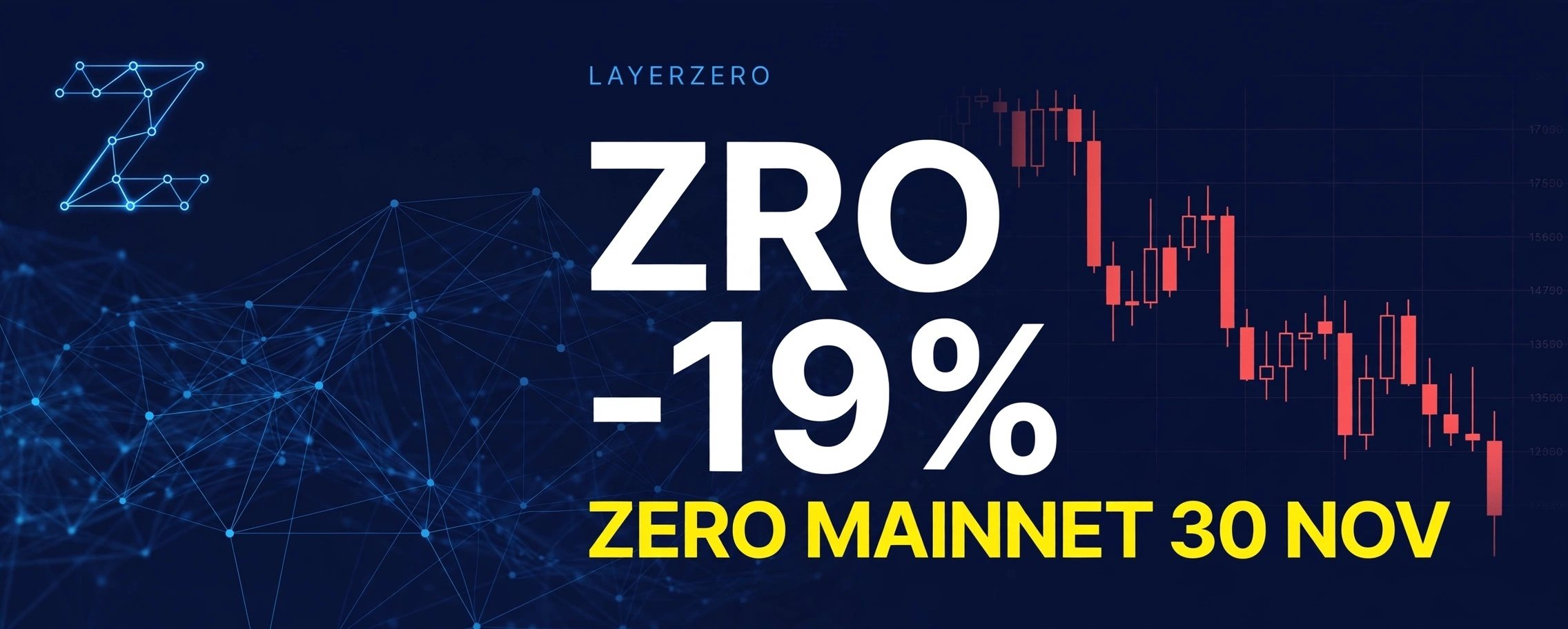
Despite the major launch, as of November 24, 2026, ZRO was trading at just $1.02–$1.04, down 19.26% in 24 hours and 30% in 7 days. Its market cap was around $409 million. Back in October, ZRO had reached $1.98.
There are 3 reasons this could be happening:
1. Sell the News + The Market Is Down
Many traders bought ZRO well in advance in anticipation of the November 30 launch. When staking opened, they sold to take profits. On top of that, the broader market is down, with Bitcoin falling 5%, and ZRO is taking an even harder hit.
2. The 4-Month Lock-Up Is Making People Hesitate
Staking until March 31, 2027 is a long time. Anything can happen in the market over 4 months. Many holders are choosing not to lock up their tokens because they’re afraid the price will fall and they won’t be able to sell.
3. The ATLAS Fee Model Hasn’t Been Proven Yet
This is the most important part, but it’s rarely discussed.
LayerZero announced that 75% of ATLAS fees after venue rebates will be used to buy back and burn ZRO. This sounds really good.
But buybacks will only happen if ATLAS is actually used and generates fees. If no trading venues are busy on November 30, there will be no fees and no buybacks.
The market is waiting for evidence, not promises.
3 Risks You Should Know Before You Start Staking
If you’re interested in staking, you need to know these 3 risks from the official documentation:
1. You Can’t Withdraw Until March 31, 2027
There’s no emergency unstake button. Even after March 31, withdrawals will still take up to 7 days due to the cooldown.
2. There’s No Liquid Staking Token
You won’t receive a replacement token that you can sell. Your stake is only recorded at your address on Zero.
3. The Contract Hasn’t Been Audited at Launch
The ATLAS documentation itself states that the staking contract hasn’t been audited at launch. And until March 31, 2027, LayerZero Labs will mint and distribute new rewards off-chain. This means there’s an element of trust in the team.
This doesn’t mean the project is bad, but it is a risk you need to understand.
Conclusion: What Should You Watch on November 30?
Don’t just watch the ZRO price. Keep an eye on these 3 things:
1. Will the Zero mainnet really launch on time?
2. How many trading venues will use lzATLAS right away on day one?
3. How much ZRO will be locked in staking? The more that’s locked, the less supply will be available to sell on the market.
And one other important date: *December 15, 2026. LayerZero plans to end support for converting STG to ZRO and retire the V1 relayer.
Zero is a major step for LayerZero, from simply being a bridge between blockchains to becoming a blockchain itself. But in a market experiencing Extreme Fear like today, good news alone isn’t enough. What’s needed is proof of real usage.
Disclaimer: This article is for educational purposes and is not a recommendation to buy or sell. Staking carries lock-up and smart contract risks. Always do your own research (DYOR).