The float had only dipped halfway when he raised his rod. The angler beside him asked if he’d caught anything. He held out the empty hook: “What do you think?”
At the “One-Bite Fishing” Reservoir on the east side of town, there was an early-shift attendant named Gong Bankou. He was forty-seven. Everyone else used slim, pointed floats; his was always a size bigger. He said small floats were hard to see, and if he couldn’t see them, his hands would get restless. A little pair of spring-loaded scissors stuck out of the right pocket of his fishing vest. He’d use them to cut line, but he wouldn’t lend them to anyone. If somebody reached for them, he’d fend them off with his fish basket. His thermos held only corn soaked overnight until it was plump. He wouldn’t even sniff commercial bait. “That stuff’s for the float, not the fish,” he’d say. He also had a slightly embarrassing habit: every day before opening the dam, he’d tap the little scissors against the rim of his bucket three times. Only then would he allow himself to cast his first line. Everyone at the dock knew his rule: until the float had completely disappeared beneath the water, you weren’t allowed to raise your rod—and you had to finish counting “one, two, three.” That was how he got the nickname Bankou—“Half a Bite”—and he owned it.
A regular at the stall opposite was called Shoudao, “Thin Blade.” His rod was thinner than everyone else’s, but he cast faster than any of them. The two had been trading jabs for years. Shoudao always said, “If you count to three after a bite, the day’s gone.” Gong Bankou would shoot back, “Raise your rod when it’s only halfway under, and there’ll probably be nothing on the hook.” Once, Shoudao got fed up and challenged him, in front of Sister Wang, the vendor, to see who could catch a fish first. Shoudao ended up lifting an empty rod three times in a row. He didn’t mention the contest again for quite a while, and whenever he saw Gong Bankou, he only asked to borrow some corn.
A little after seven on Wednesday morning, the fog still clung to the water. Gong Bankou’s mind wasn’t really on fishing. Overnight, $BTC had snapped back sharply, then just as quickly given up its gains. As he watched the market, his hand moved faster than his brain. The add-to-position button had taken him one screen away from confirmation. He’d nearly pressed it. He tucked his phone back into his vest, but his palm was still hot. As usual, he tapped the little scissors against the bucket rim three times, as if to shake off that lingering heat. Even so, his first cast landed a little off target.
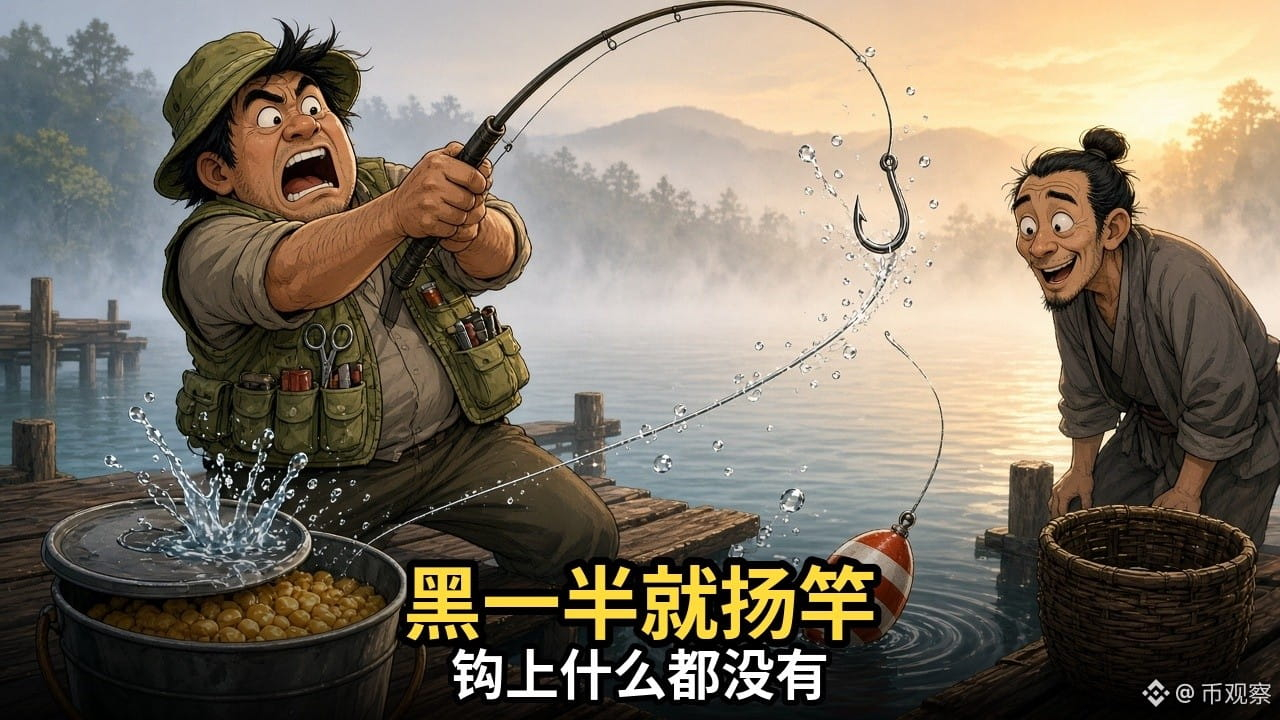
His big float suddenly bobbed twice, then dipped halfway and stopped. “One” hadn’t even left his lips before his wrist had already jerked upward. The rod shot straight up, splashing water onto the bucket lid. The hook came flying back through the fog, empty and dripping. Even the big float he’d made himself was still bobbing where it had been, as if it couldn’t understand why the man had moved first.
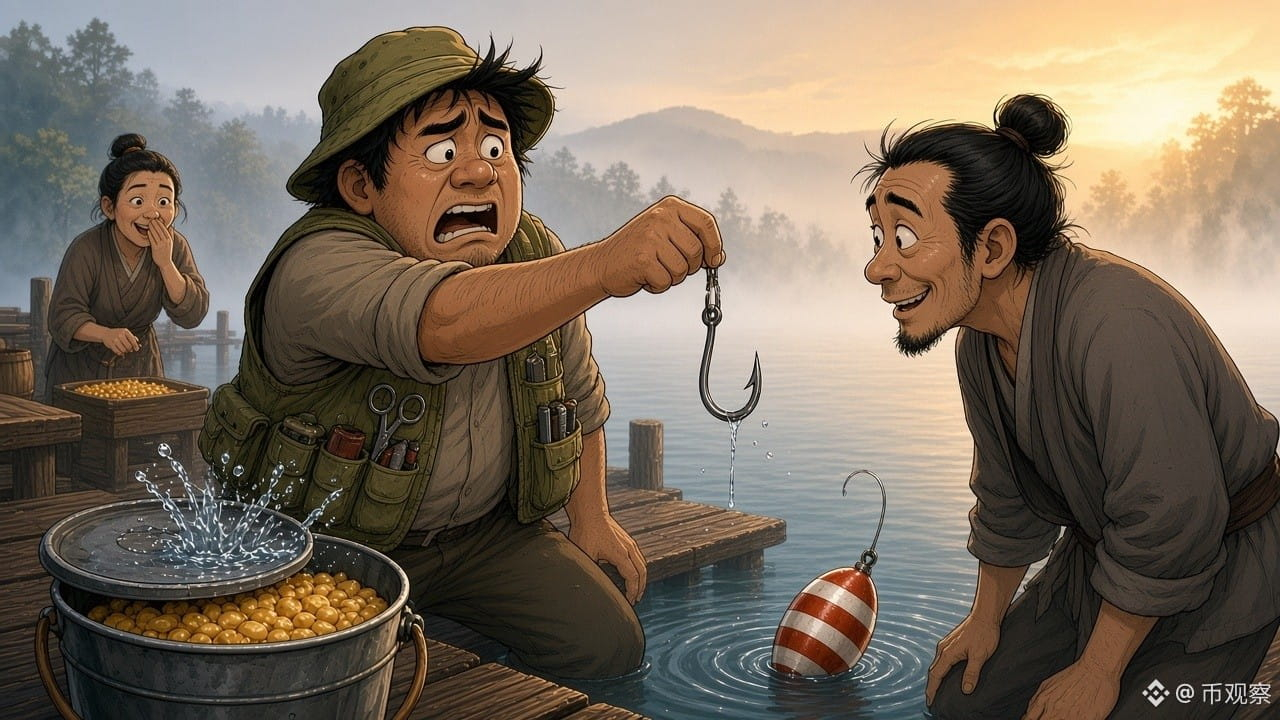
Shoudao leaned over and, trying to be polite, asked, “Brother Gong, did you get one?”
Gong Bankou held the empty hook up in front of him. His throat was a little dry. “What do you think?”
Sister Wang, who sold corn, laughed behind them. Shoudao didn’t twist the knife. He simply repeated the old saying, softly: “Raise your rod when it’s only halfway under, and there’ll probably be nothing on the hook.” Gong Bankou wanted to explain, but couldn’t think of a single thing that would make it sound any better. So he put fresh corn on the hook, set the rod back on its stand, and this time watched the float properly, counting more slowly than anyone.
Close to nine, Shoudao’s thin rod suddenly bent down. This time the float disappeared completely beneath the water. He used to hate waiting, but now he watched until it was fully gone before lifting his rod. A palm-length crucian carp came out of the fog, flicking its tail beside the bucket. Sister Wang patted the lid. “See? You only get a catch when it’s gone all the way under.” For once, Shoudao didn’t look pleased with himself. He just angled his fish basket toward Gong Bankou, as if worried about rubbing it in.
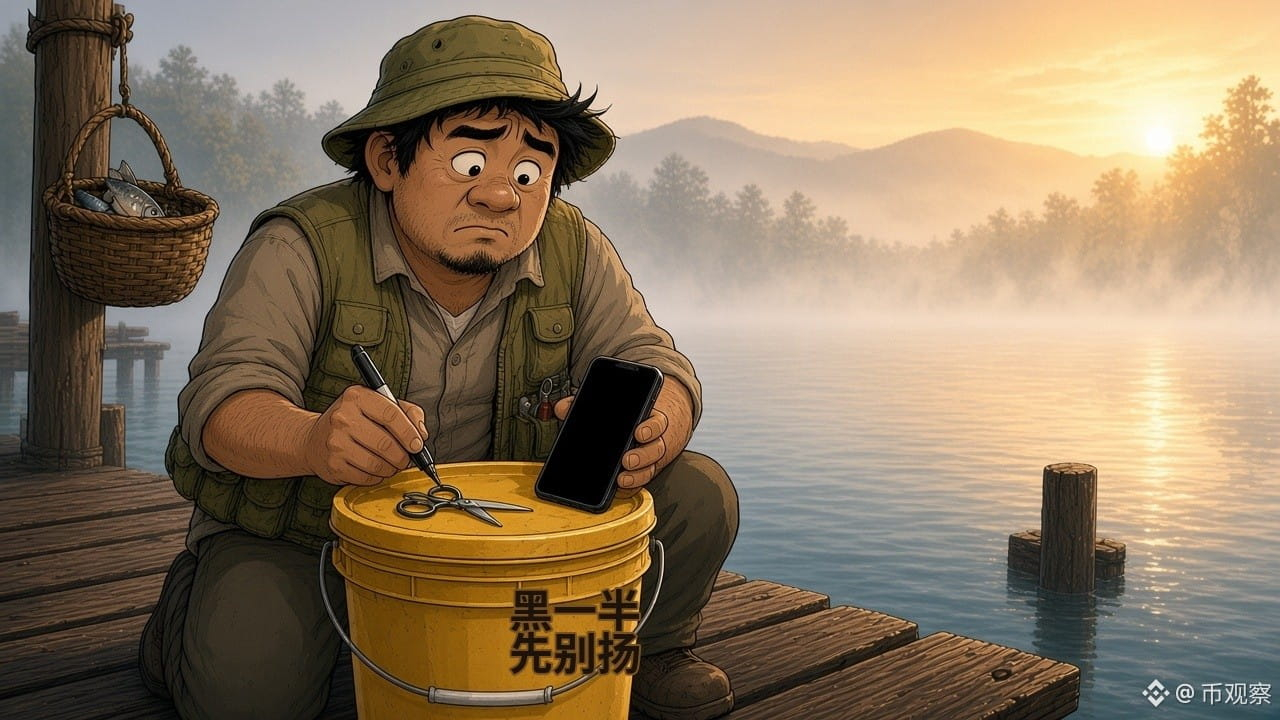
Gong Bankou didn’t try to steal the spotlight from the fish. He walked over to his own bucket before taking out his phone. That overnight snap-back had already given up its gains. The confirmation page was still open, one step before adding to his position. He swiped it away, kept only a small spot position, and tucked the phone—along with the little scissors he never lent out—under the corn-bucket lid. Then he wrote six characters on the lid with a marker: “Halfway under? Don’t raise yet.” He looked at them twice after he was done, as if he’d moved the words from his mouth onto the lid so he wouldn’t forget them again.
Shoudao passed by carrying his fish and still asked, “Brother Gong, how about your bite?”
Gong Bankou wiped the wet hook on the hem of his shirt and smiled. His voice, though, was serious. “If you move before the bite is over, there’ll probably be nothing on the hook. That’s exactly what I just did. Same goes for a position: keep it under control yourself. Don’t mistake halfway under for a fish that’s already firmly hooked.”
(The characters in this story are fictional.)