#cftcapprovestradereportingruleforpredictionmarkets
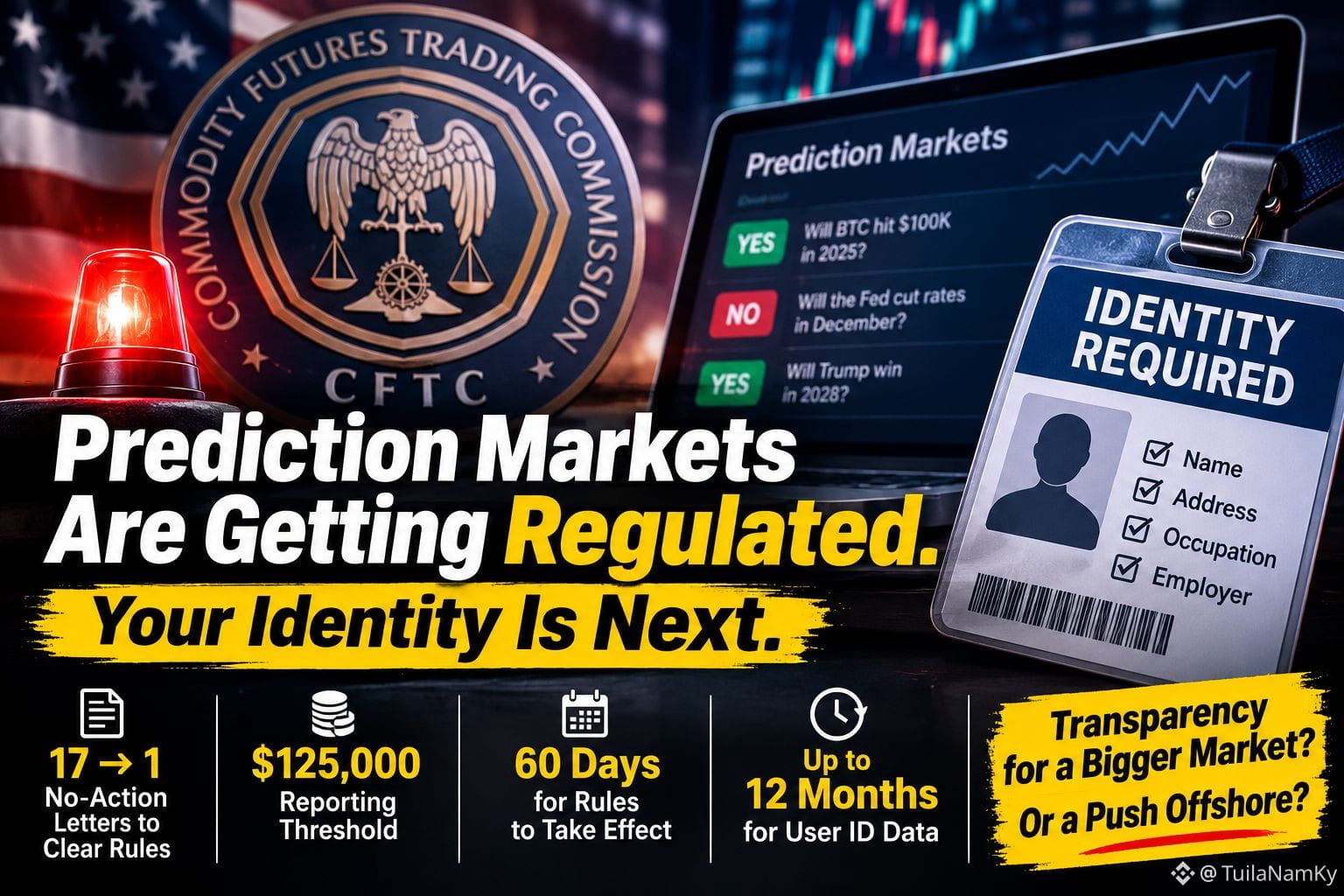
🚨 Prediction Markets Are Getting Regulated. Your Identity Is Next.
For years, prediction markets ran on regulatory duct tape: 17 no-action letters, each a polite "we won't act… for now."
Under Chairman Michael Selig, the CFTC has replaced the patchwork with fixed trade-reporting rules for fully collateralized event contracts.
It was overdue.
About 1,600 contracts were certified in 2025, against roughly 5 a year from 2006–2020.
📊 The numbers worth pinning:
17 no-action letters → 1 standing framework. Ad hoc relief is out, standardized reporting is in.
125,000 contracts or $125,000 notional. That's the large-position reporting threshold. Whale-sized, but now on the record.
60 days after Federal Register publication, and the core rules take effect.
Up to 12 months is the runway for collecting user identity name, address, occupation, employer.
That last bullet is the real plot twist.
"Anonymous gray zone" and "CFTC-regulated platform" are heading for a quiet divorce.
💡 Square Insight:
Clear rules are what let compliant platforms scale and let big capital walk in without a legal escort.
The price of admission is transparency, so traders who treated prediction markets as a lawless side quest should adapt before the reporting does it for them.
So here's the question:
Does mandatory identity plus reporting make prediction markets credible enough for serious money, or does it push the degens toward offshore and on-chain alternatives?
Which side are you on?
$BTC
$ETH
$SOL
NFA / DYOR