#据报美国拟对16个贸易伙伴加征新关税
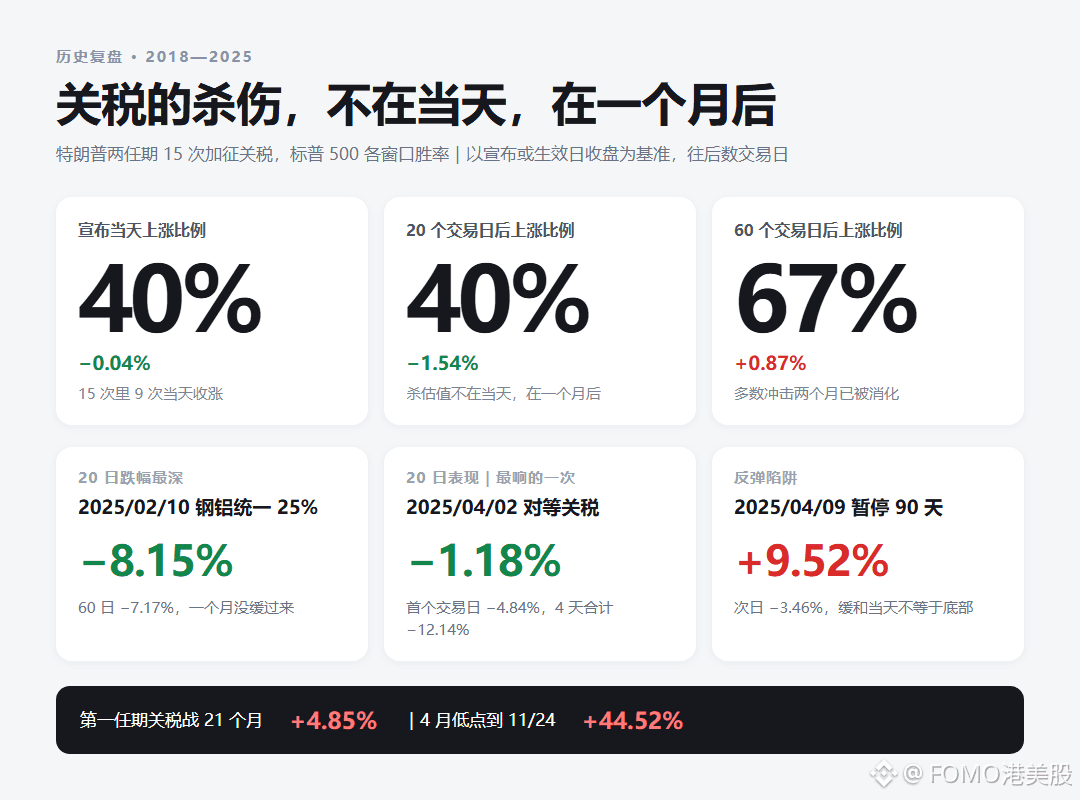
On the day tariffs were announced, the S&P $SPYB barely fell. Across Trump's two terms, tariffs were raised 15 times; the average change that day was −0.04%, and the market closed higher on 9 of those 15 occasions.
The damage came later. After 20 trading days, the share of cases with gains had fallen to just 40%, with an average return of −1.54%. By 60 trading days, the win rate had recovered to 67%, with an average return of +0.87%.
The real damage showed up a month later.
The steepest 20-day drop followed the 25% across-the-board steel and aluminum tariffs on February 10, 2025: the index fell 8.15%. The S&P actually closed up 0.67% on the announcement day, but still hadn't recovered a month later. By contrast, the much-discussed reciprocal tariffs announced on April 2 led to a drop of just 1.18% over 20 days. The news came after the market closed; the index fell 4.84% on the first trading day and 12.14% over four trading days.
Even a day of easing isn't necessarily the bottom: the 90-day pause on April 9 sent the index up 9.52%, but it fell 3.46% the next day.
The tariff war during Trump's first term lasted 21 months, yet the S&P rose 4.85%. From its April low to November 24, it gained 44.52%. Rate hikes, retaliation, and agreements came in turn, but the index kept climbing. Tariffs changed the pace, not the direction.
#关税 #标普500