The KAFD Tower in Riyadh was bombed and 11 people were injured, but that story is already behind us. Don’t keep trading it as a bearish catalyst today. I’ve also had the knee-jerk reaction of “buy BTC during a war,” but the market keeps teaching me lessons.
What’s really hanging over us now is the Strait of Hormuz: a container ship was attacked, two oil tankers struck mines and caught fire, Iran says it will “tighten the blockade day by day,” and the U.S. is still discussing whether to include Iran’s leaders among its targets. That’s the knife hanging over oil prices.
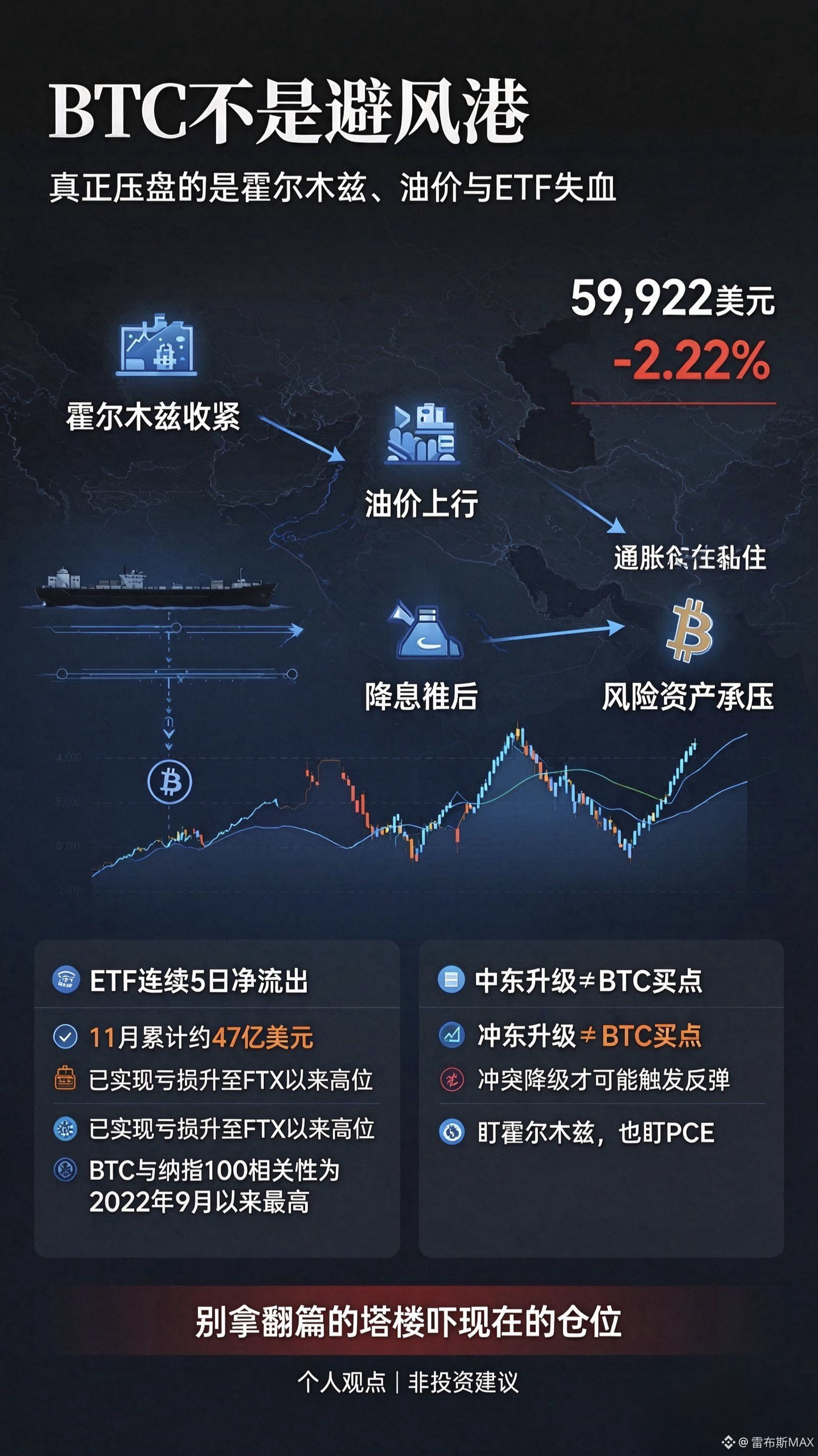
The crypto market is taking an even harder hit. BTC is at $59,922, down 2.22% in 24 hours; ETFs have seen net outflows for five consecutive trading days, totaling about $4.7 billion in November—a monthly record; realized losses have climbed to their highest level since the FTX collapse, and BTC’s correlation with the Nasdaq 100 is also at its highest since September 2022. Put simply, BTC isn’t “being dragged down by the Middle East.” It’s tied to tech stocks by the same interest-rate leash, and ETF outflows are slowly draining it dry.
My view hasn’t changed: escalation in the Middle East → higher oil prices → persistent inflation → delayed rate cuts → real interest rates weigh on risk assets. BTC is at the end of that chain, not a safe haven. The “buy BTC during a war” narrative hasn’t given me a reason to buy—at least not yet. And don’t get too excited about Iran charging Bitcoin tolls: most of the settlement is in stablecoins. Crypto is a payment rail here, not digital gold.
Of course, I won’t speak in absolutes: if the U.S. and Iran make peace, tensions in the Strait of Hormuz ease, and oil prices reverse course, inflation expectations could cool and BTC might rebound. But that would be a trade on de-escalation, not escalation. Confuse the two and you could pay dearly.
In short: don’t let an old story about a tower spook your positions today. Keep an eye on the Strait of Hormuz, and on PCE. Just my personal opinion, not a trading signal.
#BTC #中东局势 #PersonalOpinion