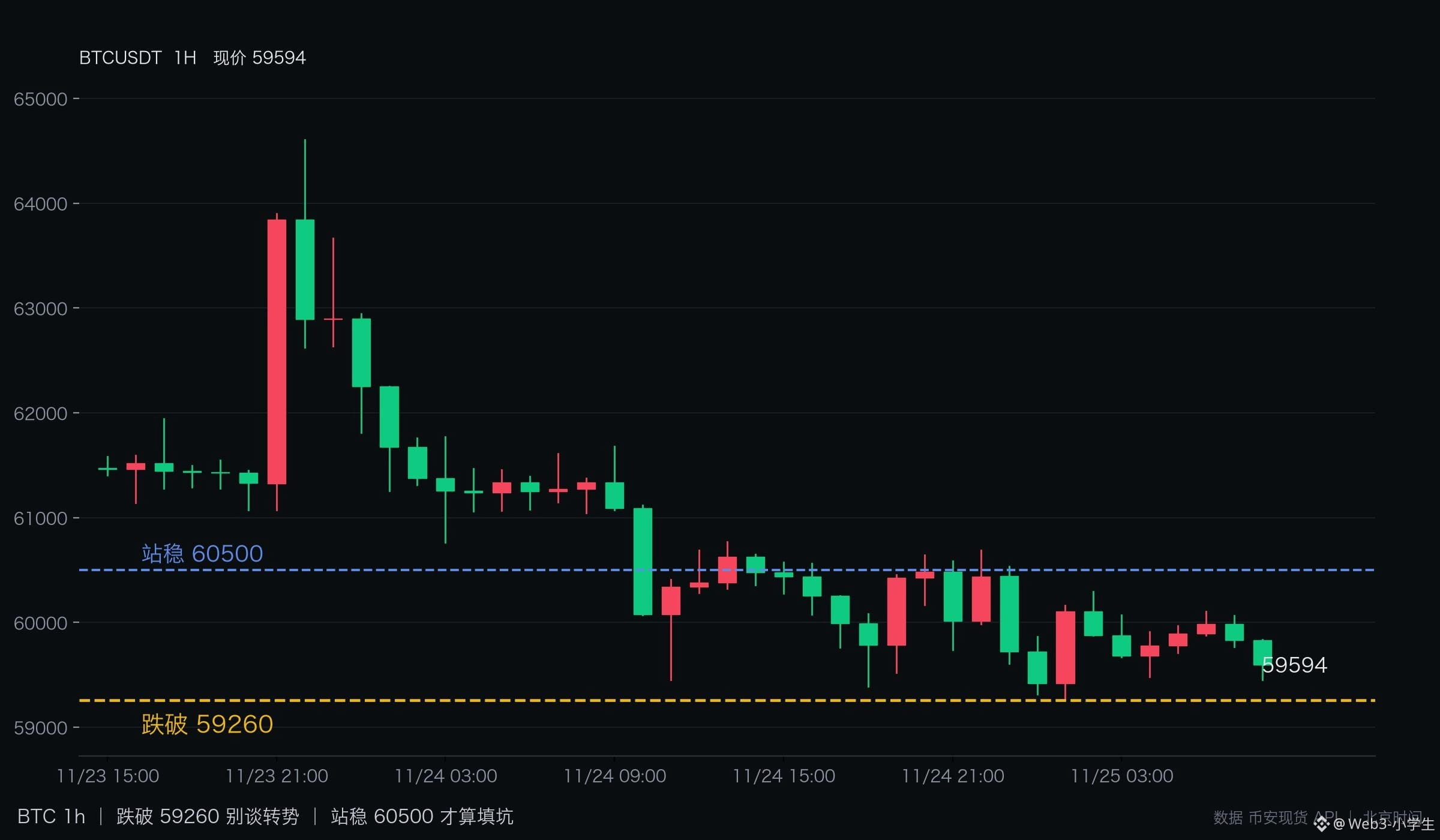
This morning it plunged to 59,260. Now it’s just above 59,600, and Bitcoin is still below 60,000.
Someone brought out a report to make the case that institutional holdings hit a record $29.8 billion. That’s old news from September 30.
The report came out last week. Galaxy counted the 13F filings of 2,166 institutions and found a net increase of 49,000 bitcoin-equivalent shares in the third quarter, bringing their total holdings to 356,000. At the prices then, that was an all-time high.
The numbers are real.
The problem is the timing.
A 13F is a snapshot at quarter-end. It tells you who held what at the end of September; it doesn’t tell you who’s selling in November. Spot ETFs saw record net outflows of $4.71 billion in November. There are three months between a record on the books and record outflows, but the same batch of headlines bundled them together and served them up in the same week.
What stood out to me most in this report wasn’t the total. It was that the holders have changed.
Hedge funds’ share fell from 50.6% at the end of 2024 to 19%. Financial advisers and wealth platforms rose from 24.3% to 40.5%, adding to their holdings for nine quarters in a row.
Fast money left; slow money came in.
That should be a good thing.
But there’s another line buried in the report. Wells Fargo added 30,000 bitcoin-equivalent shares in a single quarter, taking the top spot as the largest individual holder for the first time, with a position worth $2.5 billion. Meanwhile, BlackRock’s IBIT alone accounted for 65.2% of institutional holdings. The money hasn’t gone far; it’s just sitting in a slower pocket. Slow, but still there.
Slow money comes with a condition: it has to believe this thing can keep going up. What if it doesn’t? When $4.71 billion flowed out in November, the cracks were already showing. Last week Bitcoin plunged to 55,000, its lowest level in more than two years, and only climbed back near 60,000 on Tuesday.
Saylor is still buying, adding another 457 coins to bring his holdings to 850,000. On November 23, the CFTC issued a staff opinion allowing derivatives exchanges to count $BTC toward their operating reserves, but at an 80% discount: one dollar counts as only 80 cents. He seized on that line, saying the next phase is to put Bitcoin to work. $MSTRB has fallen nearly 9% from its peak over the past couple of days.
Sounds great. But regulators are only willing to count it at 80 cents on the dollar.
Spot ETF shares are held in custody on platforms like $COINB . When investors redeem, actual money goes out the door, no matter what the reports say.
The report doesn’t break down how much of that $4.71 billion outflow came from financial advisers cutting their positions. We can’t tell; we’ll have to wait for next quarter’s 13F filings. Only two things are certain: institutional books stop at September, while prices stop at today. Before the December 9 rate decision, this gap won’t close on its own.
For now, keep an eye on 59,260, today’s low. If it can’t get back above that, a rebound to 60,000 is just a chance to cut losses, not a trend reversal. Let’s talk about the rest only if it gets firmly above 60,500.