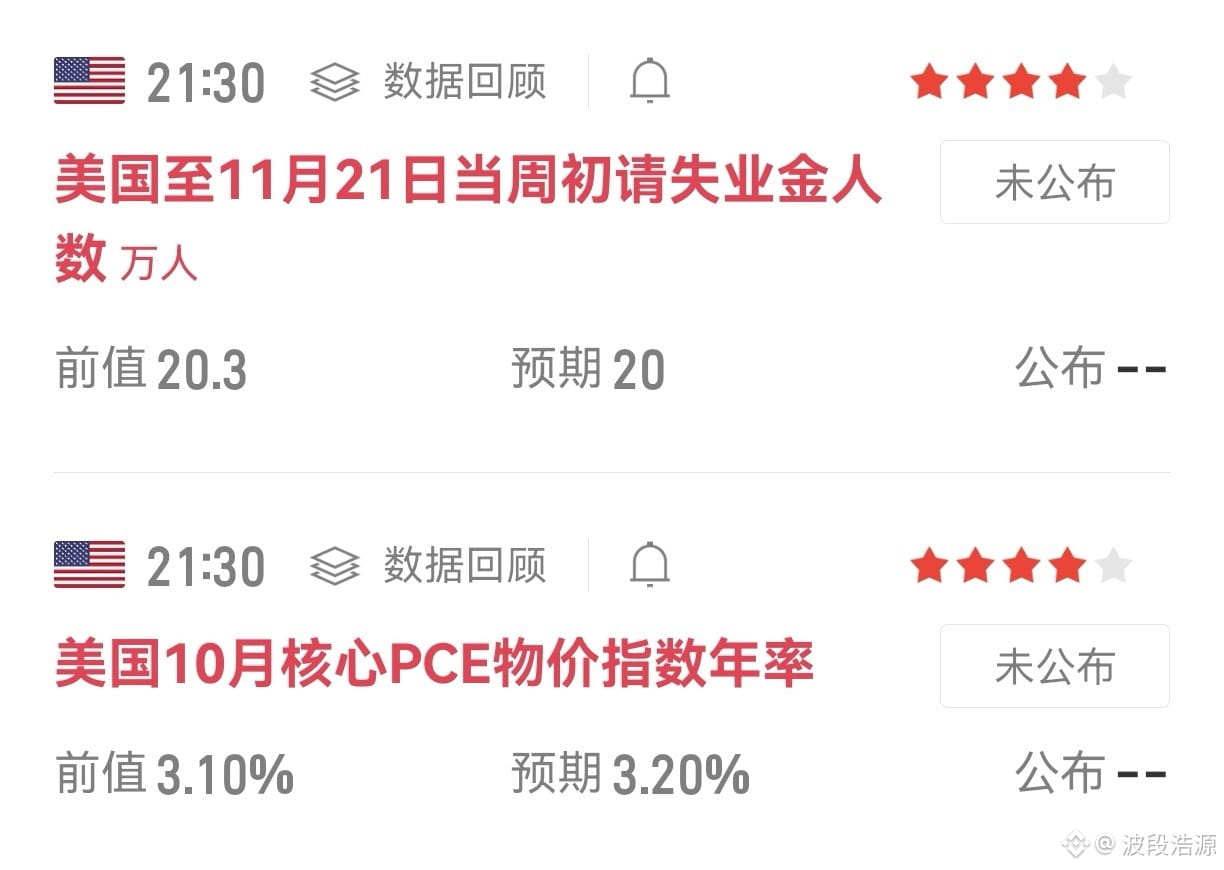
Tonight’s PCE and jobless claims data are due, and BTC and ETH will likely follow one of these three scenarios: $BTC $ETH #感恩节交易周开启,市场能否迎来修复性反弹?
1. Hotter-than-expected data (PCE ≥ 3.3% or initial claims ≤ 200,000)
Persistent inflation is confirmed, and expectations of tighter policy are ramped up. The dollar and Treasury yields rise, putting direct pressure on BTC as a high-risk asset and increasing the risk of retesting previous lows. As a higher-beta asset, ETH faces heavier selling pressure, with its downside moves likely to become even larger.
2. In line with expectations (PCE 3.2%, initial claims 200,000)
Rate hikes have already been priced in, so markets may briefly stabilize. But inflation remains above target, making it difficult to reverse expectations of a December rate hike. BTC will most likely remain weak and range-bound, with any rebound depending on the strength of inflows. ETH is likely to move in tandem, with an even more pronounced tendency to fall along with BTC but not rise with it, limiting its rebound potential.
3. Cooler-than-expected data (PCE ≤ 3.1% or initial claims > 200,000)
Rate-hike expectations ease, and risk appetite picks up temporarily. BTC gets a brief reprieve and room to recover; ETH has greater upside sensitivity and may lead the rebound. However, a single month’s data is not convincing enough: a recovery is not a reversal, so avoid chasing prices higher.
Note: If the signals are contradictory, PCE carries more weight than initial claims. The main question right now is whether inflation will force rate hikes. Employment data is providing less marginal information, so PCE remains the main factor setting the direction.
Summary: Hotter data is directly bearish; in-line data means weak, range-bound trading; cooler data offers temporary relief, not a reversal. The broader picture does not support a sustained uptrend. Stay composed and stick to the plan.