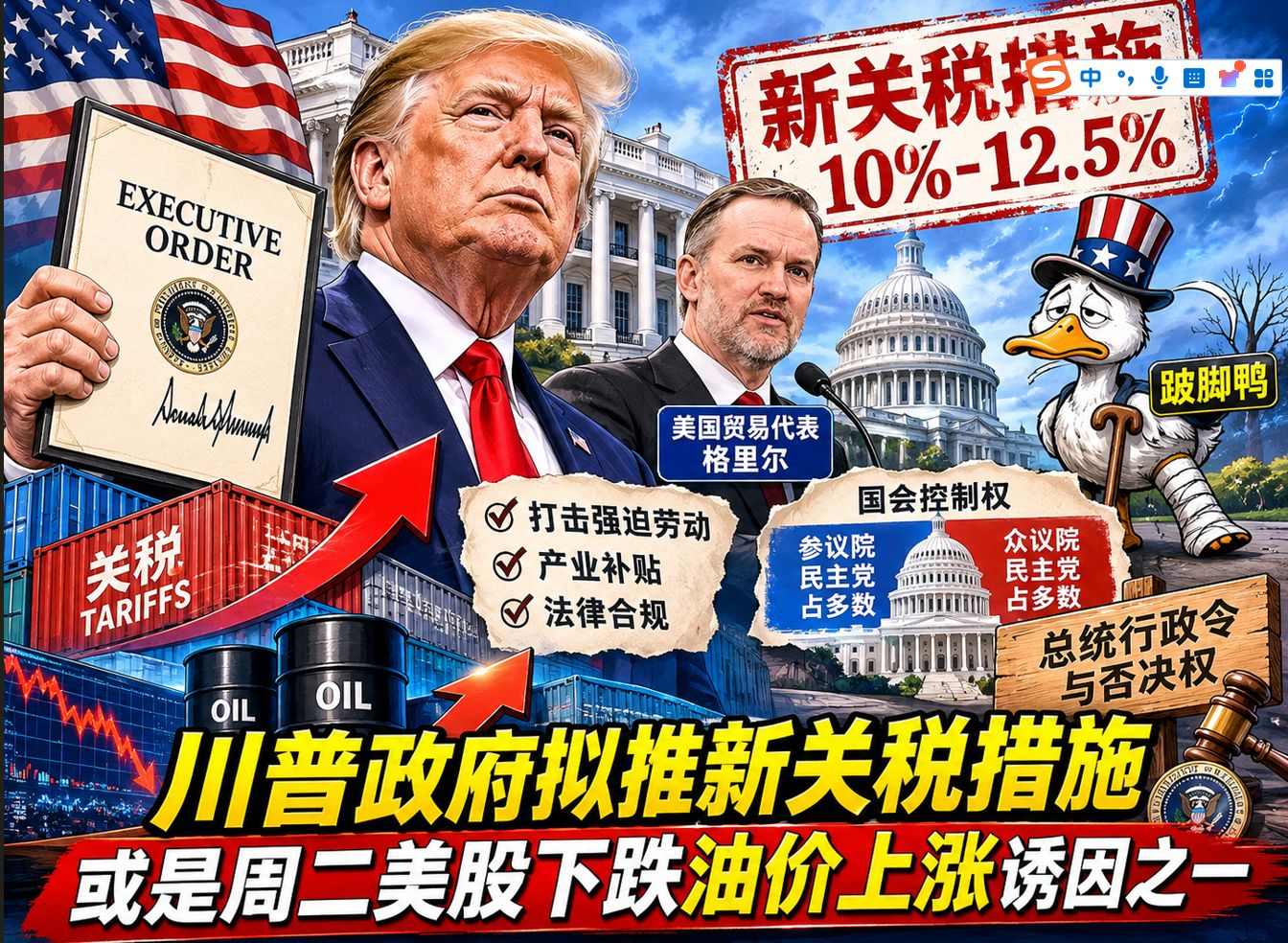
🚨 Trump administration plans new tariff measures, possibly one of the factors behind Tuesday’s decline in U.S. stocks and rise in oil prices
According to The Wall Street Journal, the Trump administration is preparing to introduce new tariff measures, imposing tariffs of 10% to 12.5% on its major trading partners. The administration says the measures are aimed at combating forced labor.
Separately, U.S. Trade Representative Greer is expected to announce the results of a special Section 301 trade investigation this week.
The investigation began in March this year and aims to establish a legal basis for restoring the Trump administration’s “tiered tariff design and ‘dynamic escalation’ provisions.”
What has drawn the most attention from markets is that these new tariffs, based on “industrial subsidies,” would not replace the “forced labor” tariffs scheduled to take effect in July 2026; instead, they could be added directly on top of them.
If the two sets of tariffs are successfully combined, the overall tariff barriers on goods exported to the U.S. by dozens of trading partners would rise sharply, returning to levels close to the high tariffs set by Trump in 2025.
#币圈心学
This report by The Wall Street Journal may be one of the factors behind Tuesday’s overnight decline in U.S. stocks and rebound in oil prices.
The Trump administration’s deliberate emphasis on “combating forced labor” is not simply motivated by human rights concerns. Rather, it reflects a multifaceted strategic calculation involving legal compliance, global reach, and political maneuvering.
After losing control of both chambers of Congress, Trump will find it difficult to get his foreign economic policies through Congress. His remaining options are to use executive orders and veto powers, and to engage in legal battles and political maneuvering with Congress.
#关税 #贸易保护