$AERO: Status Quo Bias and Market Inertia
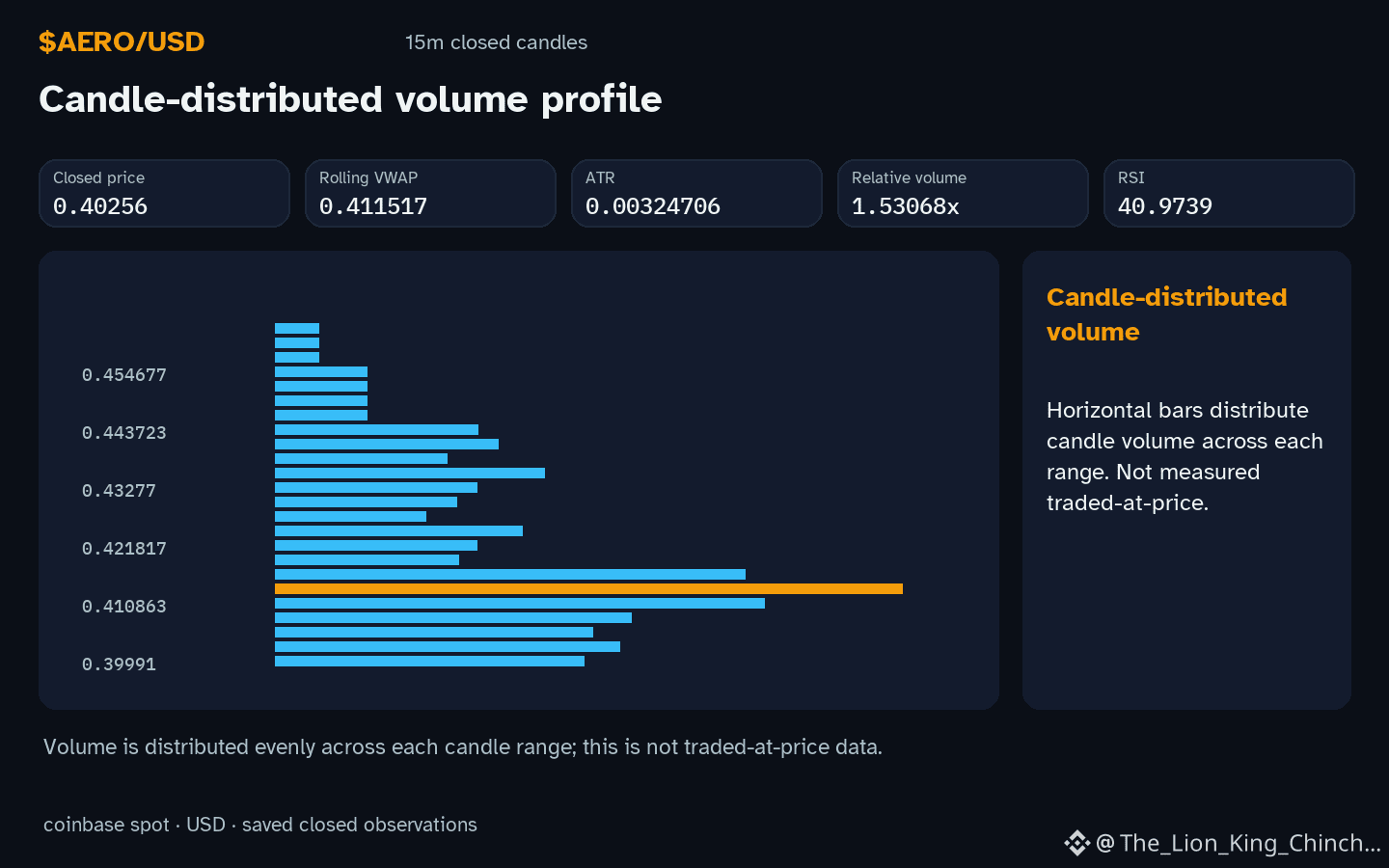
Why does $AERO keep sliding down on the hourly chart while volume stays above baseline? The observation shows an hourly down direction with relative volume 1.53x baseline, raising a question about default inertia when market structure shifts.
When a price trend reverses, traders often cling to the previous reference point – the last known support or the prior trend line – instead of recalibrating to the new direction. This anchoring to an old frame can create a status‑quo bias, where existing orders or watchlist alerts remain untouched even as the market moves against them. The current candle suggests a shift, yet the lingering focus on the earlier range may delay corrective actions.
One possible reaction is to hold an existing long position, hoping the down move is temporary, while another trader might add to a short position only after confirming that the new lower structure holds. Both responses stem from the same inertia: the reluctance to abandon the familiar reference.
A practical self‑check is to ask: “If the next hourly candle breaks the current low, would I still treat the old support as relevant?” If the answer is no, the bias is likely influencing the decision.
A counterexample would be a sudden upward reversal with RSI 41.0 indicating overbought conditions; such evidence would weaken the inertia hypothesis and suggest the market is resetting rather than persisting in its previous frame.
Probabilistic market research, not a recommendation or guaranteed return.
#AERO #TradingPsychology #CryptoLearning