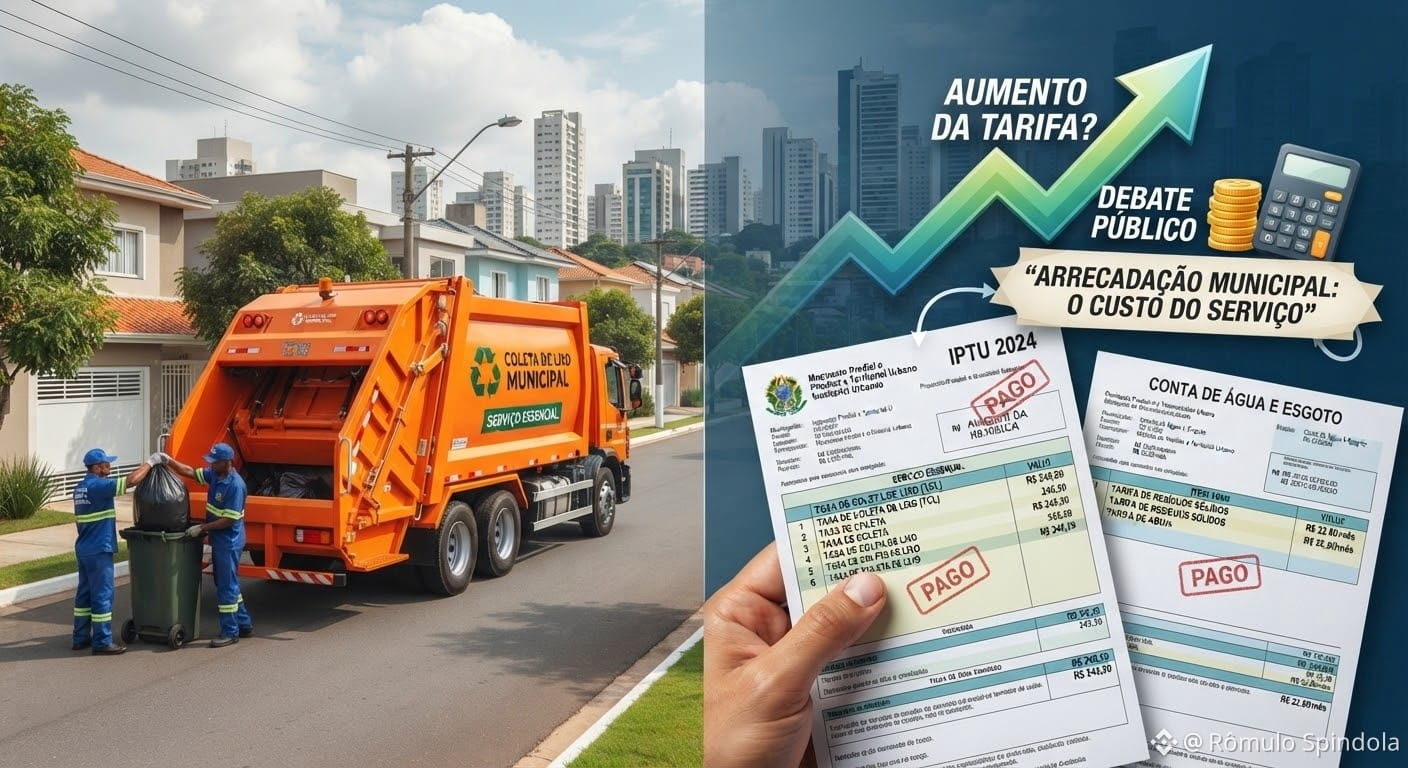
I had a question about whether we paid for garbage collection and how it worked, so I asked an AI. And it gave me the following answer.
Yes, people pay a specific fee for this service, although it almost never comes on a separate bill just for that. In most Brazilian cities, household garbage collection is charged along with the IPTU (urban property tax) or on the water bill. In most Brazilian cities, household garbage collection is charged along with the IPTU or on the water bill.
This fee is charged by the city government (or by a company it has hired) and usually appears under names such as Garbage Collection Fee (TCL), Solid Waste Management Fee (TMRS), or Public Cleaning Fee.
How the charge works in practice:
On the IPTU bill: This is the most traditional format (used in Rio de Janeiro, for example, with the TCL). The collection fee is listed as a separate item within the property's annual tax bill and can be paid in full or in installments along with the IPTU.
On the water/sewer bill: Many municipalities have started charging the fee monthly on the utility company's bill to reduce delinquent payments and make it easier to spread the cost throughout the year.
In condominiums: Each apartment pays its own fee through its respective IPTU bill (or individual water bill). The condominium does not pay an "extra fee" for the city garbage truck to collect regular household waste, as long as the volume is within the residential limit.
What about renters?
By law (the Tenancy Act), ordinary maintenance expenses and fees related to the use of the property—such as the IPTU and the garbage fee—are the owner's responsibility, but it is common and legal for the rental agreement to pass this payment on to the tenant.
Exemptions
Low-standard residential properties, families registered with CadÚnico, or people eligible for an IPTU exemption (such as low-income retirees, depending on each municipality's rules) are generally also entitled to a full or partial exemption from the garbage fee.
Now that I know this, I wonder if the collection fee
$ICP