

#anthropicbreaksbelowipopriceamidaislump 🌍 #PositiveMindsGlobalResults
BINANCE SQUARE | INVEST • LEARN • GROW • TOGETHER
NOVEMBER 25, 2026 | GLOBAL MARKETS • AI • BITCOIN • TRADE • ECONOMY
GLOBAL MARKETS AT A CROSSROADS: TARIFF THREATS, AI SELL-OFF, ANTHROPIC'S IPO AND BITCOIN'S DECLINE
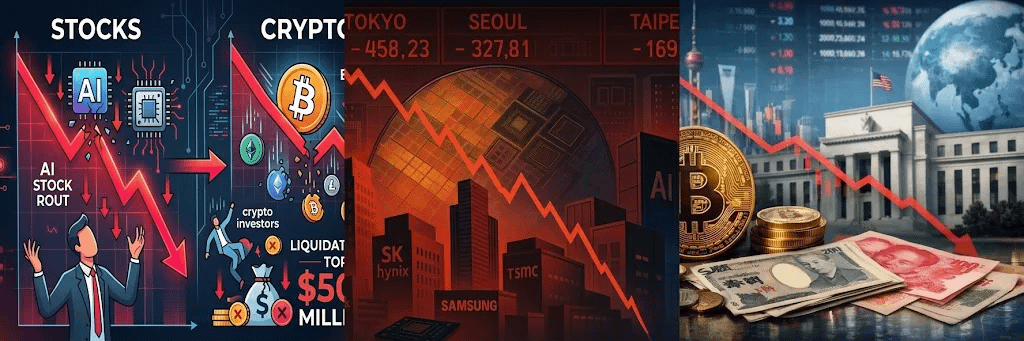
🌐 A NEW WAVE OF MARKET UNCERTAINTY IS BUILDING
Global financial markets are facing a renewed wave of uncertainty as potential US tariff increases, a sharp reversal in artificial intelligence stocks, concerns surrounding Anthropic's record-breaking IPO and Bitcoin's recent decline begin to converge.
What initially appeared to be separate developments across trade policy, technology and cryptocurrency is increasingly becoming a broader question about investor confidence, valuations, liquidity, economic growth and the sustainability of the global AI investment boom.
The United States is reportedly preparing new tariffs against China, Japan, South Korea, the European Union and more than a dozen other trading partners. At the same time, AI-linked stocks have come under renewed pressure, investors are reassessing the enormous costs of AI infrastructure, and Bitcoin is struggling amid a deteriorating appetite for risk.
The timing is significant.
Markets are no longer simply rewarding companies for announcing AI investments, expansion plans or ambitious growth projections. Investors are increasingly demanding evidence that the billions—and potentially trillions—being committed to artificial intelligence can eventually produce sustainable revenue, profitability and returns.
This could mark a critical transition for global markets: moving from the excitement of the AI boom toward a more demanding period of financial scrutiny.
🇺🇸 1. US TARIFF THREATS REIGNITE GLOBAL TRADE UNCERTAINTY
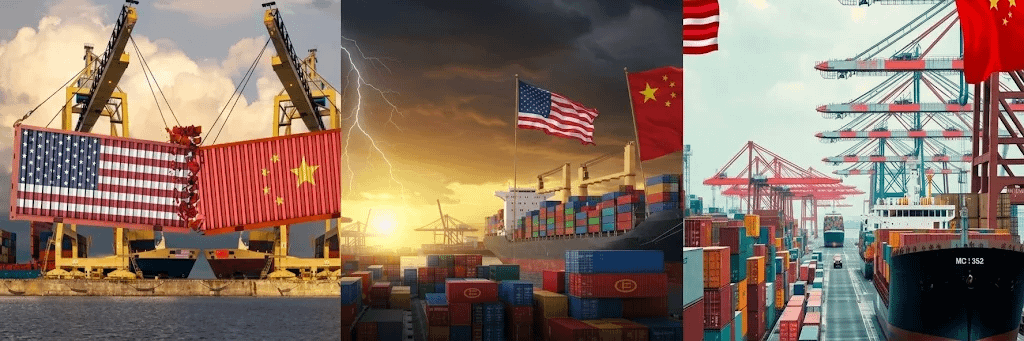
The Trump administration is preparing to unveil potential new import duties targeting 16 major trading partners as part of an investigation into alleged excess industrial capacity, government subsidies and manufacturing practices that Washington believes disadvantage American companies.
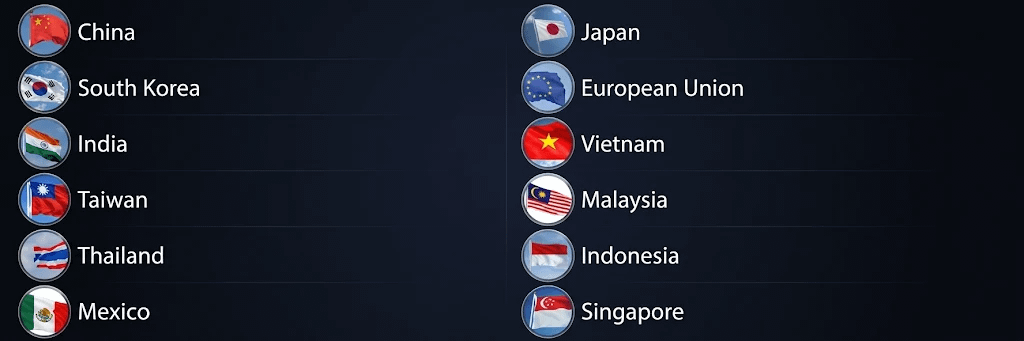
The investigation, conducted under Section 301 of the Trade Act of 1974, reportedly covers China, Japan, South Korea, the European Union, India, Vietnam, Taiwan, Thailand, Malaysia, Indonesia, Mexico, Singapore and several other economies.
According to reports, the findings and potential tariff proposals could be announced as soon as this week. However, the final tariff rates, exemptions and implementation timetable remain uncertain.
Countries potentially facing new tariffs
Major economies and trade partners under scrutiny
🌍 PositiveMindsGlobalResults I BINANCE SQUARE | INVEST • LEARN • GROW • TOGETHER I NOVEMBER 25, 2026 | GLOBAL MARKETS • AI • BITCOIN • TRADE • ECONOMY
Other economies included in the reported investigation are Norway, Switzerland, Bangladesh and Cambodia.
The US administration argues that government-backed subsidies, state-supported financing, industrial policies and excess manufacturing capacity allow foreign producers to compete unfairly, potentially flooding international markets with goods and putting American industries under pressure.
China is expected to face particularly close scrutiny, with Washington arguing that its industrial policies contribute to excess production in sectors including electric vehicles, solar products, metals, machinery and other manufacturing industries. Beijing has rejected accusations that its exports are unfair, maintaining that its industrial competitiveness reflects economic strengths and market demand.
Why this matters to global markets
Tariffs are not simply political announcements. If implemented, they can affect the cost of imported goods, company margins, consumer prices, manufacturing investment, supply-chain decisions and international trade volumes.
Businesses may face higher costs when sourcing components or finished products. Companies could respond by passing those costs to customers, reducing profit margins, moving production, delaying investment or restructuring their supply chains.
For financial markets, the biggest concern is the possibility that higher tariffs could create a difficult combination of slower economic growth and renewed inflationary pressure.
That scenario could complicate the Federal Reserve's policy decisions, particularly if inflation remains elevated while economic activity begins to weaken.
The market risk is not just the tariffs themselves—it is the possibility that businesses and investors begin preparing for another prolonged period of unpredictable global trade policy.
📉 2. ANTHROPIC'S IPO: A HISTORIC DEBUT FOLLOWED BY A SHARP REVERSAL
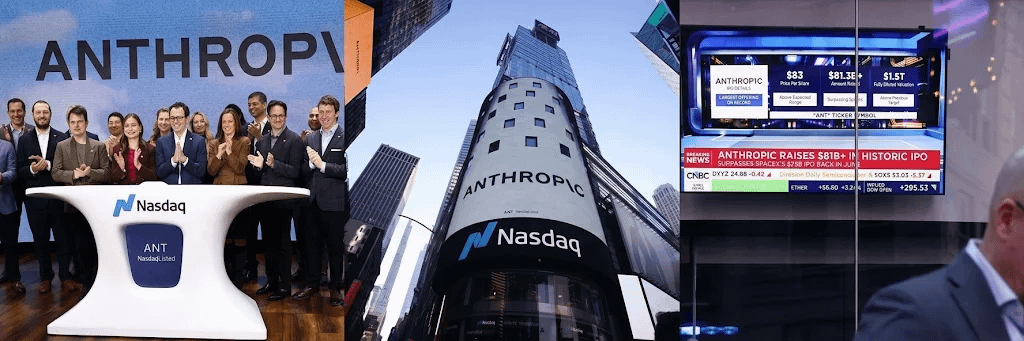
Anthropic's IPO has quickly become one of the most important tests of investor confidence in the artificial intelligence industry.
The company, known for developing Claude AI, entered public markets amid enormous investor interest in artificial intelligence. Its debut attracted attention not only because of its size, but because it provided investors with a direct opportunity to evaluate the financial expectations surrounding one of the industry's leading AI developers.
However, the excitement surrounding the listing has been followed by significant volatility.
Anthropic shares fell below their $83 IPO price on November 24, declining to approximately $76.60, after opening at $111.50 on November 19. Its valuation reportedly fell from around $2 trillion at its debut to approximately $1.5 trillion.
The reversal is significant because it raises questions about how much future growth was already reflected in the company's valuation.
The AI valuation problem
Artificial intelligence remains one of the most transformative technologies of this generation. However, the financial cost of developing and operating advanced AI models is enormous.
Companies must continuously invest in:
High-performance computing infrastructure.
Advanced AI chips and accelerators.
Data centres and electricity.
Cloud infrastructure and networking.
Research, engineering and talent.
Model training and inference.
Cybersecurity and data protection.
Global commercial expansion.
Even companies experiencing rapid revenue growth may face enormous operating costs, capital commitments and cash-flow pressure.
The market is beginning to distinguish between companies that can demonstrate sustainable commercial returns and those whose valuations depend heavily on expectations of future dominance.
Anthropic's post-IPO weakness does not automatically mean the company is fundamentally failing. It may instead reflect investors reassessing the price they are willing to pay for long-term AI growth.
Why Anthropic's decline matters beyond Anthropic
The IPO has become an important market signal for the broader AI sector.
If investors become increasingly cautious about the valuation of a leading AI company, the consequences may extend to other AI developers, semiconductor manufacturers, cloud providers, data-centre operators and companies supplying AI infrastructure.
The key question is no longer simply:
How quickly is AI growing?
It is becoming:
How much capital must be invested to achieve that growth, and how much profit will ultimately be generated?
This distinction could define the next phase of the AI market.
🧠 3. NVIDIA, ANTHROPIC AND AI STOCKS FACE A NEW REALITY
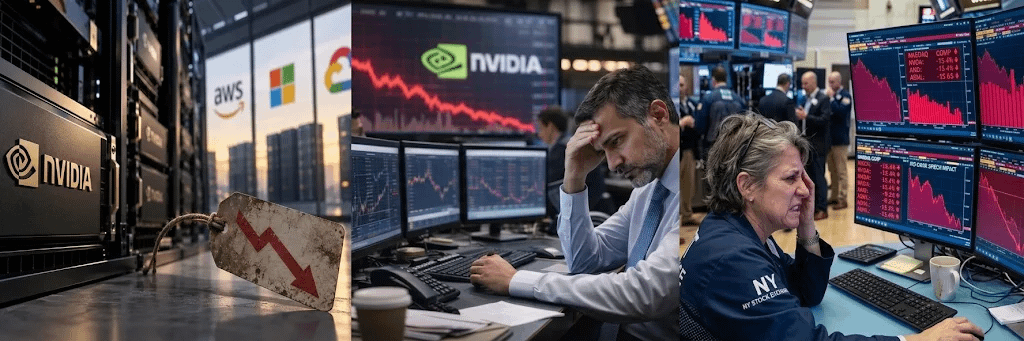
The artificial intelligence investment boom is entering a more challenging phase as investors increasingly question whether the industry's extraordinary spending can deliver the returns required to justify current valuations.
On November 24, US stocks reversed lower as AI-related shares weakened, pulling major indexes down despite gains across parts of the broader market.
The S&P 500 declined approximately 1%, while the Nasdaq Composite fell around 2.1%. Nvidia dropped 7.8% following its extraordinary 31.5% rally the previous day. Other AI-linked companies, including Anthropic and CoreWeave, also faced selling pressure.
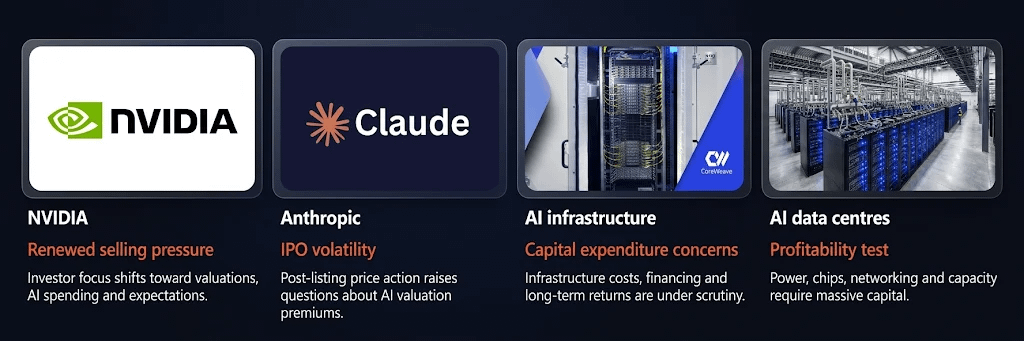
The growing gap between AI expectations and financial reality
The market's concern is not necessarily that artificial intelligence will disappear or lose its importance.
The concern is that the financial market may have moved too far ahead of the actual economic benefits currently being generated.
Major technology companies are investing heavily in AI infrastructure. These investments include chip purchases, data-centre construction, electricity capacity, cloud platforms, networking equipment and long-term computing commitments.
While these investments could create enormous value over time, the financial returns may not arrive at the same speed as the capital being deployed.
This creates a critical risk for investors.
If AI adoption continues growing but companies struggle to monetize the technology quickly enough, valuations could remain under pressure even while AI usage expands.
In other words, the technology can succeed while some investors still lose money.
The market is demanding more than growth
The next stage of the AI investment cycle could reward companies capable of demonstrating:
Strong and sustainable revenue growth.
Improving operating margins.
Positive free cash flow.
Profitable AI services and products.
Efficient use of infrastructure.
Competitive advantages that are difficult to replicate.
Returns that justify large capital expenditures.
This could result in a more selective market where AI companies are no longer valued equally simply because they operate in the AI sector.
₿ 4. IS ANTHROPIC'S IPO REALLY RESPONSIBLE FOR BITCOIN'S RECENT DOWNTURN?
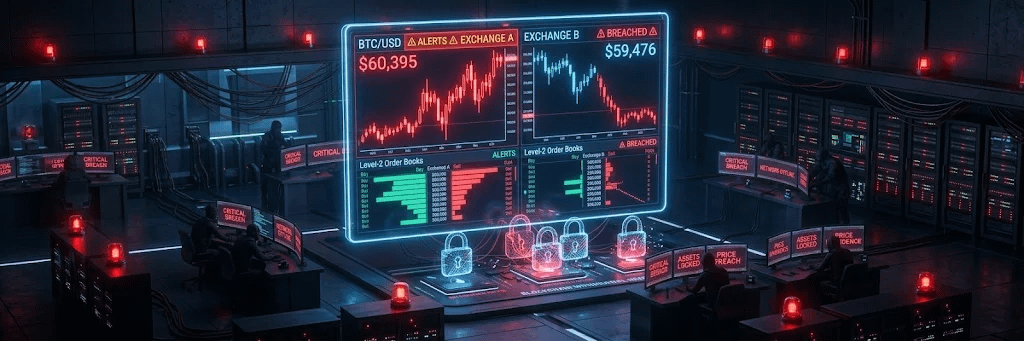
Bitcoin's recent decline has generated a difficult question for cryptocurrency investors: Is the AI market correction beginning to spill over into digital assets, and is Anthropic's IPO somehow contributing to the pressure?
The timing has attracted attention.
Anthropic's IPO initially generated enormous excitement, but its shares subsequently weakened. AI stocks then experienced another significant sell-off, while Bitcoin also came under pressure amid a broader decline in investor confidence.
The relationship deserves attention—but it must be understood carefully.
There is no confirmed direct link between Anthropic's IPO and Bitcoin's decline
Anthropic's share-price movement does not directly determine Bitcoin's value.
Bitcoin is influenced by a much wider combination of factors, including:
Global liquidity conditions.
Federal Reserve interest-rate expectations.
Institutional investment and ETF flows.
Leverage and derivatives positioning.
Liquidations across crypto exchanges.
US dollar strength or weakness.
Risk appetite across equities and technology.
Regulatory developments.
Geopolitical uncertainty.
However, financial markets are increasingly interconnected.
When investors become concerned about valuations in one major asset class, that caution can spread to other assets perceived as risky. Technology stocks and cryptocurrencies can both experience selling pressure when investors reduce exposure to speculative investments, raise cash or seek safer assets.
The AI trade and Bitcoin may share the same risk environment
Bitcoin is increasingly traded within the same global liquidity environment as high-growth technology stocks.
When institutional investors become more defensive, they may reduce exposure to multiple risk-sensitive investments simultaneously.
Technology stocks decline
AI valuations and future earnings expectations are reassessed.
Risk appetite weakens
Investors reduce exposure to volatile and speculative assets.
Bitcoin faces selling pressure
Crypto can suffer as liquidity, sentiment and leverage deteriorate.
This is a potential transmission mechanism—not proof that one market is causing another to fall.
Why Bitcoin could remain vulnerable
If the AI stock correction continues, investors could become more cautious toward the entire risk-asset environment.
Bitcoin may face additional pressure if:
Institutional investors reduce risk exposure.
US technology stocks continue falling.
Market volatility increases.
Leveraged traders are forced to liquidate.
Spot Bitcoin ETF flows weaken.
Liquidity conditions tighten.
Investors move toward cash and lower-risk assets.
Conversely, if Bitcoin stabilizes despite falling technology stocks, it could indicate that cryptocurrency markets are becoming less dependent on broader technology-sector sentiment—or that crypto-specific demand is supporting prices.
The critical question is whether Bitcoin can eventually decouple from the current risk-off environment.
Could Bitcoin fall further?
Yes, additional downside remains possible if global risk appetite deteriorates, liquidity tightens, leveraged positions unwind and major support levels fail.
But a decline in AI stocks alone does not establish a reliable Bitcoin price target.
Investors should avoid assuming that Bitcoin must follow Nvidia, Anthropic or the Nasdaq in a predictable manner. Correlations can change rapidly, particularly during periods of financial stress.
The most important signal will be whether Bitcoin continues falling alongside technology stocks—or begins showing independent strength even while the AI market remains under pressure.
💻 5. MICROSOFT TURNS TO INTEL EMIB TO REDUCE AI CHIP BOTTLENECKS
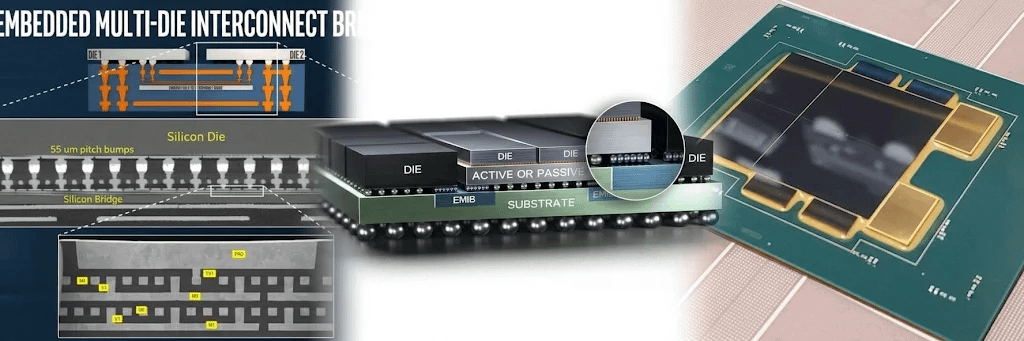
While investors are questioning the sustainability of AI spending, the industry's largest technology companies are continuing to expand and redesign the infrastructure supporting artificial intelligence.
Microsoft's decision to adopt Intel Foundry's EMIB advanced packaging technology for custom Azure chips represents an important development in the semiconductor supply chain.
The agreement, announced November 18, highlights Microsoft's effort to diversify its AI hardware ecosystem and improve flexibility in building custom computing solutions.
Intel's EMIB—Embedded Multi-die Interconnect Bridge—is an advanced packaging technology designed to connect multiple chip components within a package using a high-density interconnect bridge.
Rather than depending entirely on one advanced packaging approach or supplier, technology companies are increasingly exploring alternative manufacturing, packaging and chip integration solutions to improve supply availability and manage infrastructure costs.
Microsoft's move also reflects the growing importance of custom silicon in cloud computing.
Why advanced packaging matters to AI
Modern AI computing is not dependent on a single chip.
High-performance AI systems require an increasingly complex combination of:
GPU and AI accelerator chips.
CPUs for system operations.
High-bandwidth memory.
Advanced chip packaging.
High-speed interconnects.
Networking infrastructure.
Power delivery and cooling.
As AI models become larger and more computationally demanding, the ability to combine multiple chip components efficiently becomes increasingly important.
Advanced packaging can help improve communication between chaplets, reduce certain integration constraints and support more complex semiconductor designs.
Microsoft and Intel: a strategic opportunity
The partnership could create a new opportunity for Intel Foundry as Microsoft seeks additional flexibility in its custom Azure hardware development.
For Intel, winning a major cloud customer for its advanced packaging technology could strengthen its position in the semiconductor manufacturing ecosystem.
For Microsoft, diversifying its chip supply and packaging capabilities may provide greater control over its infrastructure roadmap, potentially reducing reliance on a limited number of suppliers and technologies.
However, the agreement should not be interpreted as Microsoft abandoning Nvidia or TSMC.
The AI hardware ecosystem is too large and complex for a single supplier to replace all existing technologies immediately. Instead, companies are increasingly pursuing diversified hardware strategies, combining GPUs, custom accelerators, CPUs, memory and different packaging technologies according to workload requirements.
The bigger message is that the AI infrastructure race is expanding beyond the battle for GPUs.
The next competitive advantage may come from the entire computing architecture—how chips are manufactured, connected, powered, cooled and deployed at scale.
⚙️ 6. THE AI INFRASTRUCTURE RACE IS BECOMING A SUPPLY-CHAIN BATTLE
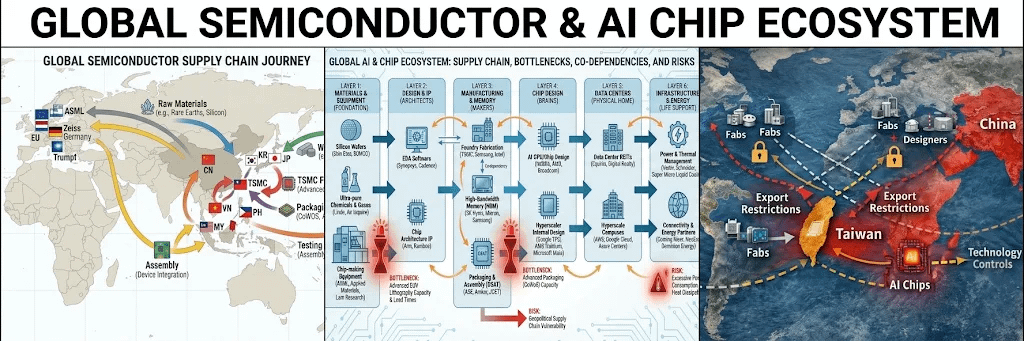
The global AI race is increasingly becoming a battle for control over the entire semiconductor and computing supply chain.
The industry depends on a highly interconnected ecosystem involving semiconductor designers, foundries, advanced packaging providers, memory manufacturers, data-centre operators, cloud platforms, electricity suppliers and international logistics networks.
The United States may lead in many AI software and chip-design areas, but the infrastructure supporting AI development is heavily dependent on global manufacturing capabilities.
Taiwan remains particularly important to the semiconductor industry, while Japan, South Korea, China, Malaysia, Singapore and other Asian economies play significant roles in manufacturing, packaging, materials, memory, equipment and logistics.
This creates a strategic challenge for technology companies and governments.
The bottlenecks are becoming more complicated
The industry is no longer facing only a shortage of high-performance GPUs.
AI expansion can also be constrained by:
Infrastructure bottleneck Why it matters
Advanced chip manufacturing AI chips require highly sophisticated production
capabilities.
Advanced packaging Chips must be integrated efficiently to achieve
performance and scale.
High-bandwidth memory AI systems require enormous quantities of fast
memory.
Electricity Large data centres require dependable power at
industrial scale.
Cooling systems AI workloads generate substantial heat and require
advanced thermal management.
Networking High-speed connections are needed to link thousands
of processors.
Data-centre construction Buildings, equipment and infrastructure can take years
to complete.
Capital expenditure The cost of expanding AI infrastructure can pressure
cash flow and debt levels.
These constraints explain why Microsoft is exploring alternatives and why companies across the industry are investing in custom chips, advanced packaging and diversified supply chains.
The AI industry may continue to grow, but the speed of that growth will increasingly depend on whether the physical infrastructure can keep pace with the ambitions of software developers and cloud providers.
📊 7. THE FINANCIAL MARKETS ARE ENTERING A MORE DEMANDING AI PHASE
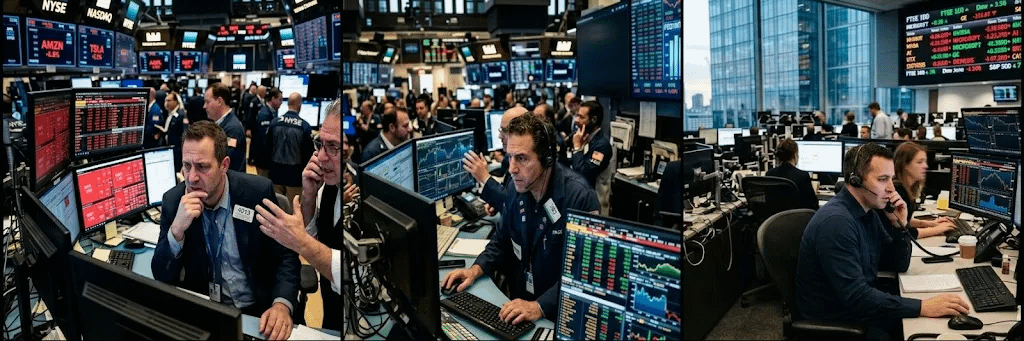
For several years, the AI narrative has been one of explosive growth, technological breakthroughs, massive investment and extraordinary expectations.
Companies announcing AI expansion plans frequently received strong investor attention because the market anticipated that artificial intelligence would transform productivity, business operations, cloud computing, software, healthcare, finance, manufacturing and countless other industries.
But the investment environment is changing.
Investors are beginning to ask whether the current pace of spending is sustainable, whether AI infrastructure will generate sufficient returns, whether competition will reduce pricing power, and whether the largest technology companies can maintain the margins investors currently expect.
The difference between an AI boom and an AI investment cycle
The AI boom may continue to expand while the AI investment cycle becomes more volatile.
A technology can transform the global economy without every company associated with it becoming a successful investment.
History provides numerous examples of revolutionary technologies creating enormous long-term economic value while investors experienced major losses during periods of excessive valuation and speculation.
The internet transformed global commerce, communications and business productivity. Yet many companies during the dot-com era failed because their valuations, business models or spending plans were not sustainable.
Artificial intelligence could follow a similar pattern in some areas—not because AI is a failure, but because the market may have overestimated how quickly certain businesses can generate profits.
The next phase could therefore produce a major distinction between:
AI companies with sustainable revenue and strong cash flow.
AI businesses with high operating costs and uncertain profitability.
Companies with real infrastructure advantages.
Companies relying heavily on external financing.
Technology firms with valuable AI products.
Businesses whose AI investments have not yet generated meaningful returns.
The market could remain bullish on artificial intelligence over the long term while becoming bearish on certain AI stocks in the short term.
That distinction is increasingly important for investors.
💵 8. THE FEDERAL RESERVE, INFLATION AND INTEREST-RATE UNCERTAINTY
The tariff situation could create another challenge for monetary policy.
If new tariffs increase the cost of imported products, businesses could face higher input costs. Depending on the extent of the measures, those costs could eventually affect consumer prices, manufacturing expenses, supply chains and inflation expectations.
At the same time, trade restrictions and uncertainty could weaken business confidence, reduce investment, slow hiring and potentially affect economic growth.
This creates a difficult scenario for central banks.
The potential policy dilemma
Inflation pressure
Tariffs may increase import costs and create renewed price pressure.
Growth pressure
Trade uncertainty may weaken business activity and economic confidence.
If inflation remains persistent, the Federal Reserve may have less room to ease monetary policy.
If economic growth weakens significantly, policymakers may face pressure to support the economy.
A combination of slowing growth and stubborn inflation would create a difficult environment for equities, bonds, cryptocurrencies and other risk-sensitive assets.
For Bitcoin, interest-rate expectations and global liquidity remain important because they can influence institutional demand, capital allocation and investor willingness to hold volatile assets.
🔗 9. HOW THESE FOUR DEVELOPMENTS COULD CONNECT
The potential tariff announcement, Anthropic's IPO reversal, AI stock selling and Microsoft's chip strategy may appear to be separate stories. However, together they reveal four major forces currently influencing financial markets.
The four forces shaping the market
1. Geopolitical risk
Tariffs, trade negotiations, industrial policy and supply-chain uncertainty.
2. Valuation risk
Investors question whether AI growth expectations are already priced too aggressively.
3. Capital expenditure risk
Billions in computing, chips, power, cooling and data centres must eventually generate returns.
4. Liquidity and risk appetite
Investors may reduce exposure to volatile assets when uncertainty and market volatility rise.
The potential chain of events is important.
Tariff uncertainty could increase concerns about inflation and economic growth. Higher uncertainty could influence monetary policy expectations and corporate investment decisions. AI stocks could experience further valuation adjustments if investors become less confident about future profitability. Bitcoin and other cryptocurrencies could then face pressure as capital moves away from risk-sensitive assets.
This is a possible scenario, not a guaranteed outcome.
Markets can also respond positively if tariffs are limited, trade negotiations improve, inflation moderates, AI earnings remain strong or liquidity conditions become more favourable.
The direction of markets will depend on how these forces develop—not simply on the headlines themselves.
🔮 10. THREE POSSIBLE MARKET SCENARIOS FROM HERE
A scenario-based outlook—not a prediction or price guarantee.
SCENARIO 1 — BEARISH: RISK-OFF SELLING DEEPENS
Higher tariffs + AI valuation pressure + tighter liquidity
If new tariffs escalate trade tensions, AI stocks continue declining and inflation expectations rise, markets could face another wave of risk reduction. Technology stocks, Bitcoin and other speculative assets could experience further selling pressure.
Key risks: tariff escalation, inflation, weak earnings, leverage liquidations and declining liquidity.
SCENARIO 2 — BASE CASE: VOLATILITY AND SELECTIVE RECOVERY
Markets adjust without a major economic breakdown
Investors continue reassessing AI valuations, but earnings growth remains reasonably strong. Tariff announcements create uncertainty without triggering a major trade escalation. Markets remain volatile, with sharp rebounds and corrections as investors distinguish between stronger and weaker companies.
Key factors: earnings resilience, controlled inflation, stable liquidity and manageable tariff measures.
SCENARIO 3 — BULLISH: CONFIDENCE RETURNS
Trade tensions ease + AI profitability improves + liquidity stabilizes
If tariff measures are more limited than expected, AI earnings remain strong and financial conditions improve, investors could return to equities and cryptocurrencies. AI infrastructure companies could recover, and Bitcoin could benefit from renewed institutional demand and improved risk appetite.
Key catalysts: trade agreements, improving earnings, falling inflation, stronger liquidity and sustained investment demand.
👀 11. WHAT INVESTORS SHOULD WATCH NEXT
The coming days and weeks could be important for determining whether this is a temporary market correction or the beginning of a more sustained adjustment.
Key market indicators to monitor:
US tariff announcement
Rates, affected countries, exemptions and implementation dates.
Nvidia and AI stocks
Price stabilization, earnings outlooks and institutional positioning.
Anthropic's post-IPO performance
Whether the stock can stabilize and attract demand following its initial decline.
Federal Reserve expectations
Inflation, Treasury yields and interest-rate outlook.
Bitcoin institutional flows
ETF inflows and outflows, spot demand and liquidity.
Crypto leverage and liquidations
Open interest, funding rates and forced selling.
AI infrastructure spending
Capital expenditure, electricity demand, data-centre expansion and return on investment.
🧭 12. THE BIGGER PICTURE: A TRANSITION FROM EXCITEMENT TO REALITY
The global AI industry is not necessarily entering its end. It may be entering a more mature and financially demanding stage.
The first phase of the AI boom was driven largely by technological breakthroughs, enormous demand for computing power, rapid adoption and expectations of future growth.
The next phase could be defined by competition, efficiency, profitability, financing, energy availability, infrastructure capacity and commercial execution.
Companies that can convert AI demand into sustainable earnings may ultimately emerge stronger.
Companies that spend aggressively without delivering sufficient returns could face lower valuations, financial pressure and increasing scrutiny from investors.
At the same time, governments are becoming more deeply involved in trade, industrial policy, chip restrictions and strategic technology competition. This means the AI industry is not operating in a purely commercial environment anymore—it is increasingly connected to national security, economic policy and geopolitical competition.
Microsoft's move toward Intel EMIB, renewed US tariff investigations and the volatility surrounding Anthropic's IPO all reflect different sides of the same transformation.
The AI economy is expanding, but the cost of building it is becoming increasingly visible.
And financial markets are beginning to ask harder questions.
📝 FINAL CONCLUSION: THE WORLD IS ENTERING A MORE COMPLEX MARKET CYCLE
The simultaneous pressure on AI stocks, Bitcoin and global financial markets is a reminder that markets rarely move because of one headline alone.
The threat of new US tariffs could reshape global trade expectations. Anthropic's IPO reversal is testing investor confidence in AI valuations. Nvidia and other AI stocks are facing renewed scrutiny over the sustainability of enormous technology investments. Microsoft and Intel, meanwhile, are working to address the infrastructure bottlenecks that could determine the next stage of AI expansion.
Bitcoin is caught within this wider financial environment, where liquidity, institutional positioning, global economic expectations and investor confidence can become just as important as developments inside the cryptocurrency industry itself.
The coming period could bring further volatility, but it could also create opportunities for investors who remain disciplined, understand the risks and avoid making decisions based solely on headlines.
The AI revolution is still unfolding. The global economy is still adapting. And the financial markets are now testing which expectations are realistic, which valuations are sustainable and which investments can survive a more demanding economic environment.
The next major market move may not be driven by a single company, a single cryptocurrency or a single economic announcement—but by how all these forces interact.
Market Risk Disclaimer: This publication is for informational and educational purposes only and does not constitute financial, investment or trading advice. Financial markets, stocks and cryptocurrencies involve substantial risks, including the possibility of losing your capital. Market scenarios and forward-looking analysis are not guarantees of future performance. Always conduct your own research (DYOR) and carefully assess your financial situation and risk tolerance before making any investment decisions.
#GlobalMarkets #Bitcoin #BTC #Anthropic #NVIDIA #ArtificialIntelligence #AIStocks #Microsoft #Intel #CryptoMarket #WallStreet #USATariffs #TradeWar #Semiconductors #TechStocks #MarketVolatility #EconomicOutlook #Investing #FinancialMarkets #PositiveMindsGlobalResults
🌍 PositiveMindsGlobalResults I BINANCE SQUARE | INVEST • LEARN • GROW • TOGETHER
INOVEMBER 25, 2026 | GLOBAL MARKETS • AI • BITCOIN • TRADE • ECONOMY