CFTC makes two moves in one day, and prediction markets officially go legit
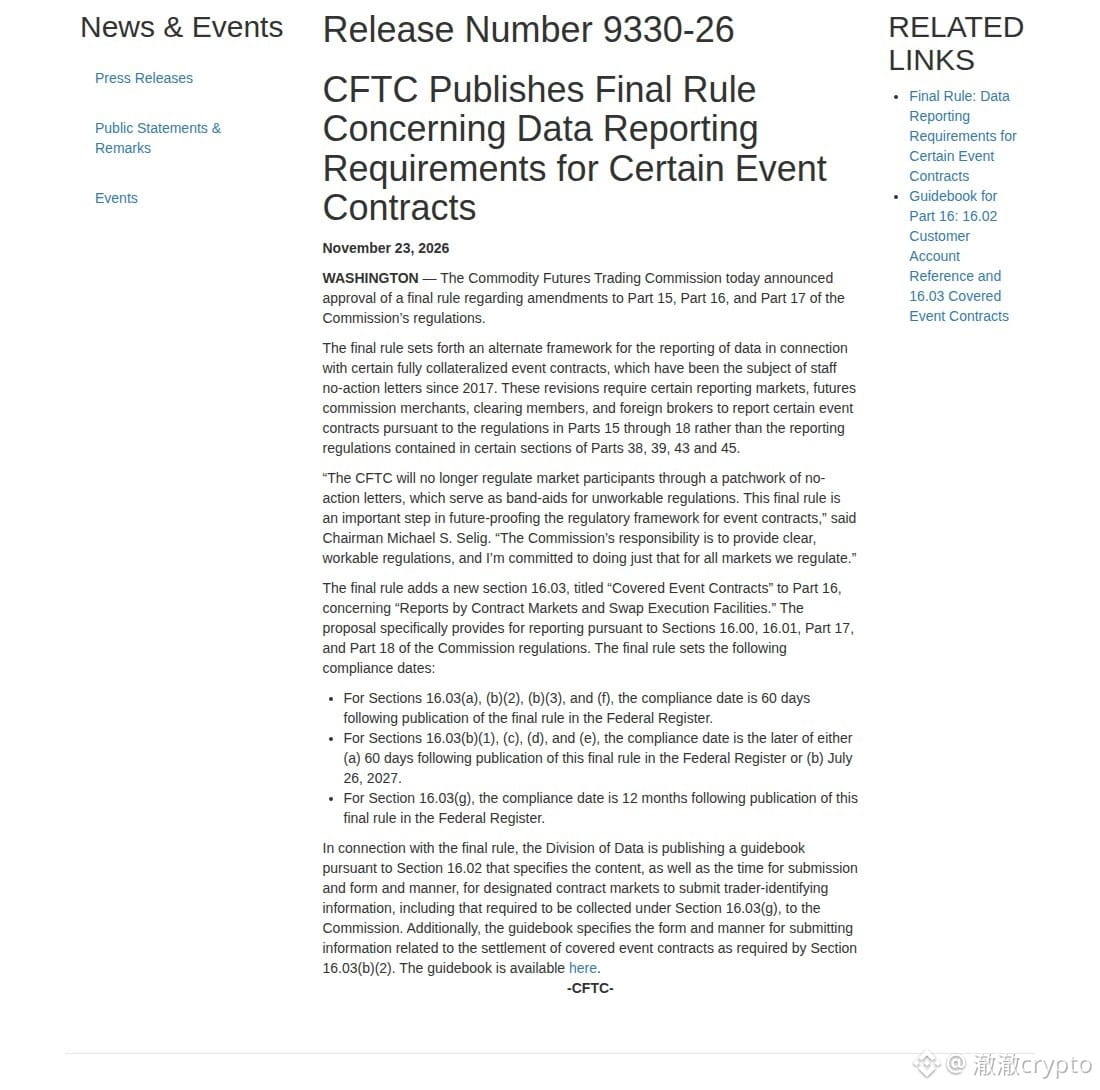
On November 23, the U.S. Commodity Futures Trading Commission adopted a final rule establishing permanent reporting requirements for fully collateralized “event contracts,” voiding 17 letters granting temporary exemptions that had accumulated since 2017.
Exchanges will henceforth have to report traders’ names, addresses, occupations, and employers. The large-trader threshold is 125,000 contracts ($125,000 notional), and most provisions take effect 60 days after publication in the Federal Register.
That same day, the CFTC also opened the door to counting Bitcoin and Ethereum at 80% of their value, and payment stablecoins at 98%, toward exchanges’ reserves for 12 months of operating expenses.
I think this is the first time prediction markets have gone from “temporary exemption” to “officially recognized.” Kalshi and Polymarket will no longer have to rely on exemption letters to keep operating.
But the real-name reporting requirement won’t take effect for 12 months, and the door to anonymous trading is closing. The reserve provision is only staff guidance, not a formal rule, so a change in leadership could reverse it.
First, we’ll see whether this rule can withstand lawsuits from the states. A New York judge just rejected an injunction on Monday, but the states are still suing. If the Supreme Court rules that states have the authority to regulate, this federal framework could be significantly weakened.
Do you think requiring real names in prediction markets is a positive or a negative? A: Positive—compliance will give investors the confidence to enter the market. B: Negative—once real names are required, half of retail traders will leave.
$BTC $ETH $SOL
#预测市场 #CFTC