

The Problem Starts After the Transaction
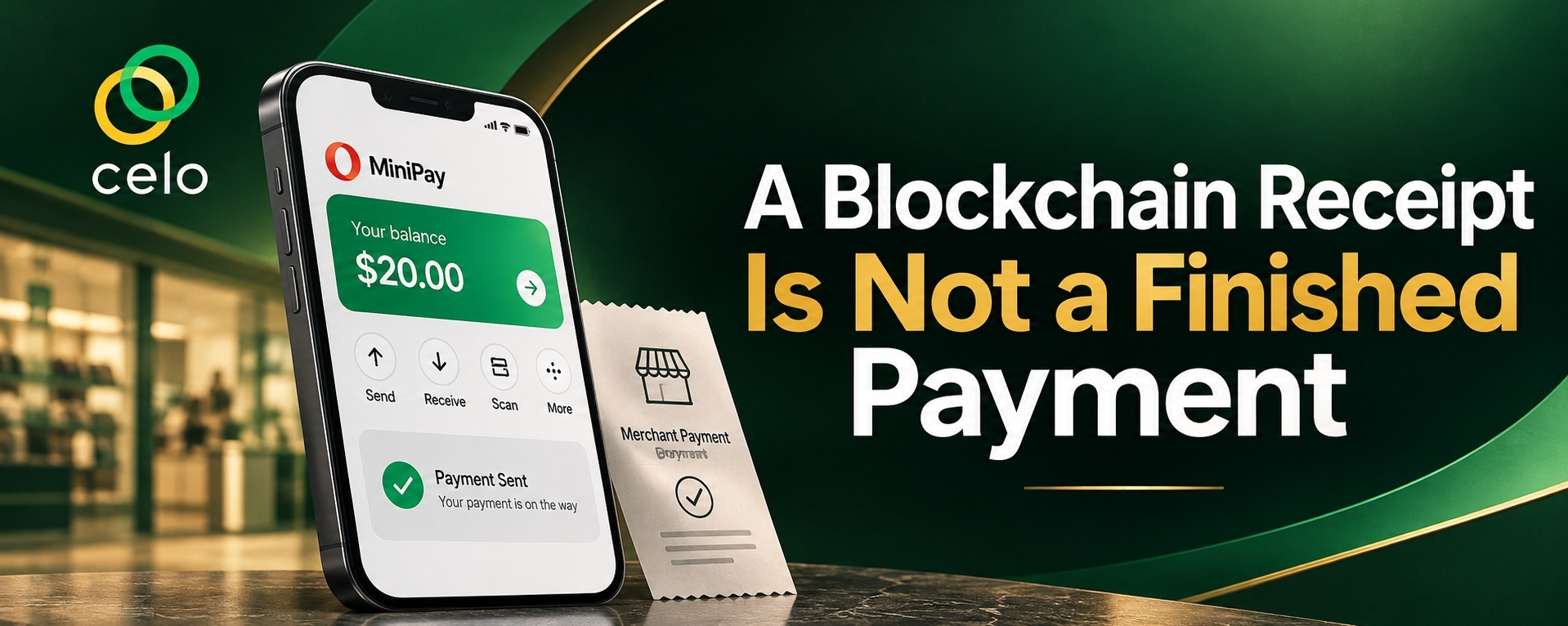
A blockchain can give a payment a clean ending: a transaction hash, a confirmation and a receipt.
Real life is less simple.
The recipient may still need to convert the money, pass a verification check, use a local payment provider or find a merchant that accepts the relevant payment method. A transfer can settle on-chain while the last step of the financial journey remains incomplete.
This is the question I think matters most for MiniPay now: can it turn stablecoin transfers into reliable everyday payments, not just successful blockchain transactions?
What MiniPay's Numbers Actually Prove
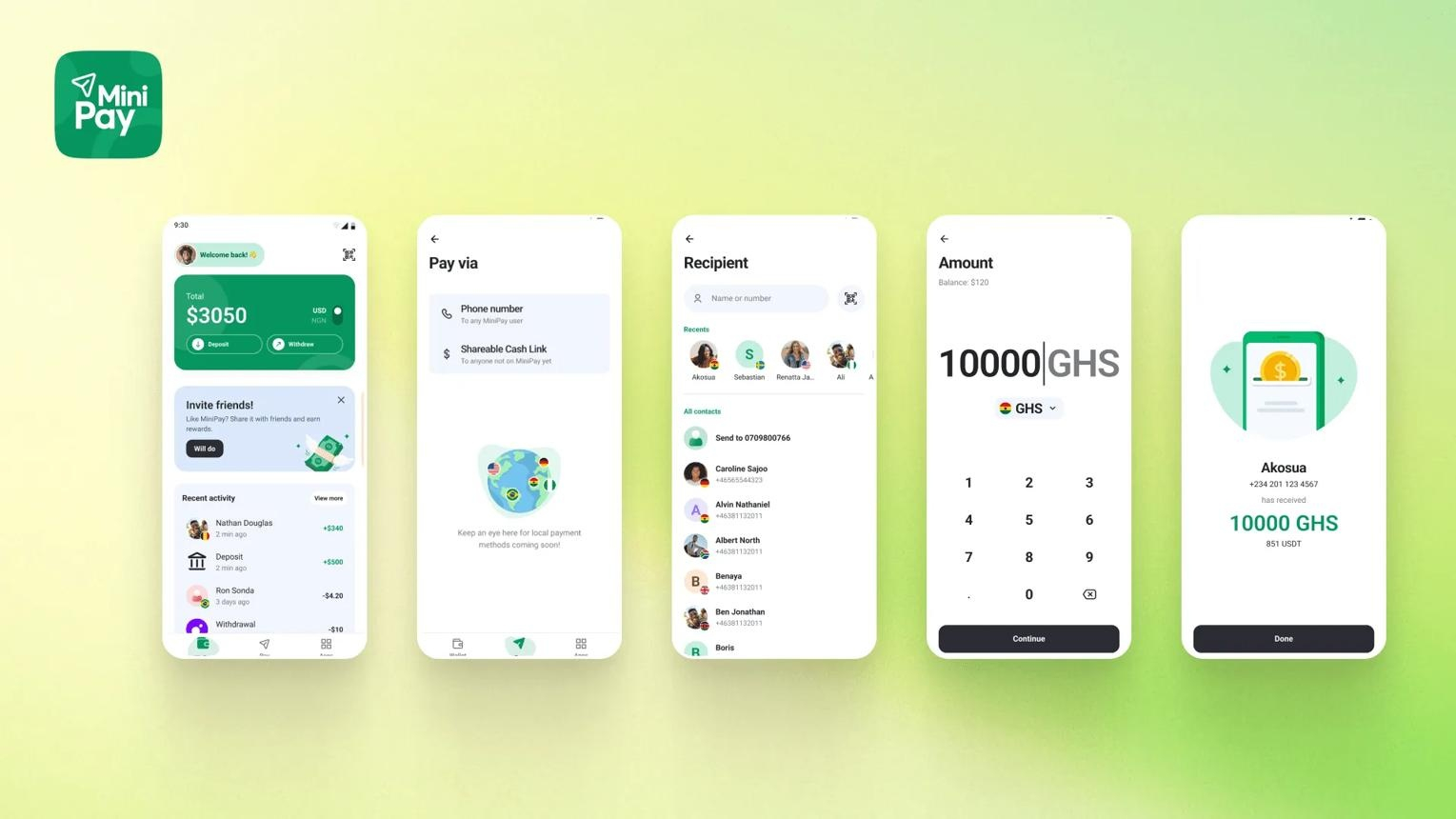
The product has already demonstrated meaningful activity. Opera and Tether reported that in December 2025, MiniPay users made more than 3.5 million peer-to-peer payments and initiated over $96 million in USDT transfers. Users also added more than $49 million in cash through local partners. Across its integrations, more than $153 million was sent or received during that month.
Those numbers deserve credit. They show that MiniPay is not simply collecting wallet activations without any financial activity behind them.
But the categories matter. Three and a half million payments are not three and a half million unique users. Cash added through local partners is not the same as money successfully withdrawn. And the $153 million figure covers activity across integrations; it should not be treated as a separate pile of merchant purchases.
The same February 2026 announcement reported 12.6 million activated wallets and an estimated 3.64 million on-chain users. It also described 7 million phone-verified USDT wallets and 300,000 unique USDT buyers during December. These are useful indicators, but they measure different things. Without consistent cohort definitions, dividing one figure by another would not give us a reliable retention rate.
MiniPay's more recent public metrics have continued to grow. Its website reports over 21 million activated wallets and more than 617 million transactions. Its October Q3 update had reported 20 million activations, 600 million transactions and $2.3 billion in processed volume. That is substantial distribution. The next question is what happens after someone opens the wallet.
Reconstructing a MiniPay Payment
To investigate that, I reconstructed the public payment journey using MiniPay's developer documentation, Celo's public records and the company's own service disclosures. This is not a claim that I personally installed the app or made a live payment. It is a public-evidence audit: checking which parts of the journey can be verified and where the available evidence stops.
Step 1: Identity Through a Phone Number
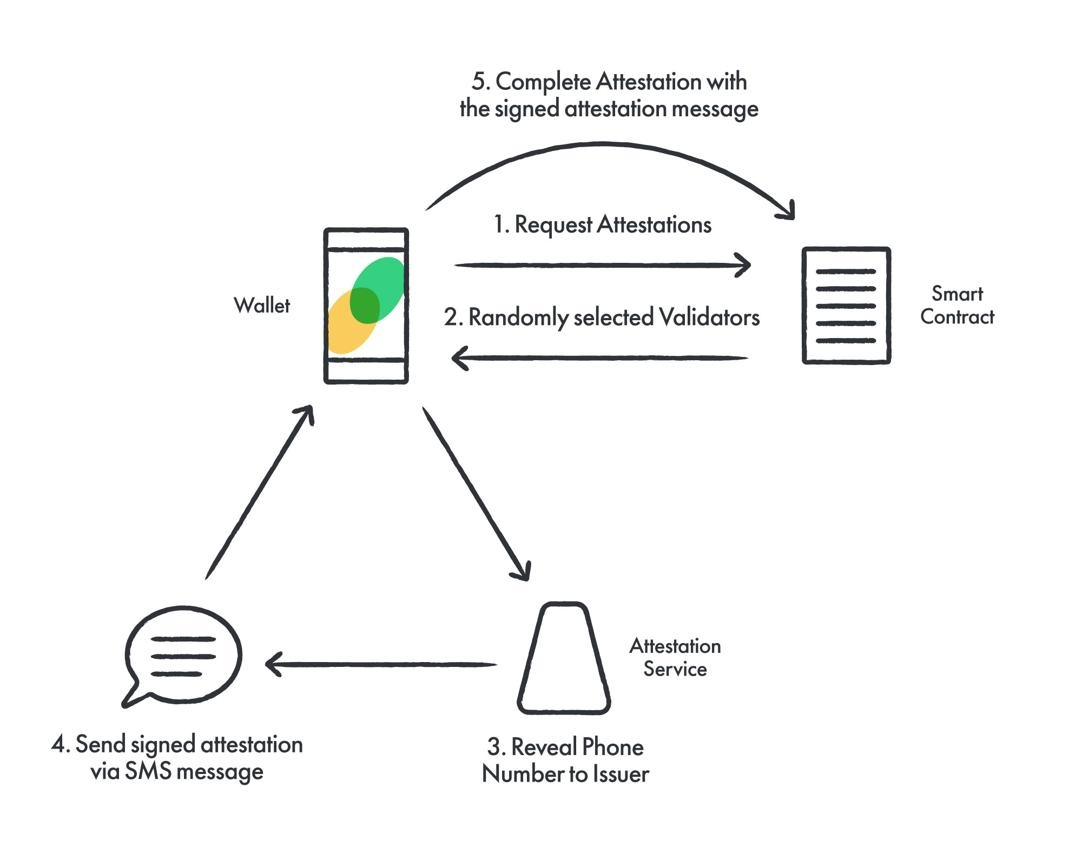
The first step is identity.
MiniPay supports phone-number-based transfers, so a sender does not always need to ask the recipient for a long blockchain address. Celo's SocialConnect system can map an off-chain identifier, such as a phone number, to a blockchain address. ODIS helps obfuscate that identifier before it is used in the on-chain attestation system.
This is more than a product description. MiniPay's public developer code identifies its mainnet issuer address, and CeloScan contains real "AttestationRegistered" events associated with that issuer. One can inspect the issuer and destination account in the public transaction record. The identifier itself is obfuscated.
That record proves that the identity-mapping mechanism is being used on-chain. It does not prove that a stablecoin payment took place. Keeping those two forms of evidence separate is important.
Step 2: Sending Stablecoins and Paying Network Fees
The next step is the transfer itself.
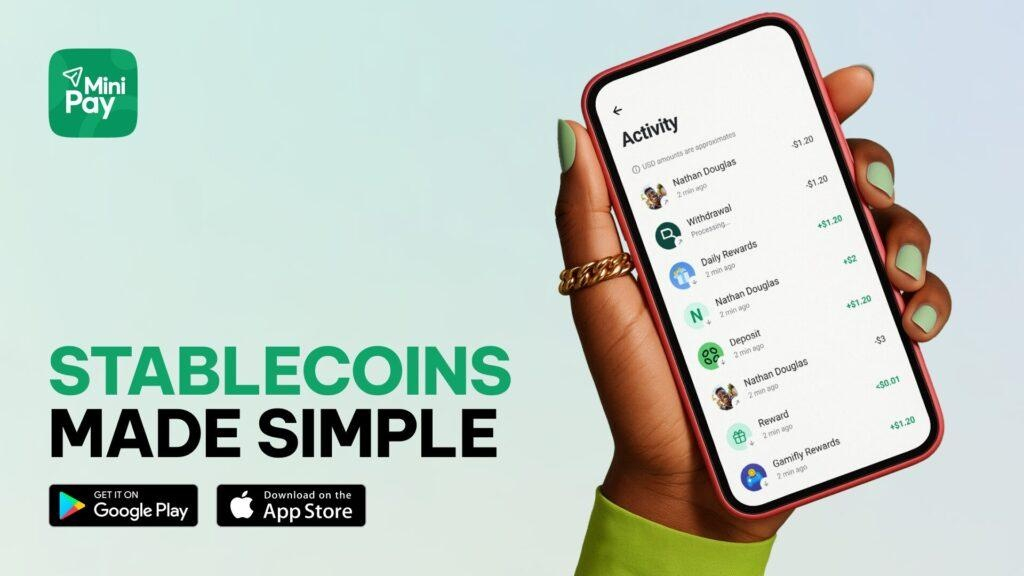
MiniPay's developer documentation shows how a Mini App can initiate a USDT transfer using the token's Celo contract and a fee adapter. The wallet's fee-currency logic can use an eligible stablecoin balance to cover the network fee, rather than requiring every user to hold native CELO separately.
Step 3: Waiting for Actual Confirmation
The documentation also shows why a transaction hash is not the same as confirmation. A transaction can move through preparation, signing, pending, confirming and confirmed states. Developers can wait for the transaction receipt, inspect its status and expose a failure state if the transaction does not succeed.
This is the correct way to think about blockchain settlement: a payment is not confirmed simply because someone pressed send.
Why On-Chain Settlement Is Not the Final Payment
But even a confirmed transfer does not finish the real-world journey.
MiniPay's own disclosures explain that stablecoin-to-local-currency exchanges are facilitated by third-party providers. The Google Play listing describes local-currency cash-outs across 66 countries, while also clarifying that zero-fee deposits and withdrawals are available only in selected markets with selected providers. Third-party restrictions and terms still apply.
That distinction changes the meaning of a cheap blockchain transfer. The network fee is only one part of the user's total cost. The conversion rate, provider spread, withdrawal fee, identity requirements and local availability can matter more than the fee paid to the blockchain.
Sonny Pay: Bringing Stablecoins Into Local Commerce
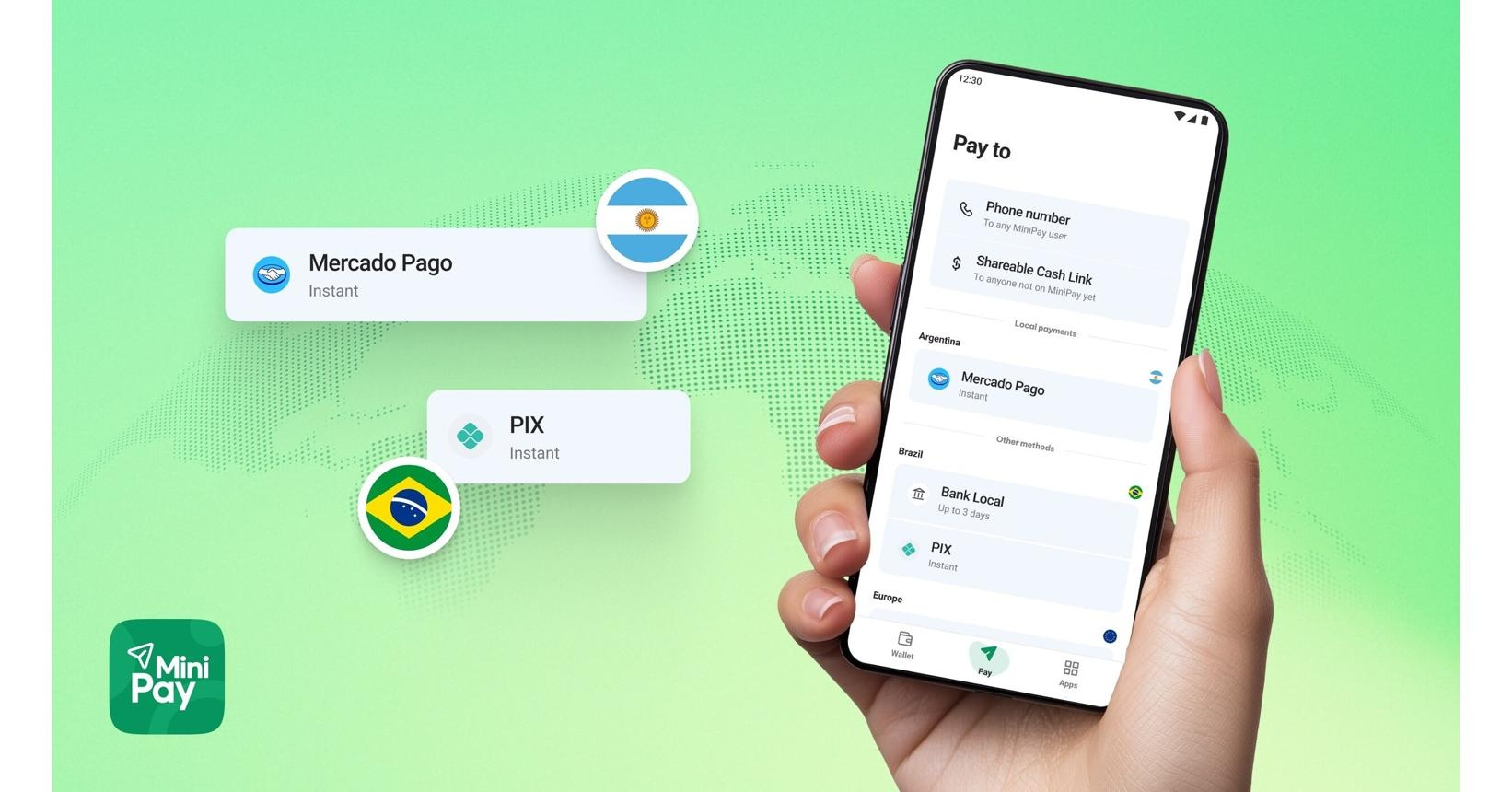
MiniPay's local QR payment initiative, Sonny Pay, is another attempt to close this gap. Its purpose is practical: let users spend a stablecoin balance through supported local payment networks while the merchant receives local currency.
However, the availability is not universal. The October Q3 update named five markets, including Brazil. A dedicated guide published in November lists four and does not include Brazil. That is a public documentation mismatch. It does not prove that Brazil was removed, but it does mean a reader should not assume that every previously announced market remains supported in exactly the same way.
KYC requirements and supported QR types also matter. A person cannot assume that every QR code in every country will work simply because a payment feature is available there.
This is where MiniPay's strongest challenge becomes visible. It has to coordinate more than a wallet and a blockchain. It depends on identity providers, stablecoin liquidity, local payment networks, cash-in and cash-out partners, and country-specific rules. If one part of that chain becomes unavailable, the user may have a confirmed stablecoin balance but no convenient way to use it.
The Adoption Question: Incentives Versus Retention
There is another reason to separate initial activity from lasting adoption: incentives.
MiniPay's Q3 update reported that around 386,000 CELO had been distributed to Opera users through the CELO Rewards programme. The programme linked rewards to conditions such as daily browsing, keeping Opera Mini updated and having MiniPay enabled. The same update reported that selected Mini Apps saw average transactions rise 72%, volume rise 85% and active users rise 26% during a campaign period.
These are real signs of distribution and engagement. I do not consider incentives a weakness by themselves. They can help people discover a product and make the first interaction easier. But campaign-period growth does not tell us how many people continue using the service after the rewards stop.
Verification, Infrastructure and Operational Risks
MiniPay has also started addressing verification friction through Sumsub's reusable KYC gateway. That could make access to supported partners easier by reducing repeated identity checks. It still does not remove the need for partner-specific requirements or prove that cash-outs and payments work reliably in every market.
Opera's regulatory disclosures add another important perspective. The company has identified MiniPay's dependence on the Celo blockchain and on third-party infrastructure and service providers. Those dependencies can create operational, regulatory and security risks. This is not evidence that MiniPay is unreliable; it is an acknowledgement that the user experience depends on systems beyond the wallet interface.
Five Metrics That Would Prove Everyday Payment Utility
So what would convince me that MiniPay has become a dependable everyday payment network?
I would look for five metrics, reported consistently and broken down by country:
First, monthly unique users who actually send or receive stablecoins—not just activated wallets.
Second, the percentage of those users who make another payment after 30 and 90 days, including periods without a promotional campaign.
Third, the number and value of completed merchant payments, separated from ordinary peer-to-peer transfers.
Fourth, the real cost and completion time of cash-in and cash-out, including exchange spreads and provider charges.
Finally, failure, refund and dispute rates across the full payment journey—not only failed on-chain transactions.
I would also want these measurements to distinguish between wallet activity, Mini App engagement, peer-to-peer transfers and local merchant purchases. Combining them into one large transaction total makes a product look simpler to measure than it really is.
The Real Test for MiniPay
My conclusion is not that MiniPay has failed to create financial utility. Its reported peer-to-peer payments, USDT transfers and local integrations show meaningful progress. It has demonstrated that digital dollars can move through a widely distributed mobile wallet at considerable scale.
But the next milestone is more demanding. MiniPay must show that users can repeatedly turn those digital dollars into useful local financial actions, with predictable costs and dependable providers.
A blockchain receipt proves that value moved. It does not prove that the recipient could use it.
Building a wallet is a distribution challenge. Building a dependable payment network is a reliability challenge. MiniPay has made progress on the first. The next evidence must prove the second.
