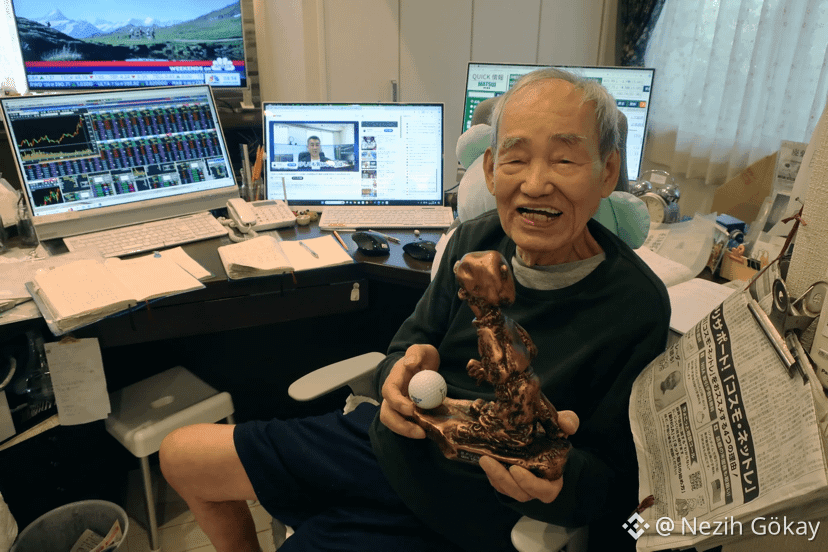

Born in 1936 to a poor farming family in Hyogo, Japan, he started trading stocks at 19 while working in a pet shop.
Today he's 88, still trades every single day, and is worth about 2 billion yen (roughly $14 million).
His name is Shigeru Fujimoto. He lives in Kobe.
After high school he took a job at a pet shop. A brokerage executive who often visited the store got to chatting with him and told him to buy stocks. Fujimoto made his first purchases back then: names like Sharp and the oil company Eneos.
Later he opened his own pet shop, then ran a mahjong parlor. In 1986 he sold the parlors for 65 million yen and became a full-time investor. Japan's bubble era was in full swing, and his assets grew to 1 billion yen.
Then the bubble burst. His fortune fell to 200 million yen. In 1995 the Kobe earthquake hit. The entrance to his apartment building collapsed, and he lost someone he knew. He kept going anyway.
In 2002, at 66, he bought a computer and started trading online. Today he has three monitors in his room. He wakes up early, follows the US market, and places hundreds of orders a day. Sometimes he's up at 2 a.m.
Last year it came out that he'd bought more than 5% of a company, and the stock jumped 17%. Local media call him "Japan's Warren Buffett." He still doesn't drive or use a cell phone. He says saving money is fun.
Think about it: he started while working in a pet shop. Back then, people probably thought, "A 19-year-old farmer's kid, what does he know?" But he kept at it for nearly 70 years.
You wouldn't normally expect someone who trades this actively for this long to build a big fortune. He started as an ordinary shop worker and made it through a market bubble and an earthquake.
He spotted his opportunity early, then made the most of the computer when it came. However you look at it, that's a remarkable consistency.