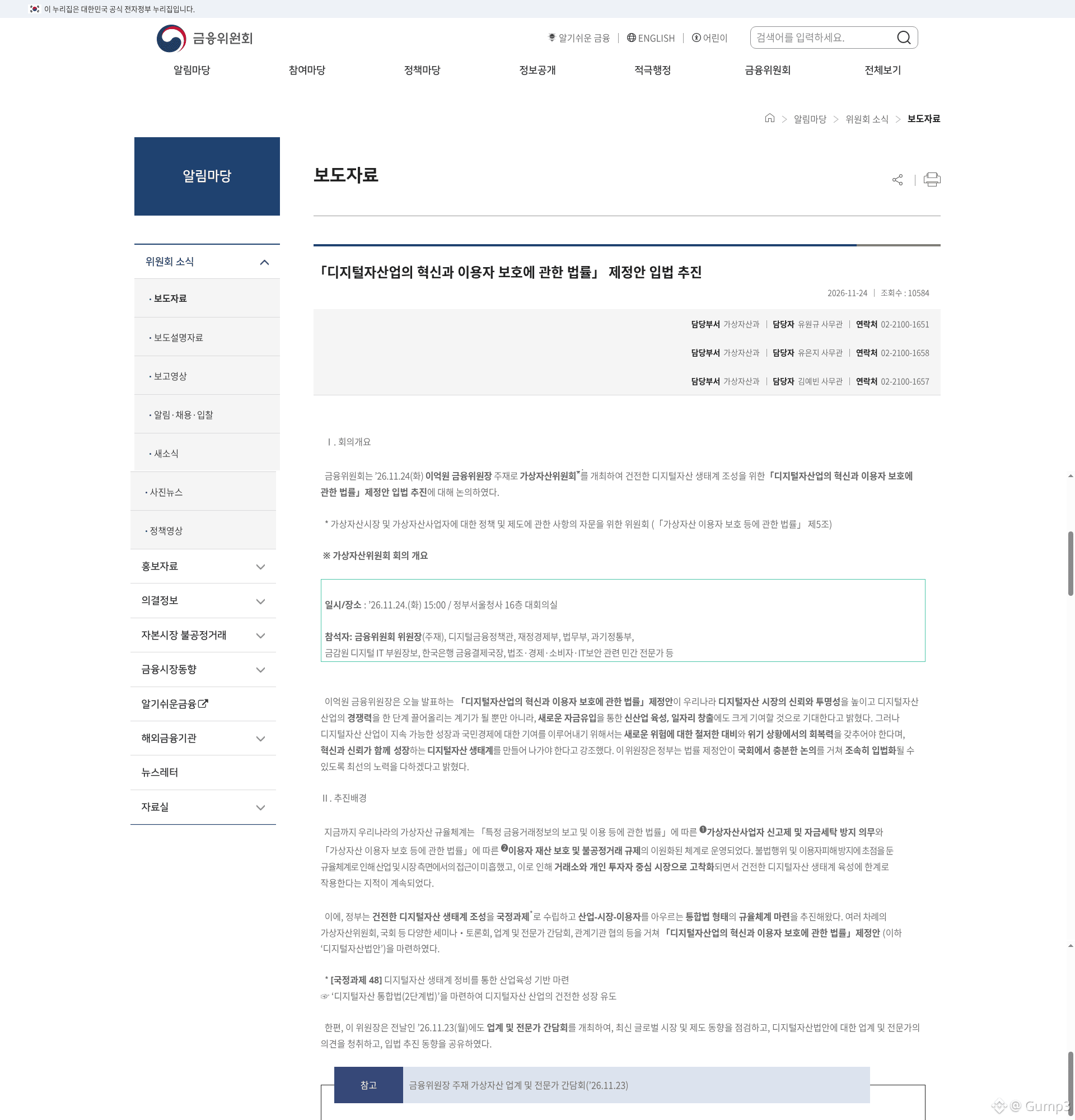
At 2 p.m. Beijing time today, South Korea’s Financial Services Commission (FSC) released the government’s draft Digital Asset Act.
Exchanges must first obtain three licenses—for trading, brokerage, and custody—before being designated as platform operators. Major shareholders are generally capped at a 20% stake, which can be increased to a maximum of 34% with FSC approval; shares above that limit carry no voting rights. The designation will be deferred for three years, and small and medium-sized exchanges may receive an extension of up to three more years. Previously, businesses filed a single comprehensive application; going forward, they will need a license, designation, or registration for each business activity.
At the initial stage, only consortia in which banks hold a majority stake will be allowed to issue won stablecoins, though technology companies may participate as the largest shareholder. Reserves must be held entirely in banks, stablecoins must be redeemable at face value on demand, and issuers may not pay interest to holders. Overseas issuers must establish a branch in South Korea, register with the FSC, and report the currency before issuing and redeeming tokens locally. Exchanges may not list tokens that have not been approved or reported, and businesses may not trade, broker, or custody them.
The draft also opens the door to domestic token issuance. Issuers must first submit a digital asset white paper to the FSC, then wait through a cooling-off period before selling. Businesses will be liable for losses caused by hacking or system failures even if they were not at fault. If an incident results from a breach of information security obligations, fines may reach up to 10% of sales. This is still a government draft and must be debated by the National Assembly; it has not yet become law. The information comes from a press release issued by South Korea’s FSC today.