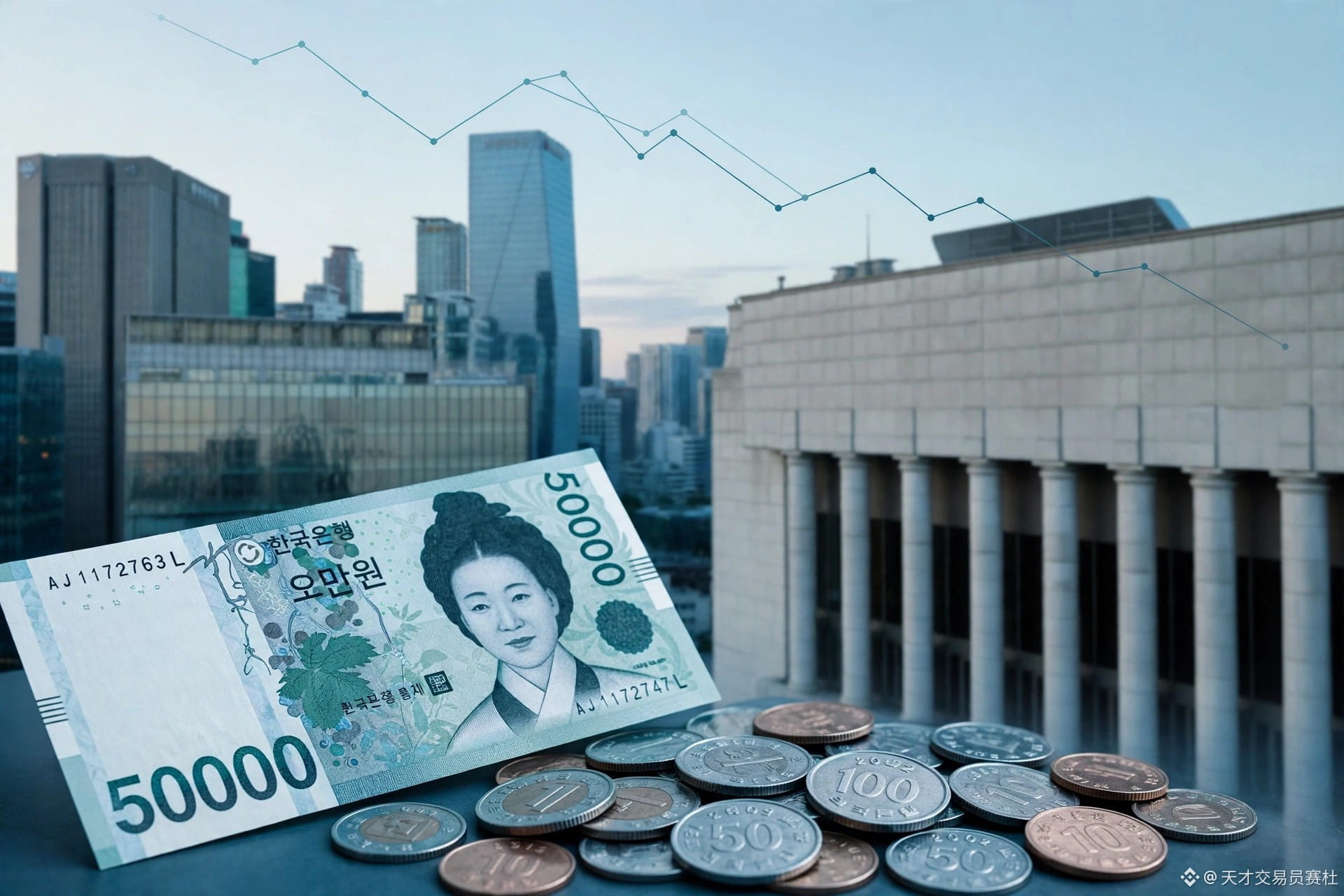
Goldman Sachs has a tip for the Bank of Korea: Don’t hike rates—stabilizing the won works better
In one sentence, Goldman Sachs laid out the Bank of Korea’s thinking: if it wants to curb inflation, stabilizing the won is far more effective than raising interest rates.
Goldman Sachs believes that the latest inflationary pressures in South Korea are mainly driven by rising import costs, rather than excessively strong domestic demand. Since the root of the problem lies in import prices, stabilizing the exchange rate is the most direct remedy. Goohoon Kwon, a senior Asia economist at Goldman Sachs, expects the Bank of Korea’s benchmark rate to peak at no higher than 3.5%, with inflation likely to fall to around 2% in the second half of next year.
He also expects the Bank of Korea to hold rates steady on Thursday, although there is still considerable uncertainty around the decision. Even if it does raise rates, it would likely be a dovish hike. His words were blunt: unless oil prices rise again or the won weakens further, there is little underlying pressure to push inflation higher.
Meanwhile, BMI, a Fitch-affiliated research firm, has also warned that South Korea’s consumer spending growth may remain modest in 2027. With high interest rates driving up household debt-servicing costs, discretionary spending is likely to be squeezed.
In a nutshell: the main character in South Korea’s story isn’t interest rates—it’s the won. If the exchange rate stabilizes, inflation will naturally come down; if it doesn’t, rate hikes will be futile, no matter how many there are.
The above is solely a personal opinion and does not constitute investment advice.
#韩国央行 #韩元汇率 #通胀 #高盛 #SouthKoreanEconomy