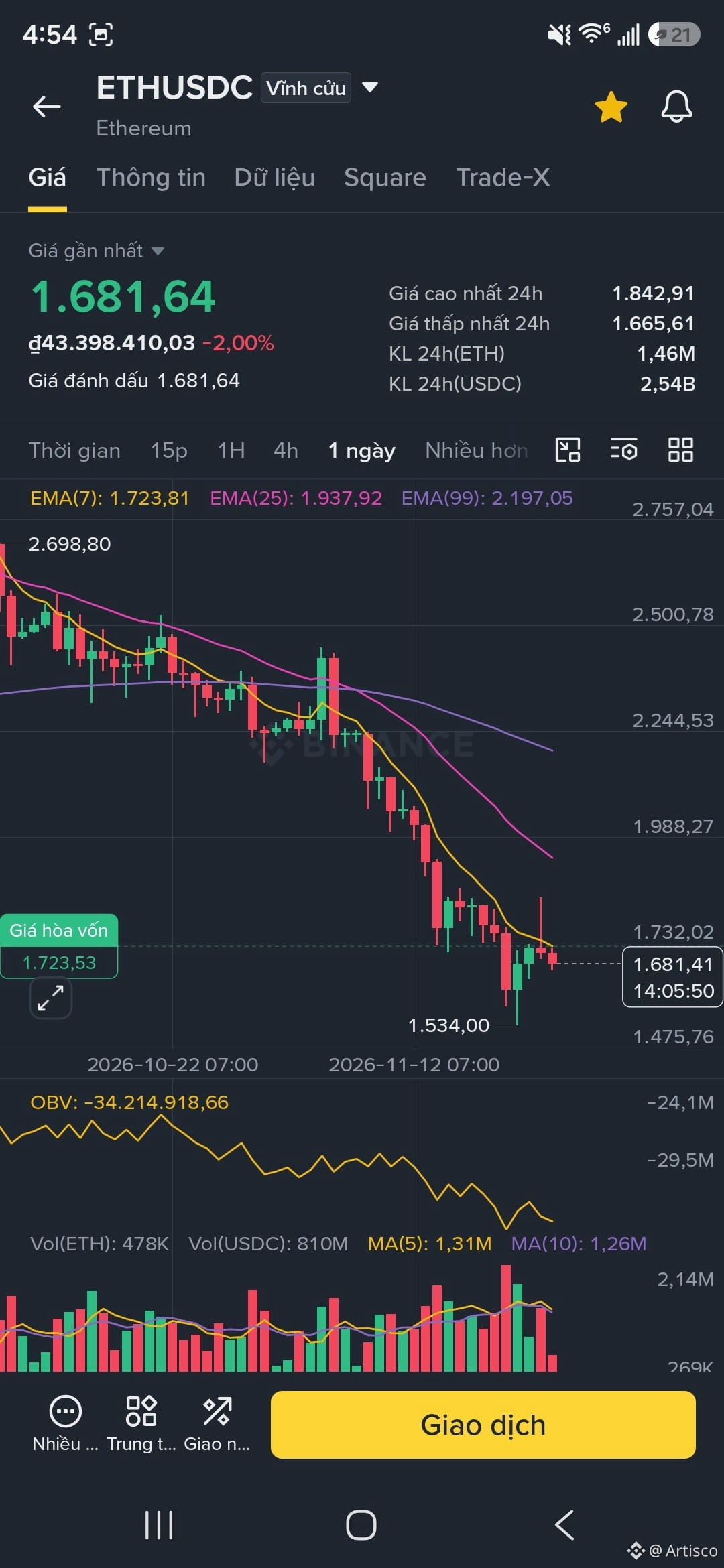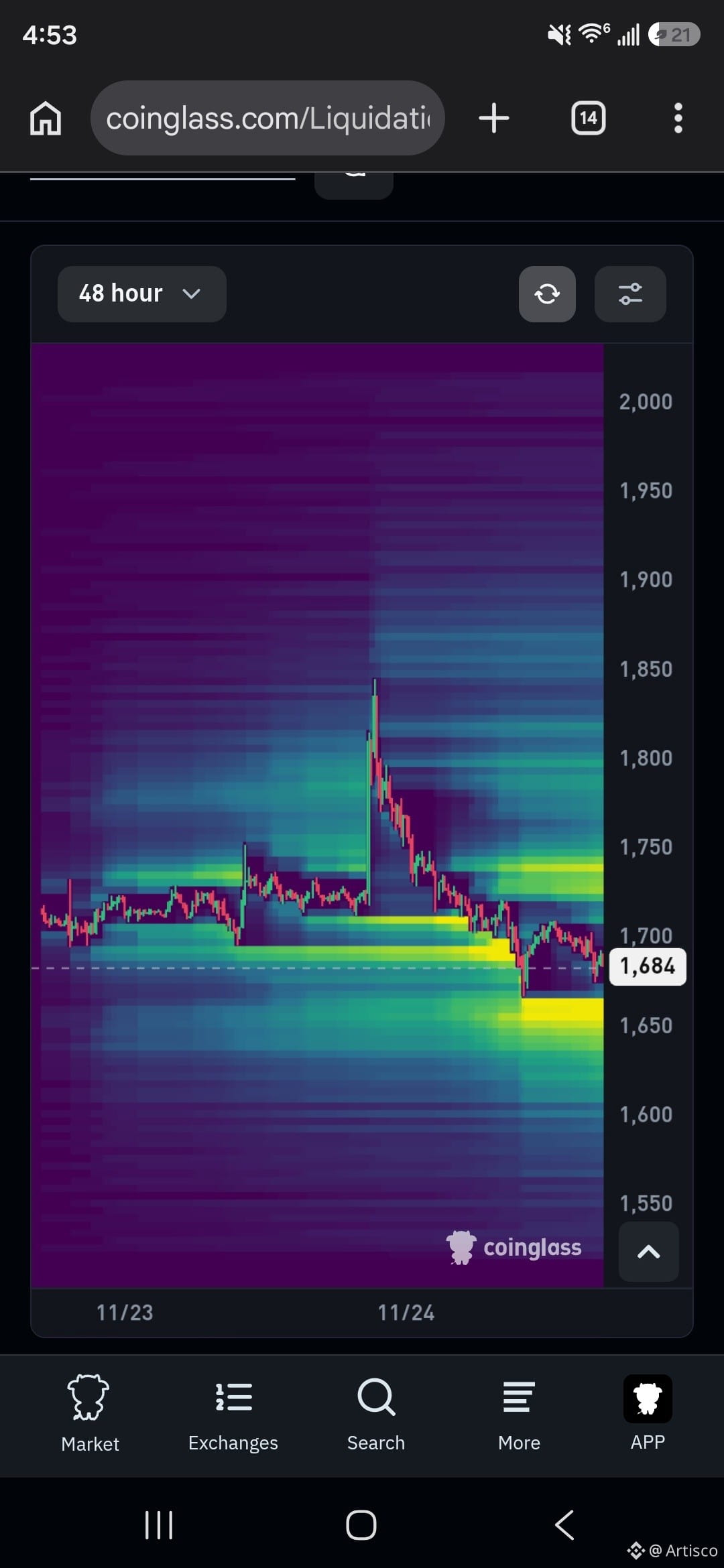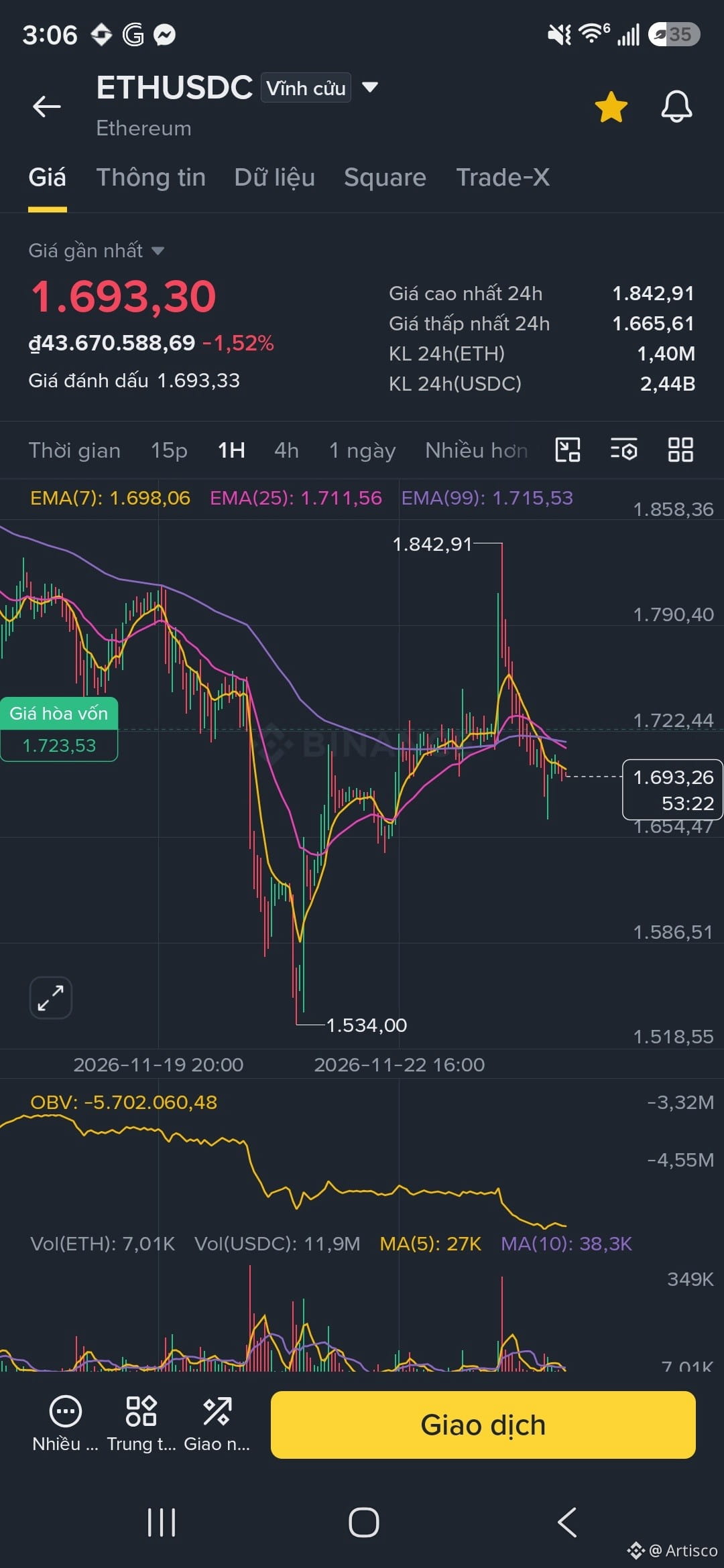
TALKING A BIT ABOUT DCA TODAY – A POWERFUL WEAPON WHEN BOTTOM-FISHING.
Since the market is sluggish and we're waiting for the next DCA entry point, let's get out some paper and a pen and do the math.
Double down where you lose—is DCA like betting on over/under?
First of all, DCA is a great strategy mathematically, and a crucial weapon when bottom-fishing. Every signal has a probability attached to it; we can never know whether it's 100% accurate. All we can know is whether the signal has potential.
There's something quite a few of you still get wrong!
📌 Let's say you have 2,000 USDT:
💰 First buy: Use 1,000 USDT to buy ETH at $2,000.
💰 Second buy: ETH drops 50% to $1,000, and you put in another 1,000 USDT to buy more.
❓ What's your average entry price after DCA?
A lot of you might quickly calculate:
(2,000 + 1,000) / 2 = $1,500.
❌ THAT'S WRONG, GUYS!
Let's see how much ETH we actually bought:
✅ First buy: 1,000 / 2,000 = 0.5 ETH.
✅ Second buy: 1,000 / 1,000 = 1 ETH.
You spent a total of 2,000 USDT and now own 1.5 ETH.
🎯 Actual average cost:
2,000 / 1.5 = $1,333.33.
🔥 That means ETH only needs to recover from $1,000 to $1,400 for you to be up 100 USDT (+5% of your capital)—you don't have to wait for it to reach $1,500!
💡 STRATEGY
When you DCA with a fixed amount, the lower the price falls, the more of the asset you can buy with the same amount of money. So the cardinal rule of DCA is: don't DCA at the same price range based on the same signal, as that only ties up more capital and increases risk—it's a double-edged sword. The price needs to fall far enough. Don't forget that the original goal is to find the bottom, not to exit the trade quickly.
You need to choose the right asset and good DCA entry points. The premise is that you have absolute confidence it will grow. If you're going to argue that silver's performance from 1980 to 2026 is negative, we'll talk about silver in the next post.
#ETH #DCA $ETH
#BinanceSquare #Crypto #Trading