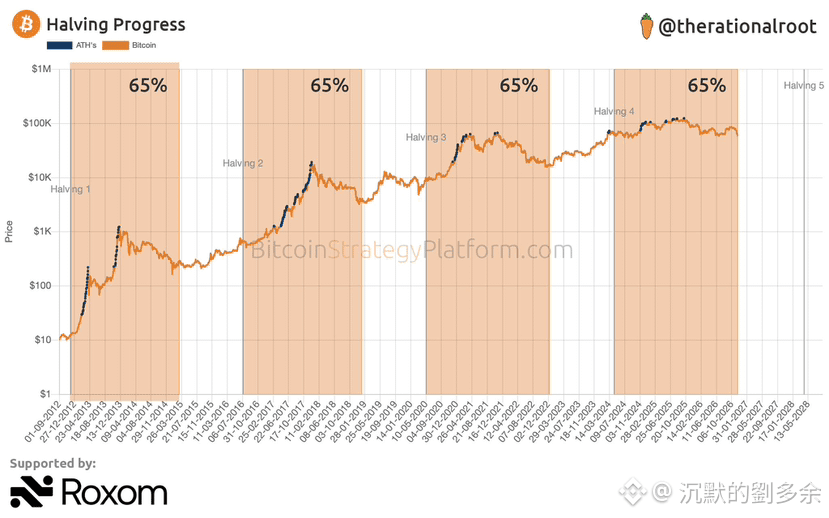
The four-year cycle has shattered like snowflakes, and Bitcoin has not become a safe haven.
Bitcoin’s biggest role over the past decade has been to promote “U.S. Treasury stablecoins.” It has the characteristics of neither a safe-haven asset nor a risk asset. Perhaps occasionally using it for money laundering is a good idea.
Now that stablecoins and the crypto ecosystem are basically established, Americans are about to collect “interest.” Once they’ve collected it, they’ll adjust Bitcoin’s trend line to give it the “characteristics” of the Nasdaq and gold.
After accumulating huge amounts, Wall Street is watching a bunch of fools put on a show, trading an asset that is neither a risk asset nor a safe haven.
They’ll just push countries to tighten regulations, sending the original group of crypto whales into the dustbin of history through congressional subpoenas, asset seizures, and rules.
Then they’ll rebuild the market’s trading logic. Every successful market has its own risk characteristics: the Nasdaq has them, and precious metals have them.
Bitcoin and China’s A-shares don’t. That’s why you’ll often hear the smartest people on Wall Street say the reason they aren’t buying more Bitcoin is: “Bitcoin has no risk characteristics of its own. It’s practically child’s play. When the Nasdaq rises, it falls; when the Nasdaq falls, it falls too. When gold rises, it falls; when gold falls, it falls too.”
Over the past decade, the smartest people on Wall Street have never been seen buying the market at scale or shorting it. The only reason they bought was that “U.S. Treasury stablecoins” were still expanding their influence. When that influence is no longer needed, they’ll naturally come to collect “interest.”
So looking ahead, what’s more concerning is the prospect of the U.S. government and capital coming to collect their interest.
$BTC $ETH #btc #eth