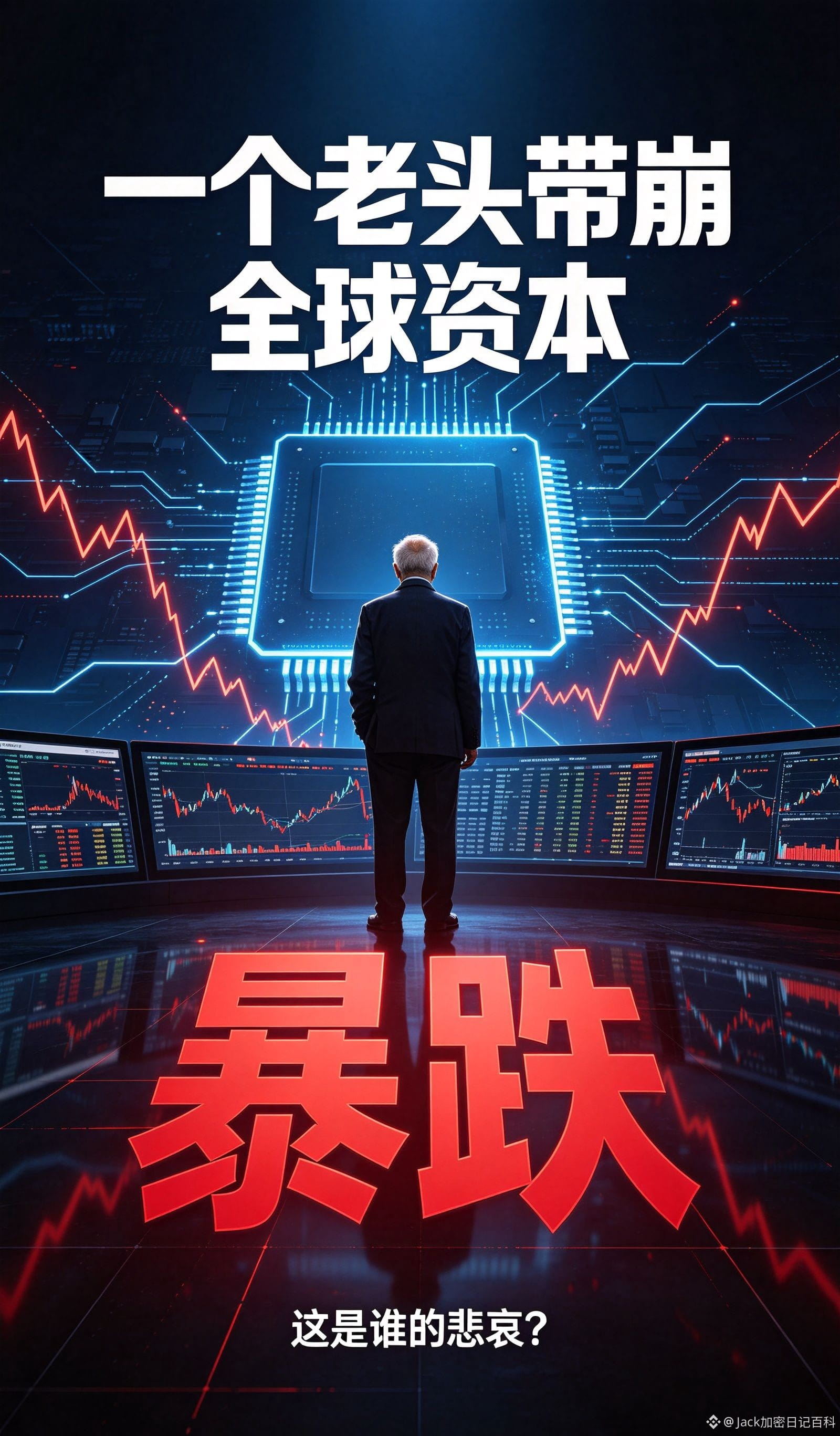

When global capital collectively panicked because an old man resigned, the market plunged in response. Then, when the old man returned to his post, it violently surged by a trillion dollars, and Nvidia's stock price briefly skyrocketed 35%.
Whose tragedy is this, really?
A giant that powers the world's AI computing should be able to support its value through mature institutions, a complete technical talent pipeline, and a stable supply chain. Yet now, the rise and fall of a trillion-dollar market cap hinges entirely on whether one person stays or leaves.
This is the helplessness of modern corporate governance: an extensive management system cannot outweigh the market's personal faith in a founder.
It's also a tragedy for capital. Much of the money being traded isn't based on fundamentals or technological advances—it's based on a personnel announcement. Prices rise and fall entirely on sentiment.
And it's a concern for the AI industry. The entire computing supply chain has placed its confidence in a single linchpin, making it remarkably vulnerable to risk.
There's no denying that he built Nvidia's AI legend with his own hands. But a healthy industry shouldn't be one where “when he stays, the market thrives; when he leaves, it collapses.”
After the frenzy, it's worth reflecting: truly strong companies should be able to function without any one person and continue moving steadily forward. #黄仁勋 #全球第一位万亿美元加密货币富豪诞生 $BNB $ETH $BTC